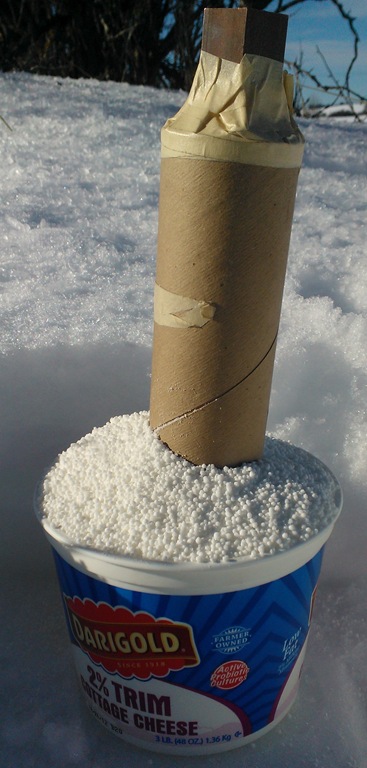
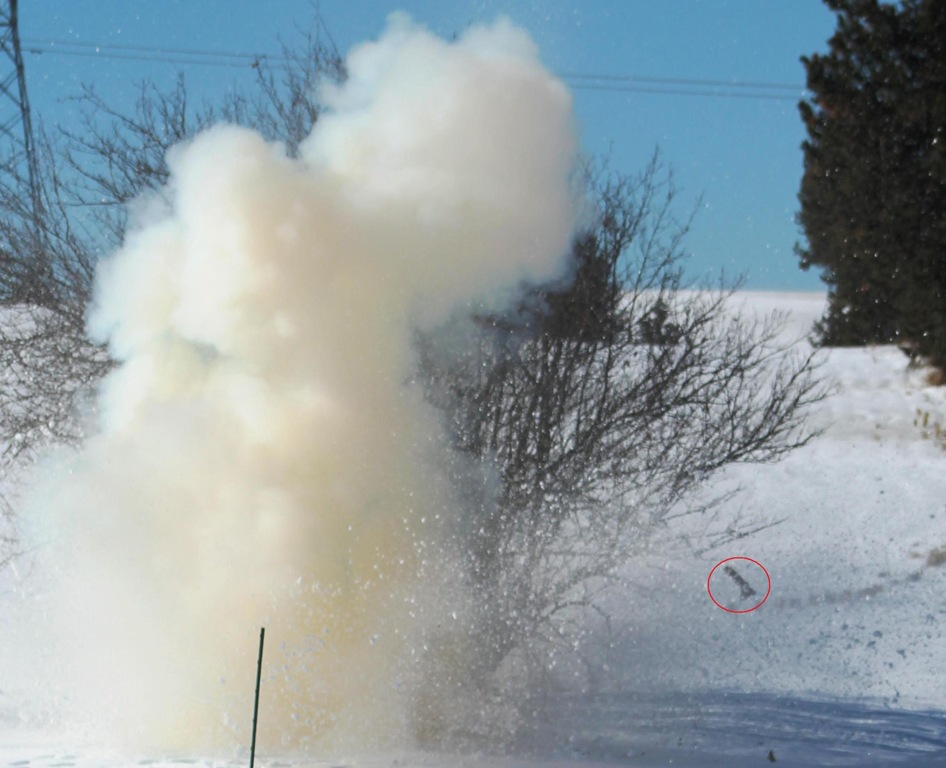
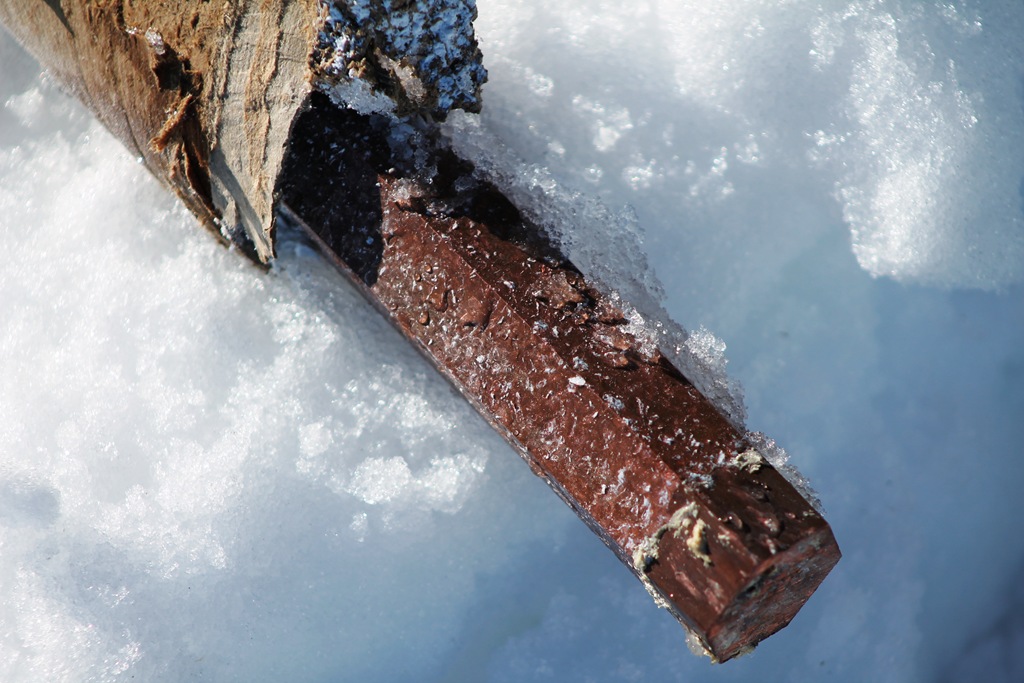
Yesterday I received an email from a book author wanting to know what a homemade bomb used to assassinate someone would look like. She didn’t want to know the details of how to build it. She just wanted to know what it would look like so she could describe it well. She more than adequately distinguished herself from the usual bomb help losers so I agreed to help her.
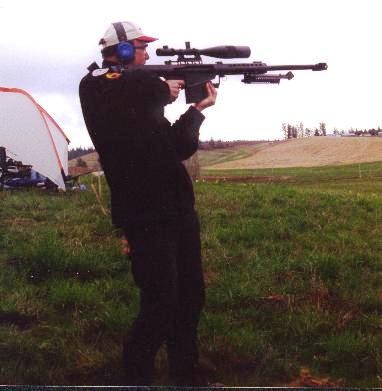
Then as almost an aside she asked, since Boomershoot was about guns as well as explosives, if I could read over her long range shot scene and comment on it. After I read it, and finished laughing, I agreed to help with that too.
I totally rewrote it for her. Apparently she liked it because she responded with, “I really like the scene, have you ever thought of doing some story writing yourself?”
I included Barb L. on the Bcc line and she gushed (I suspect a bias), “Wow. Yours is really good. Ok, yet another thing you should do professionally, technical and writing consultant for ballistics and guns.”
So, here is the result of my writing exercise from last night. I did this instead of something productive like unpack some boxes, finish the cleanup from the mess of the blog conversion, or organize the contents of my multiple hard drives:
She rolled up a corner of the blanket to get a steady rest for her range finder at eye level when she laid down. As she prepared she let her mind ease into the “bubble” where everything else outside of her task at hand disappeared. It became just another very careful shot like a thousand others she had made into paper targets. The importance of this one being a live target was pushed from her mind. Her beating heart had to be calmed so that even the pulse present in her hands was diminished. At this range each pulse of blood in her limbs moved the gun enough to change the point of impact by several inches.
She moved slowly and calmly as she went through the almost ritual of making her first shot through the cold clean bore a direct hit. As she laid down she automatically pointed her feet with the toes to the sides so that both heels and toes would lie flat to the ground. Any wiggle would be transmitted to the gun and reduce the accuracy. She pointed the laser range finder at her target and she could see the jiggle from her pulse in reticle of the magnified optic of the instrument. She put a rock under the rolled up blanket and made the base steady enough to get a good reading. At this range bouncing the laser off of something just 10 yards further away could cause her to overcompensate for the drop and make the shot high by nearly 10 inches. Just an error of 5 yards would move the shot out of the vitals–the triangle formed by his nipples and the top of his sternum. After getting three readings in a row that agreed with each other she entered the data into her exterior ballistics app on her smart phone. It already had the altitude from the GPS and the weather conditions from the weather service. It still needed the incline, her rifle had an incline meter on it but with her new rangefinder she found herself using that instead. She punch in that number too. Her rifle was zeroed for 200 yards at standard sea level conditions. She had to adjust her point of aim to shoot 24.25 minutes of angle (MOA) higher. There were four clicks per MOA on her Leupold scope. That meant 97 clicks. She was glad she didn’t have to count them off individually. The target turrets were numbered with 15 minutes per complete revolution. She did the math in her head and cranked on the elevation she needed.
The windage was a tougher problem. The anemometer gave her the wind here but it did told her nothing about the 993 yards between her and her target. Being on a hill meant the majority of the bullet’s path would be high above the tall grass, bushes, and trees she would normally use for judging the wind speed. The trees at the far end of the bullet path would help some but that wind would only cause a slight deflection compared to the wind in the first half of its 1.4 second journey. What she needed was the wind 100 feet in the air 200 to 500 yards ahead of her. For that she needed to look through her scope. She put the gun in position with its short bipod extended. A small bean bag was put under the butt of the rifle.
She moved into position behind her rifle. Again she lay her entire body flat on the ground. She scooted the rifle forward an back to get the bipod on firm ground. She then shifted and squeezed the bean bag until the crosshairs found their place. “Find your natural point of aim!”, she heard her instructor of a decade ago bark at her. No muscle could be straining to make the shot. Everything had to be relaxed so the tremors would not be transmitted to the rifle. She adjusted her body position until she could close her eyes, relax, and open them again and the cross hairs would still be resting on the target the same as before she closed her eyes. She adjusted the focus back from infinity and watched the shimmering of the air against the out of focus straight vertical edge of the bench the target was sitting on. It was called mirage. You can see it with the naked eye on a hot summer day just above the surface of a road or other hot objects. If you know what to look for and you have the right optics you can see it in cold open air as well. The angle at which the mirage moved and wiggled was a good clue as to the wind at the range the scope was focused at. It was a little bit of science and a lot of art as she adjusted for the 2 MPH left to right wind here on top of the hill, 5 MPH out at 500 yards and judging from the bushes near the target and the ripples on the lake, a 3 MPH right to left wind at the target. She dialed in a correction of 1.75 MOA left.
She confirmed she still had her natural point of aim and the wind hadn’t changed. As she adjusted the focus on her scope back to the target she felt her awareness “bubble” tighten into a universe composed only of her scope reticle and the target. Her awareness of even her trigger finger faded away. She would find that perfect Zen moment when the two pound trigger on her Remington “just went off” without her consciously thinking about it. It was all about the focusing of the jiggling cross hair on the distant target. The bubble settled in tight and her sense of hearing disappeared as did her sense of touch and pressure from the rocks under her blanket. The smell of the crushed plants faded to nothing and even her vision narrowed within the tiny window of vision granted her from the 14 power scope. The cross hairs did their random dance of six inches or so about the chest of the target. He tossed a piece of bread to a duck so she waited as he leaned back and put his elbows on the back of the bench on either side of him. It was like he was making himself a wider and more stable target for her. The cross hairs hung in the exact center of the triangle for just a moment and the gun recoiled. She had no recollection of pulling the trigger and only a dim sense of the muzzle blast through her hearing protection. It was a very clean trigger break. A half second later the gun came back down almost into the same position as before it fired. She quickly squeezed the bean bag to get her line of sight a little bit lower and “waited” for the remaining quarter second for the bullet to arrive. She could see the trace, the distortion in the air from the supersonic shock wave, as it arced down into her target and hit it at 1600 feet per second. That delivered more than half again the momentum of a .45 fired from 10 feet away and the target showed the effects. It was a good shot, maybe three inches to the right of her point of aim. Not quite enough adjustment for wind but the elevation was right on.