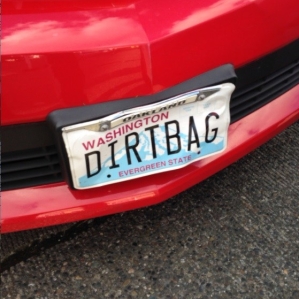
The Seattle judge found the arguments of the tyrants more convincing than those of who yearn to be free:
The private defendants raise the more substantive argument that a preliminary injunction will impair their First Amendment rights, a loss which, “for even minimal periods of time, unquestionably constitutes irreparable injury.” Elrod v. Burns, 427 U.S. 347, 373-74 (1976). The First Amendment argument raises a number of challenging issues. Is computer code speech? If yes, is it protected under the First Amendment? To answer those questions, one would have to determine what the nature of the files at issue here is: are they written and designed to interact solely with a computer in the absence of the intercession of the mind or will of the recipient or is it an expressive means for the exchange of information regarding computer programming and/or weapons manufacturing? Are the export controls of the ITAR a prior restraint giving rise to a presumption that they are unconstitutional? Is the AECA a general regulatory statute not intended to control the content of speech but only incidentally limiting its unfettered exercise? Or is the government attempting to regulate distribution of the CAD files because of the message they convey? Depending on which level of scrutiny applies, does the regulation advance important governmental interests unrelated to the suppression of free speech and avoid burdening more speech than necessary or is the regulation narrowly tailored to promote a compelling Government interest?
The Court declines to wade through these issues based on the limited record before it and instead presumes that the private defendants have a First Amendment right to disseminate the CAD files. That right is currently abridged, but it has not been abrogated. Regulation under the AECA means that the files cannot be uploaded to the internet, but they can be emailed, mailed, securely transmitted, or otherwise published within the United States. The Court finds that the irreparable burdens on the private defendants’ First Amendment rights are dwarfed by the irreparable harms the States are likely to suffer if the existing restrictions are withdrawn and that, overall, the public interest strongly supports maintaining the status quo through the pendency of this litigation.
For all of the foregoing reasons, plaintiffs’ motion for a preliminary injunction is GRANTED. The federal defendants and all of their respective officers, agents, and employees are hereby enjoined from implementing or enforcing the “Temporary Modification of Category I of the United States Munitions List” and the letter to Cody R. Wilson, Defense Distributed, and the Second Amendment Foundation issued by the U.S. Department of State on July 27, 2018, and shall preserve the status quo ex ante as if the modification had not occurred and the letter had not been issued until further order of the Court.
I’m on the side of Code Is Free Speech and suggest you get your 3-D printed gun CAD files there.