New shooter report

Sunday before last, on the 19th, I had an interesting student. Susan was born and raised in communist China. She is currently a Canadian citizen, recently married my brother-in-law, a U.S. citizen, and is in the process of becoming a U.S. citizen herself.

One of the interesting stories she told Barb and I was that growing up the schools in China taught that in the U.S. there was lots of food but only the rich could afford it. And rather than let the poor people have food for an affordable price the rich would dump the excess food in the ocean. The fact that food is so plentiful and cheap that poor people in this country are obese apparently didn’t make it through the censors.

Susan wanted to learn to shoot a gun because there are times when she is home alone. Barb reserved the indoor training bay at the local gun range and Susan, her husband Mark, Barb, and I went to the range for a couple hours.

At the range one of the first things she told me was that she had never touched a gun before. <shrug> Not a problem. That’s what we are here to fix.

She filled out the paperwork for the range and after we were in the training bay she again told me, “I’ve never touched a gun before.” I assured her that was fine. I will start at the basics and she will do just fine.

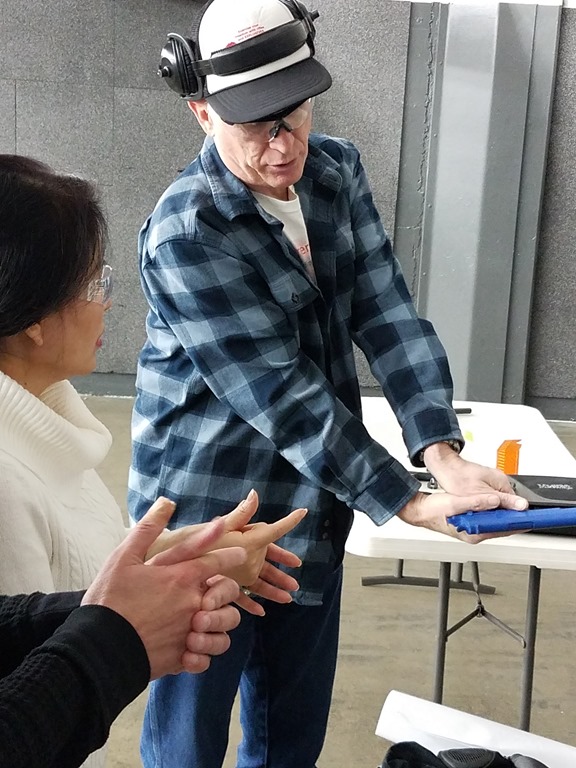
After reviewing the safety rules I used a plastic gun to show Susan and Mark the proper grip (photo by Barb):
20200119_151012

I had taught Mark to shoot a couple years ago but I don’t think he had been to the range since and he was following along with the instructions I was giving Susan.

It might be said that Susan is left handed but she uses her right hand for a lot of things. I tested her eye dominance and found she was left eye dominate. I had her first try dry firing left handed but she insisted that shooting right handed felt better. Okay, let’s see how that works out and maybe try left handed shooting later. It turned out that shooting right handed worked for her. She closes her left eye when shooting.

After she practiced gripping the plastic gun and taking a stance that was approximately correct I showed her what the sight picture looks like with the rear, front, and target all lined up.

We then moved on to dry firing a .22 with a suppressor. The first couple of “shot’s” had significant gun movement. I pointed this out and asked her to concentrate on the following through. No movement of the gun until significantly after the click. Again and again I repeated, “Trigger prep, sight alignment, squeeze, follow through”. After just two or three dry fire clicks the gun was remarkable solid.

I loaded the gun and she fired a live round for the first time. I didn’t see any flinch or movement except that caused by the recoil of the gun but the shot was way high. Odd, try again. Again it was high but a little closer. Again and still high. I looked over her shoulder and could see she was aiming high. I stopped her and went to the target with her and the plastic gun again. I pointed out the front and rear sights and how they should align on the target. I told her to keep the front sight in focus and the target and rear sight would be slightly out of focus.

Still she was shooting high. I encouraged her get the sights lined up on the target but she still kept pointing it way high. At the end of the first magazine she finally got two rounds on the target from about 10 feet away.

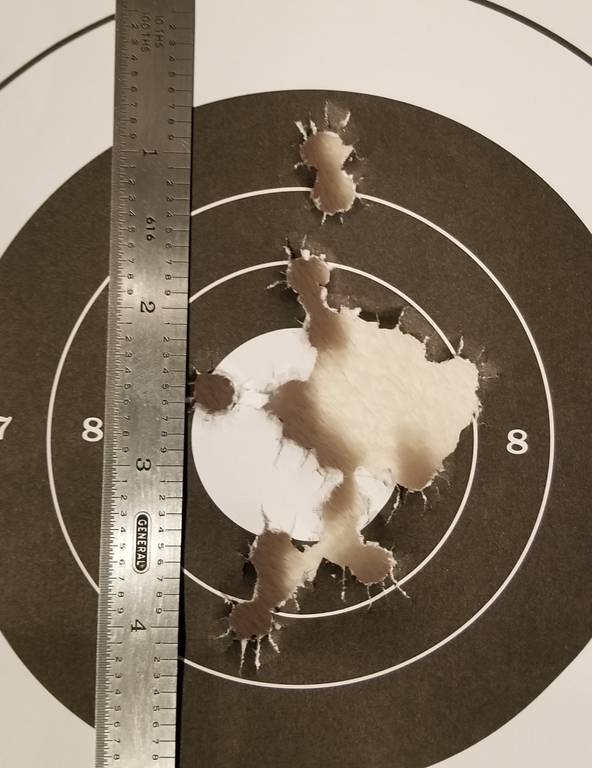
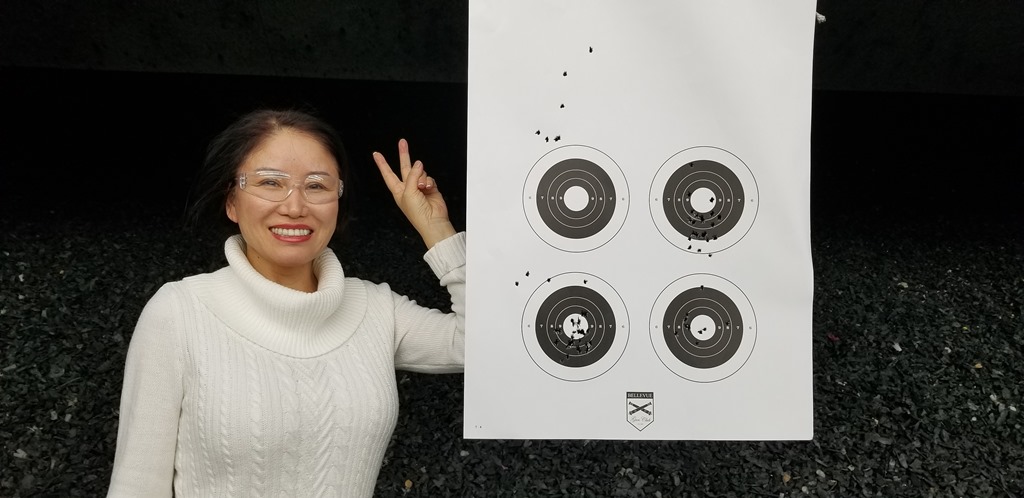
After putting in the second magazine she started getting all the shots on the target. She told me she had just been using the front sight at first. Oh! That was the problem. Somehow I hadn’t connected with her on the two sights. She went through several magazines and the groups kept improving. Here is her first target with her new shooter smile:
20200119_155030

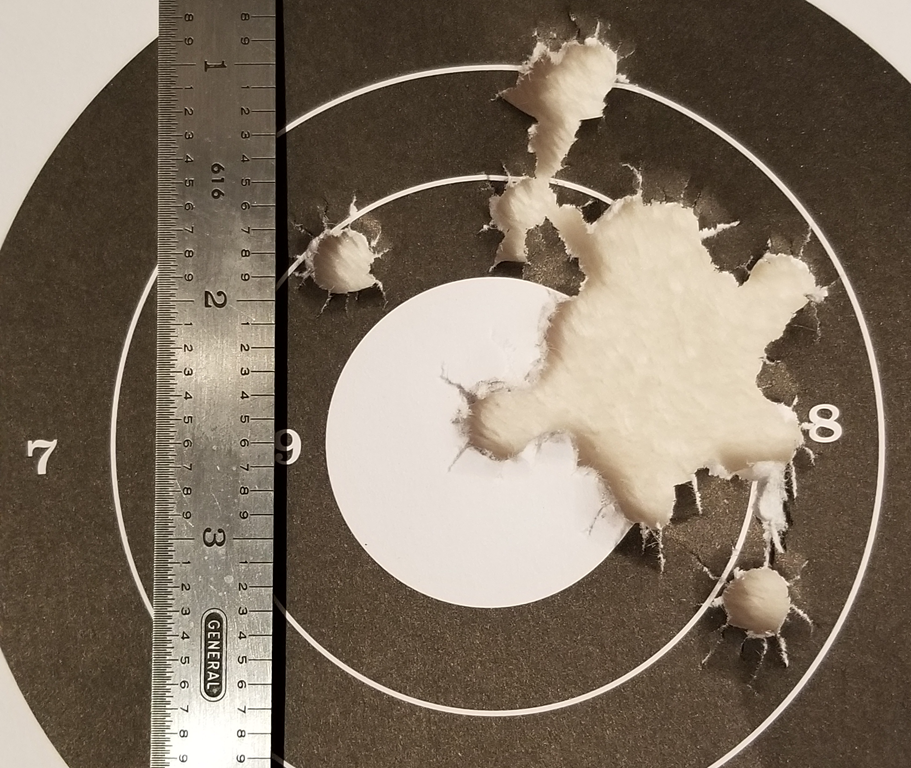
I put up a fresh set of targets and had her shoot at one target, move to the next, shoot it, and continue until she shot five times. One shot on each of three targets and two shots on the target which was the first and the last shot. Then repeat which would empty the magazine. Repeat with another magazine. She got really good hits and I encouraged her to shoot faster and faster as long as she was getting all the shots inside the rings.

I took off the suppressor to reduce the weight and let her experience more muzzle blast. She shot still faster and never had a miss. Here is her target after several magazines:
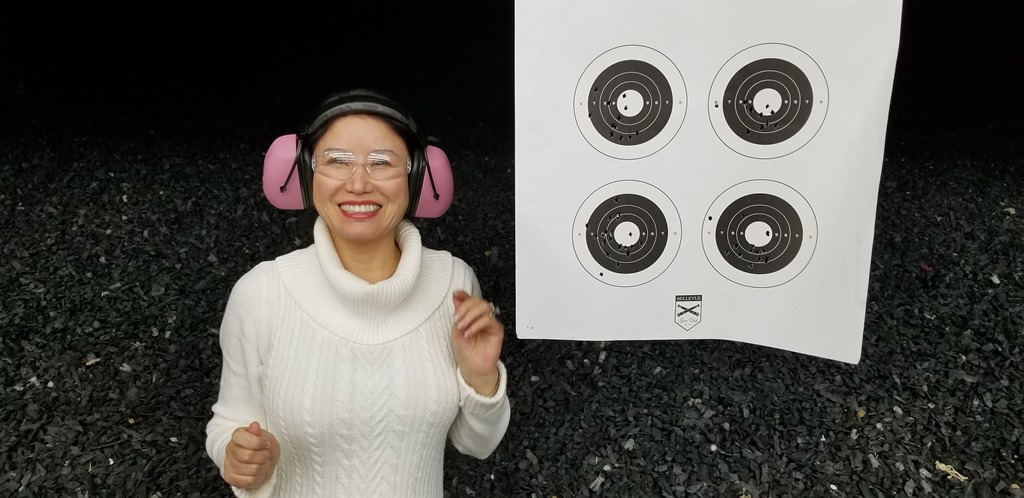
20200119_160533

I moved on to self-defense shooting. I told her about what I call the four Bs. There are only four ways you can get a bad guy to stop their attack:

  1. Brains—You get a central nervous system hit and shut them down. This includes the upper spine as well as the brain.
  2. Bone—You shoot and break their pelvis or other major mechanical supporting structure allowing you to escape.
  3. Blood—You shoot them in a vital circulatory system causing them to lose sufficient blood pressure to remain conscious. Typically this is accomplished with shots to the heart and lungs.
  4. Balls—They loose courage and stop the attack because they don’t want to get shot or want to stop getting shot.

Although number 1 is the quickest end to the attack it is a very difficult shot because the head is easy to move rapidly and it’s almost a reflexive move when a gun is pointed at your head. Plus, with pistol calibers the only dependable way to get into the cranial cavity is through the eye sockets. The curved and angled skull can deflect the bullet such that it doesn’t penetrate. Getting a bullet into the eye socket is an extremely difficult shot on a moving target.

Number 2 is a little easier if you are shooting a reasonably large caliber at the pelvis. They can’t get their pelvis out of the way as quickly and reflexively as their head. But the hips, which are most easily broken are still a small target compared to number 3.

The first target should be number 3, the upper chest. It’s difficult to move the chest area rapidly because it’s near the center of gravity. The heart and lungs are a much larger target. These are what should be shot first. If that doesn’t get the desired results after a few shots then start targeting number 2 or 1 (photo by Barb):
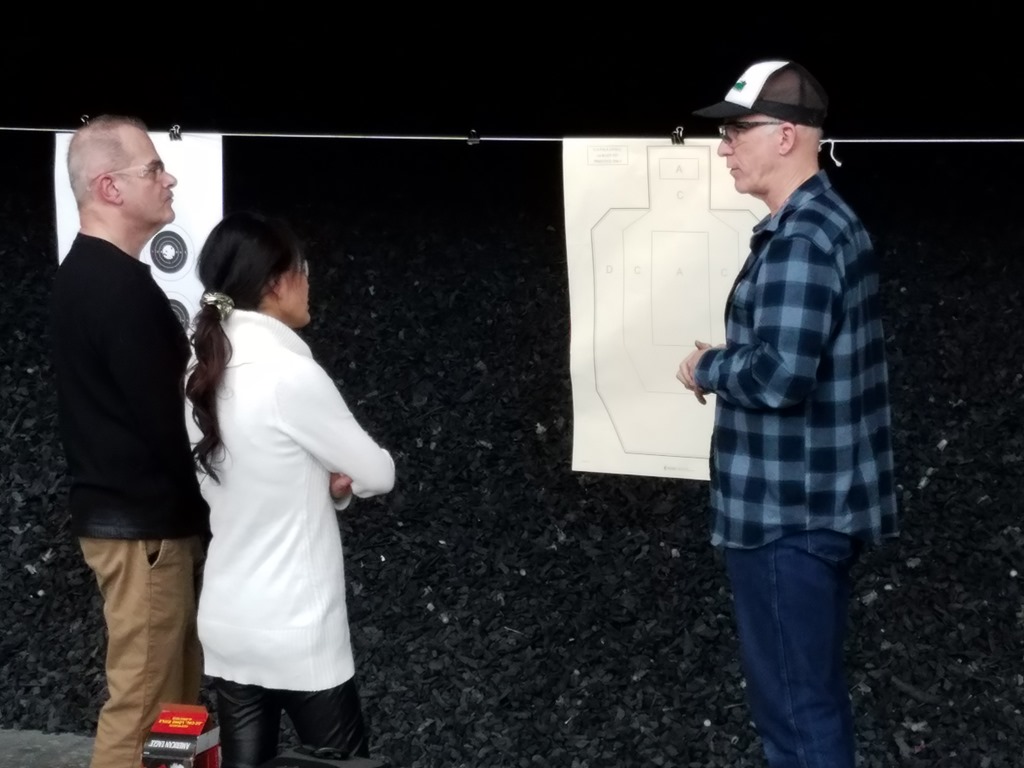
20200119_161826

How many times do you shoot? You shoot until the attack is stopped. If they turn and run you are done unless they are putting another innocent life in imminent danger of permanent injury or death.

I explained you can’t shoot someone just because you don’t want them in your yard. You can only justifiably use lethal force to defend yourself or other innocent people from imminent danger of permanent injury or death. Washington state does generally consider someone who has broken into your house, knowing that people are present, as sufficient justification to use lethal force. There are some situations where this is not going to be true. A healthy adult male shooting a 10-year old who broke a window and came into the house is probably going to jail. The resident has to use reasonable judgement.

Susan first used the .22 pistol with good results:
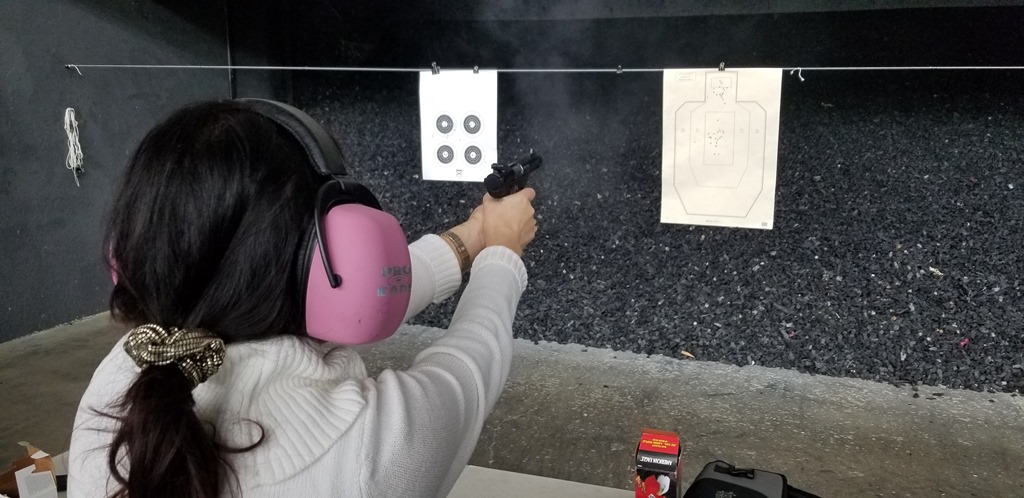
20200119_163343

20200119_163028

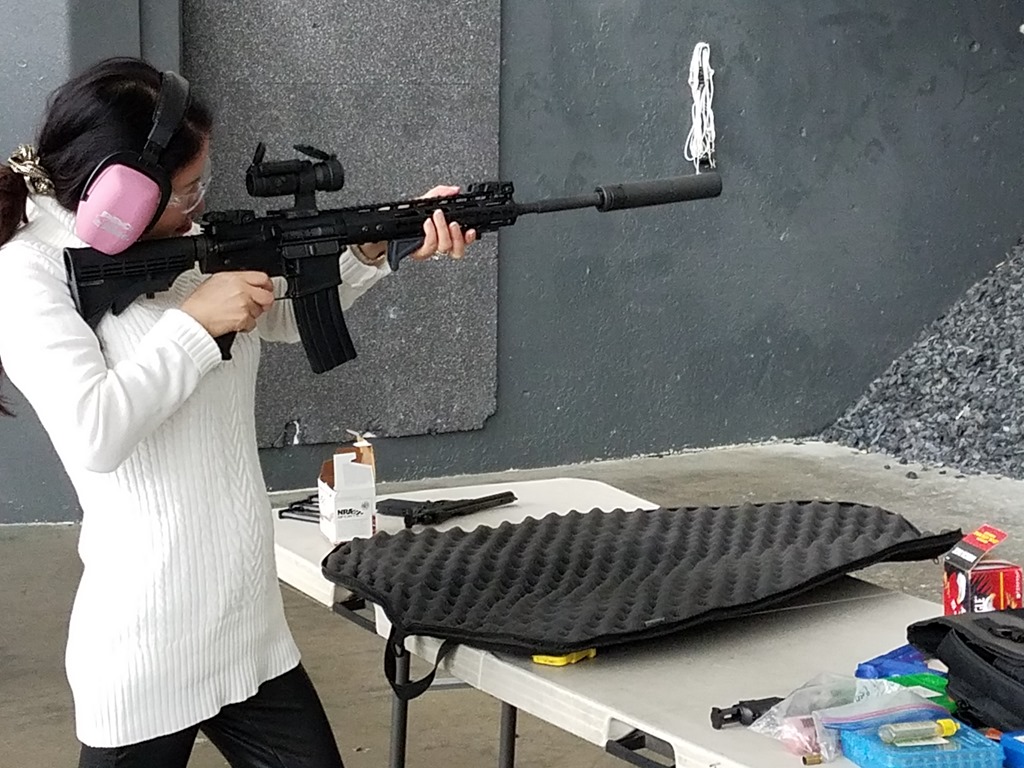
After several magazines with her shots doing well I had her try my .40 with some powder puff loads. They wouldn’t cycle the gun when Susan was shooting it. I tried to get her to lock her wrists and hold it firmly but she just didn’t have the strength to keep the gun solid enough to cycle. I switched out the ammo to my major Power Factor loads. It cycled with the two shots she took but she was uncomfortable with it and I moved her to a different gun for her defending herself in the inside the home scenario:
20200119_163903

This is a suppressed AR with a red-dot sight. I explained the bullet, even though it is the same diameter as used by the .22 she had been shooting, is moving about three times the velocity. This additional velocity will cause much more damage to an attacker and one or two solid hits will have as much “persuasion power” as a whole magazine out of the .22. Plus it is easier to get good hits. Even from the top of her stairs to the front door of her home she could easily get hits that would be difficult with a handgun.

She fired a few shots with it then I moved her back to about eight yards from the original three or four yards. She continued to get good results but the gun was too heavy for her to be comfortable with it. I took off the suppressor since it’s actually a .30 caliber suppressor and much heavier than it needs to be. I should get one sized for 223.
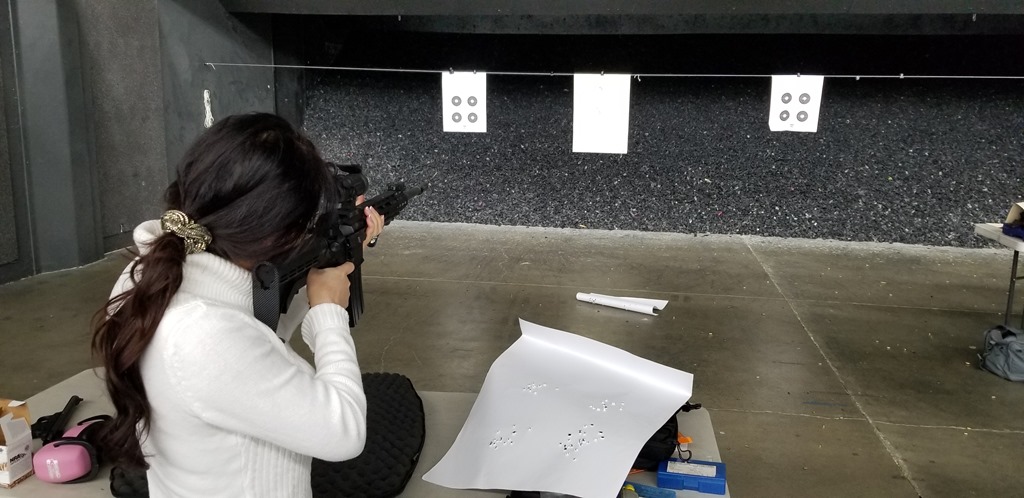
20200119_164238

With the much louder muzzle blast she still did fine and even said she liked that, “Because it will scare them away!” I told her that especially if she is indoors it will require she be wearing hearing protection because it would cause permanent hearing damage to shoot it without ear protection.

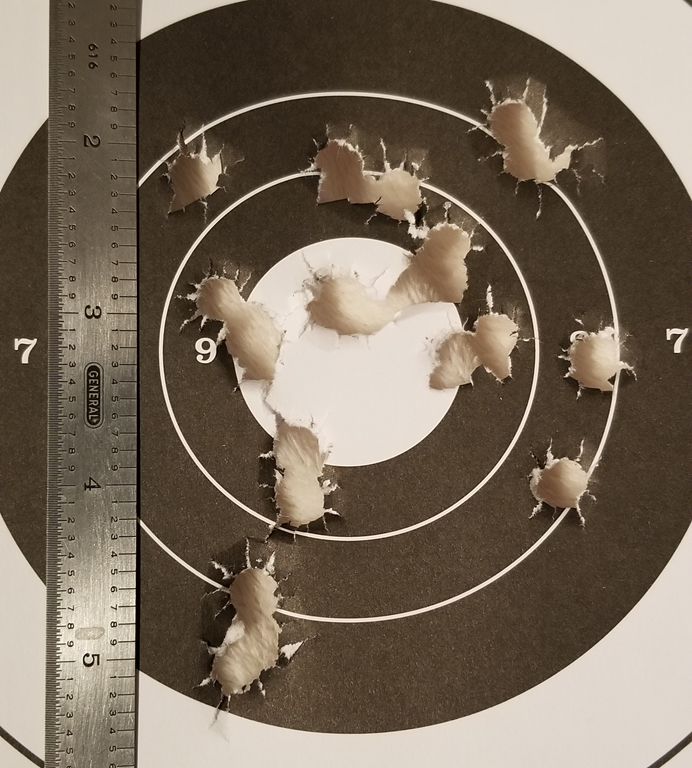
Here is her final target:
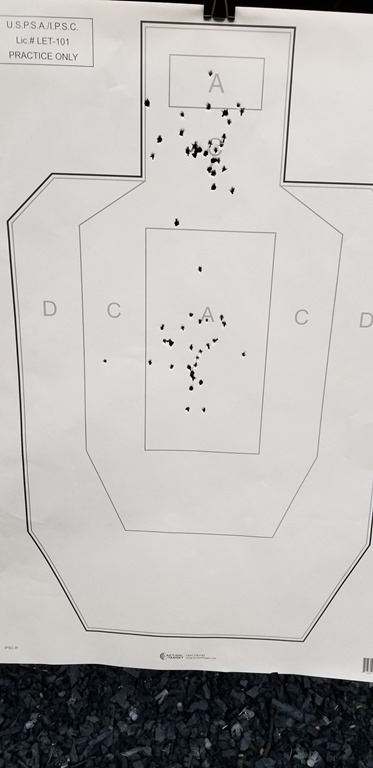
20200119_164559

Our range time was up so we cleaned up and made plans for the next stage of her firearm skills development. I gave them a link to Insights Training for the General Defensive Handgun class. She will need to have her own gun and she needs a little more preparation to be ready for the class. We will go to the range again soon and they will try out various guns to see what works best for them at this stage of development.

As we were leaving Susan again told me, “I had never touched a gun before.” She went on to say, “I thought we would just look at guns today. I didn’t think I was ready to shoot one!”

She did fine. Guns aren’t so difficult that you can’t be safe and functional within a couple hours. You can spend years becoming an expert but you can successfully defend yourself with a few hours of training and practice. Just look at the last target for the proof.
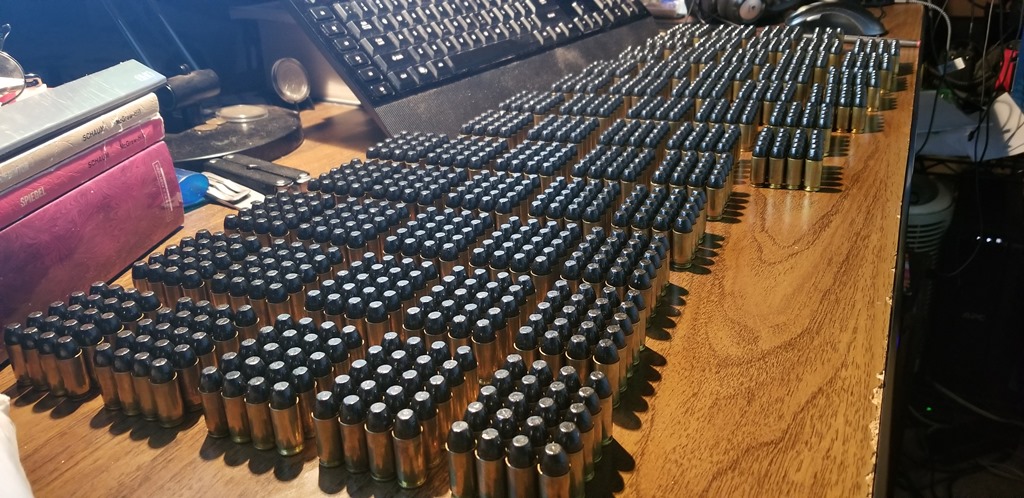

Rounds in the last month & yearly report

This year was a bit slow on the reloading front. I spent a lot of time working on precision ammo for .300 Winchester Magnum and .223 rifles. Individually weighing the charges to less than 0.1 grains is extremely slow compared to the .40 S&W rounds I pump out on the Dillon XL650. And then there is the case preparation that consumes several seconds per round on top of that.

The last couple of months my supply of .40 S&W practice and USPSA match ammo became critically low and I ignored the rifle ammo. This last month I reloaded 5,786 rounds of .40 S&W. This is more rounds in a single month since the first month I began reloading. That was 10,944 rounds of 9mm in November 1997.

5,432 of those .40 S&W loads were 180 grain polymer coated bullets from Black Bullet International. This finished off my supply of those bullets and I loaded one box of the 200 grain bullets (552 bullets in a box instead of the stated 550). Mixed in there were test loadings of CCI 500 primers instead of the usual Winchester WSPs. I really like the Winchester primers but I thought would be a good idea to have loads for the CCI primers if we get into a situation where reloading components are difficult to get.

This brings my rounds for the year up to 12,114 and my lifetime count up to 143,638.

My yearly and lifetime reloading numbers are below,

Continue reading

Boomershoot 2020 registration is now open

Today, as of 9:00 AM PST, Boomershoot 2020 registration is open to everyone. For the last several days Boomershoot 2019 participants and staff have selected their positions. The long range event on Sunday still has 42 of the 76 positions available. The Friday and Saturday Precision Rifle Clinic still has lots of openings with only three and four of the 16 positions taken on each day. The Field Fire, practice on your own with the steel targets with a range safety officer, is an alternative to the Precision Rifle Clinic and doesn’t have a practical limit to the number of people who participate.

The High Intensity events on Friday and Saturday evenings have five and 10 of the 25 available positions still available.

“What are the High Intensity events?”, you might ask. A few years ago Oleg made a great video which captures it:

The Sunday long range event is a little harder to capture. The thumps to your chest don’t come through the filtering of the video camera:

Anette gives you an overview of the entire experience:

And once experienced you will never forget the opening fireball on Sunday morning:

Boomershoot 2019 Fireball from Joe Huffman on Vimeo.

Register for Boomershoot 2020 now for an experience you will treasure for the rest of your life.

I want this for Christmas

Bolt action in .300 Win Mag for targets out to 1200 yards. It will compensate for target velocities up to 20 MPH and tracks with a precision of 0.047 MOA.

When one is available in semi-auto, 20 round magazines and will lock on targets out to 1000 yards I want one of those too.

I was productive today

This is just part of the ammunition I reloaded today:

20191208_174417

Major power factor loads using 180 grain bullets chambered in .40 S&W. These will be used both for practice and USPSA matches.

Boomershoot 2020 registration opens soon!

I finally have the new credit card processing working. I had to move the websites to a different hosting provider. For various reasons, I am abandoning the boomershoot.org domain. Everything is now on boomershoot.com.

Entry opens to Boomershoot 2019 participants on Wednesday December 11th at 6:00 PM PST. When you sign up, the site checks your name in the list of 2019 participants. It will fail to find you in 2019 if you use a different name with this entry than you did last year. The classic is ‘Robert’ versus ‘Bob’. If you can’t figure out why you aren’t being recognized send me an email and I’ll look up your entry from last year.

Entry for everyone begins on the first day of winter, Saturday December 21 at 9:00 AM PST.

Sign up soon so you don’t lose your favorite position (or something close by) to someone else.

Federal Air Marshal Qualification

I tried this years ago and failed. I should try it again.

Federal Air Marshal Qualification: Test Your CCW Skills

Commonly called the “old Air Marshal (FAM) course,” it was created for Federal Air Marshals in 1992. In cooperation with the Office of Civilian Airline Security, it was developed by a private instructor in the Fort Bragg, NC, area who routinely taught skills to certain units based at that facility. It eventually became the qualification course for all Federal Air Marshals. Those who passed it received their flying orders. Those who failed went back for more training. It was not an easy course. In fact, when senior officers from the Joint Special Operations Command attended and reviewed the course in 1998, their opinion was that those passing the TPC were among the top one-percent of pistol shooters in the world.

I expect I will fail again but I now have easy access to a place where I can practice on the stages I difficulty with.

Hanging target stand

This looks like it should be a good product:

It’s definitely a good ad.

Chicago isn’t that violent

Via email from Don W.

TailGunner

I suspect this report is somewhat exaggerated.

Labradar chronograph on sale

My chronograph died a couple years ago and I went shopping for a new one. The radar based Labradar chronograph showed up in my search. At first I blew right on by it because it cost $600. I was expecting to pay something on the order of $100. But the more I looked around the more I thought about the radar unit.

No optical sensors to put up down range! I could go to the local indoor range and set it up in my stall and do my chronograph work rather than waiting for trip to Idaho or reserving the training bay to myself. It would also work under any lighting condition. Indoors I had to use special LED lights and cover the sensors to protect them from the flickering fluorescent lights. Even when I was outside if it got too late in the day there wouldn’t be enough light and I would have to supply artificial (non flickering) light. Set up and break down took time, especially with the extra lighting issues.

Another issue is that with the optical sensor chronograph you get the velocity for each shot at one particular distance from the muzzle. Labradar will give you velocities from the muzzle out to 100 yards depending on the size of the bullet. .22 caliber bullets, even under idea conditions, disappear from the radar at about 60 or 70 yards. It’s amazing it can do that well. For those with some physics and/or electrical engineering background think about the cross sectional area of the bullet and the length of the electromagnetic wave. How do you get a detectable reflection off of something that small from so far away? It’s amazing!

I finally spent the money. I rationalizing that it would save me a lot of time and I would have a lot faster turnaround during my load development. Plus I could use the down range data from a single shot fired to compute the ballistic coefficient of bullets that I didn’t have factory data for (think pulled military surplus bullets).

It was a little awkward to use at first. Then they came out with a free app for my phone. That made a huge difference in the usability of it. I am extremely pleased with it.

In a little over two years I have fired 1836 measured bullets (a few more were fired but weren’t detected because of setup error) resulting in 134 different series.

There is a single .CSV file (easily read and worked with in Excel) for each series giving the typical statistics at preset ranges and a different .CSV file for each shot fired with the velocity measured every two milliseconds. For a 1000 fps bullet this means you get the velocity of that bullet every two feet until it disappears from radar view. This is very cool!

Yesterday I received an email from Labradar saying the unit is on sale for $499.95 from November 9th until December 2nd. Details here. You need an external USB power supply. They sell one or you can get a USB charger from Amazon or elsewhere. I recommend getting their tripod. It’s sturdy and short enough you can shoot prone with it. I’m a little annoyed they don’t have more internal storage. If you have an old SD card laying around (or a smaller card with an adapter) use that. Even a couple of megabytes will be way more storage than you would ever use in a single session.

What color do you want?

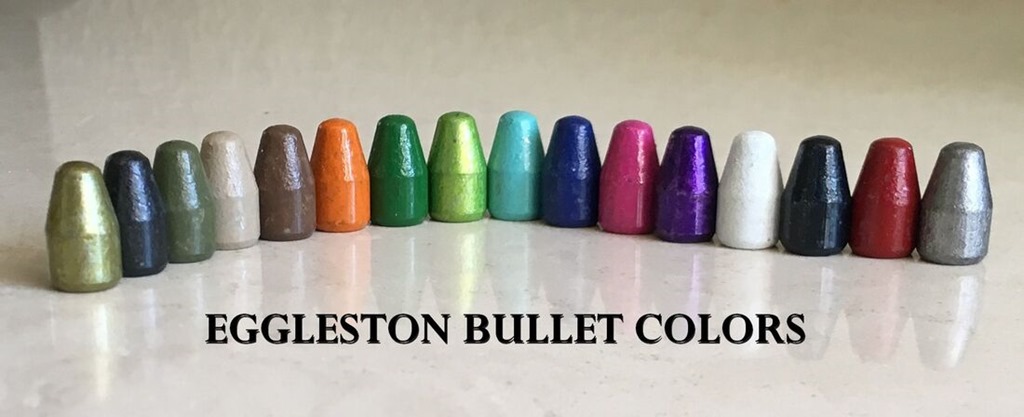
I use two different color bullets to indicate major (black) and minor power (blue) factor loads. I’ve loaded a fair number of red bullets as well. I just noticed that Eggleston Munitions has 16 different colors available now:

EgglestonBulletColors

Wow. What to do with another color (or 13)…. Maybe white for extremely low power loads for new shooters. But what about the rest? Christmas presents for the kids?

.40 caliber Black Bullets International BC estimates

I couldn’t find Ballistics Coefficients on the Black Bullets International web page so using data from my chronograph over the range of 0 to 25 yards I made some estimates for the .40 caliber 180 grain and 200 grain bullets.

I came up with 0.199 for the 180 grain bullet and 0.179 for the 200 grain bullet. Yes, the heavier bullet has a lower BC.

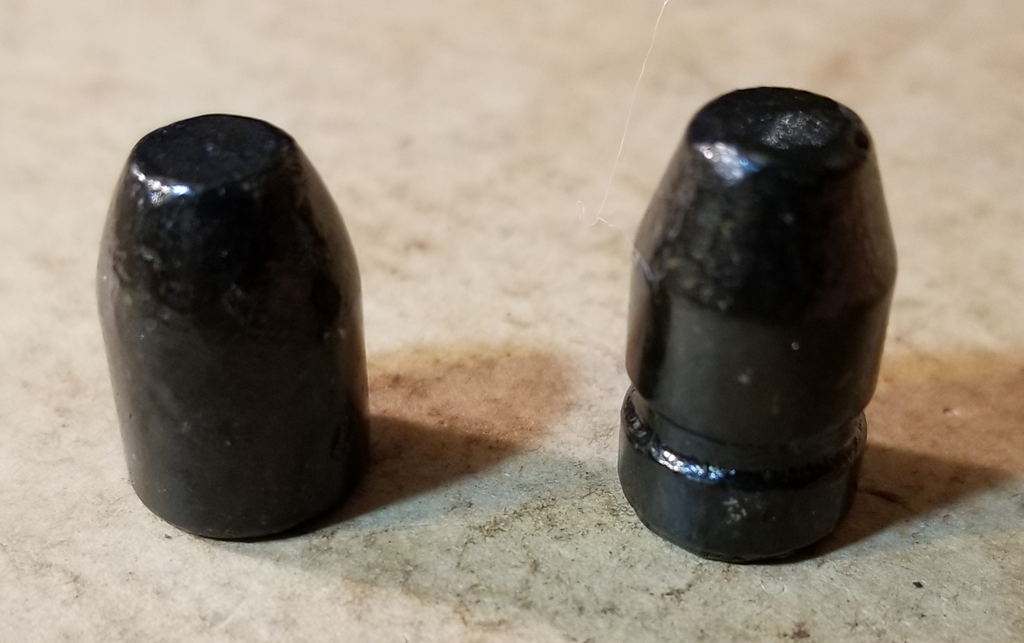
I’m a little skeptical of this although I suppose it could be possible. The two bullets look like this with the 180 grain bullet on the left.

image

The lube groove on the 200 grain bullet may increase the drag enough to account for the unexpectedly low BC.

Does anyone else have data that verifies or refutes my estimates?

Federal Syntech Action Pistol ammunition

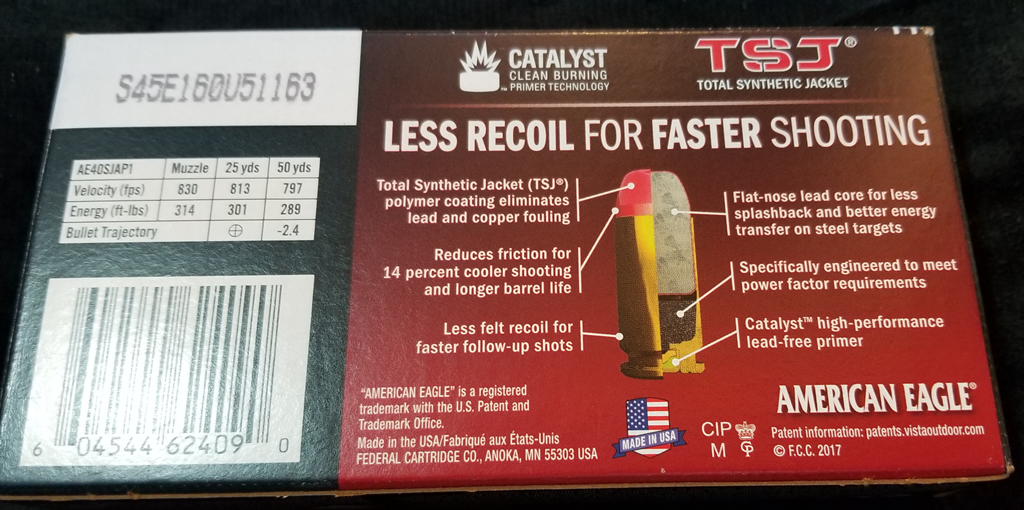
As I reload almost all my centerfire pistol ammo I have not paid much attention to new ammunition. Hence, even though it has been out for at least three years, I had not heard of Federal Syntech Action Pistol until about 10 days ago when I got this email:

Hi Joe!

My name is McKenzie, I’m a fellow USPSA shooter (though not a very good one — haha!) and I also work for TargetBarn.com. Your post the other day about the Segway shooter had me cracking up and wishing my club had better footing for some Segway shenanigans!

I’m sure you’ve heard about the relatively new Federal Syntech Action Pistol line, which is the USPSA’s official ammo. It is on USPSA’s Certified Match Ammo list, with the .40 and .45 flavors meeting major PF. It’s been a huge hit among our customers so far and there are always shooters using it at my local match.

Now I know you load your own rounds, but I wanted to see if you’d be interested in trying out some of the Syntech Action Pistol. I’ve enjoyed reading your insights on your own loads, and thought it would be interesting to hear how you think this line stacks up, especially since it’s touted as a major PF load.

If you’re interested, I’d be happy to send some out to you. Of course, there’s no pressure and no worries if you’re not interested!

Thank you for your time, and thank you for your work in bringing new shooters to the range!

Best,

McKenzie
TargetBarn.com

TargetBarn

It turns out Federal makes it in 150 grain 9mm as well as .40 and .45.

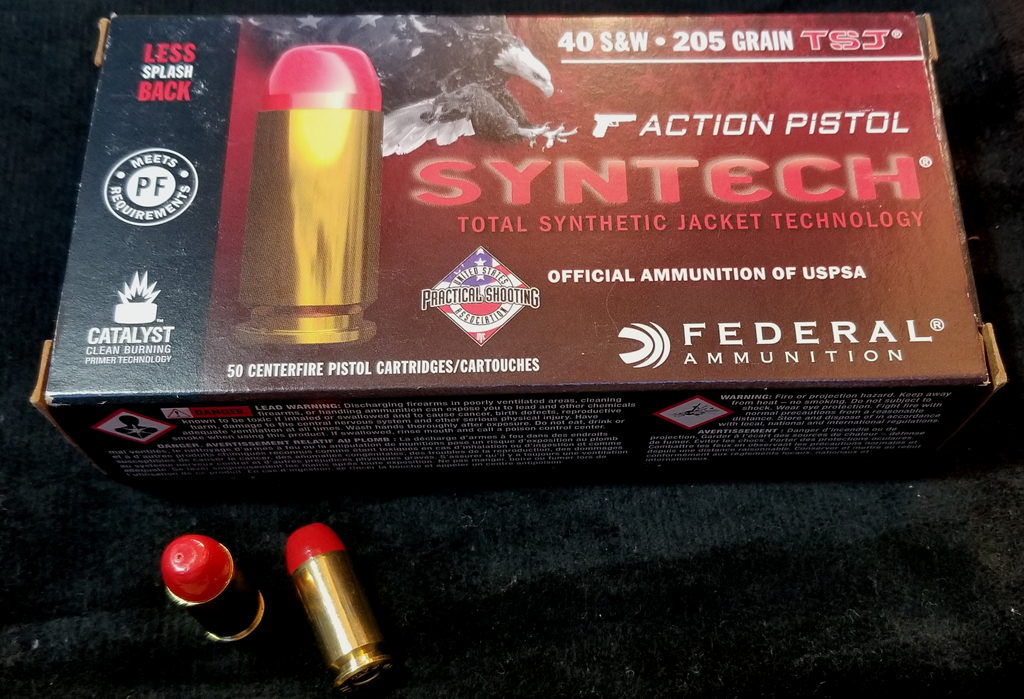
I accepted the offer for some .40 S&W:

image

image

I was very intrigued with the 205 grain bullets. I had never fired 205 grain bullets in .40 caliber. With a similar margin for making Power Factor the 205 grain bullets would yield a lower velocity than the 180 grain bullets I almost always use. The lower velocity would spread out the recoil impulse and give a more comfortable recoil. I had sort of considered it but another shooter I know said he was never able to get 200 grain bullets to shoot accurately. And here was 205 grain bullets intended for use in matches. And in 20 years I never tried it for myself.

I took it to the range yesterday and shot it through three different STI guns. I fully expected to see some keyholing at more distance ranges. I also expected it to be marginal in Power Factor for one of the guns. One gun, with the same length barrel, consistently gets lower velocities than the other two.

I was wrong.

I shot 20 rounds in each of the three guns. The Power Factors were 175.93, 179.72, and 179.89. The muzzle velocity standard deviation was outstanding: 7.1, 7.6 and 8.4 fps.

These are a little hotter load than what I normally shoot for Major Power Factor. With such consistent velocities I would not run these hotter than a PF of 170. But these guns all had barrels five inches long. If you were using a gun with a shorter barrel you would want the extra powder in these load to make sure you were reaching Major PF velocities. But even with the greater PF there was no significant difference in recoil from a new load I was test with a PF of only 168.5.

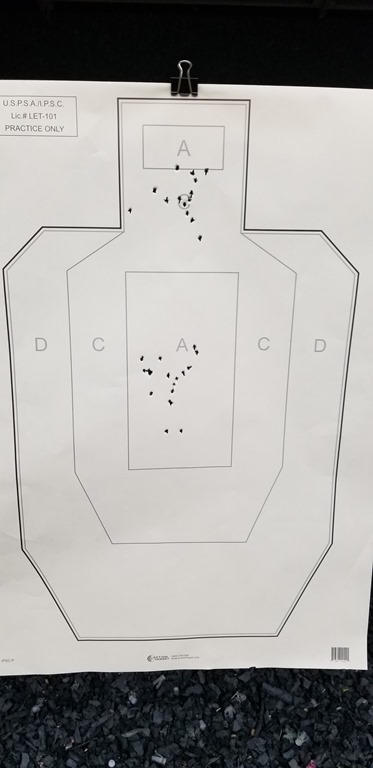
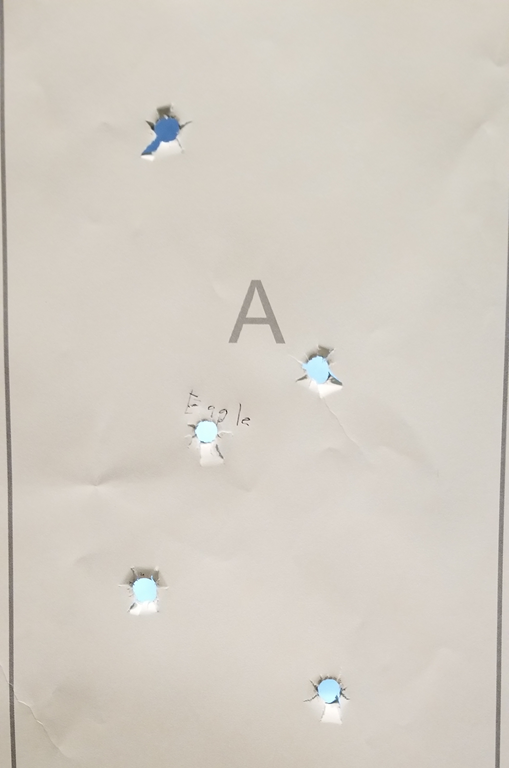
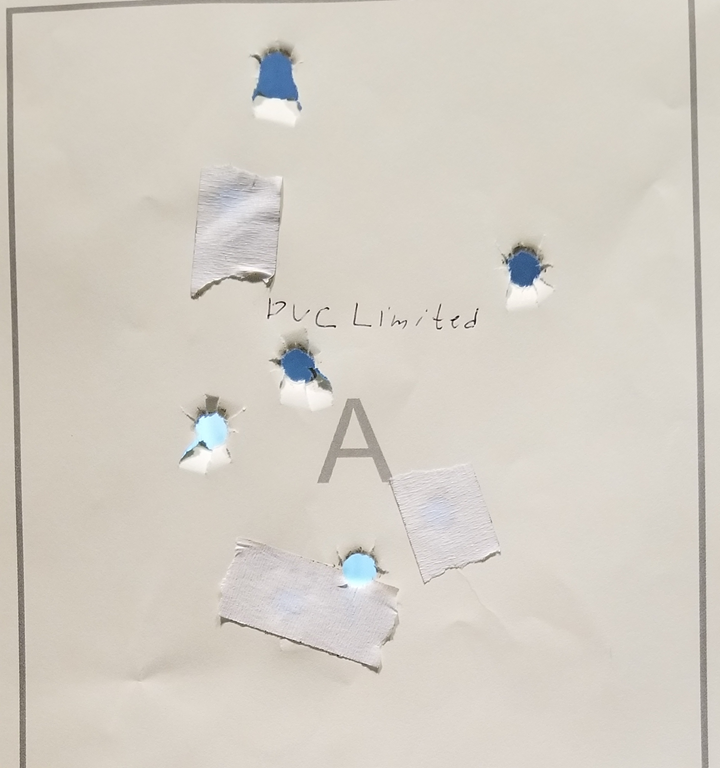
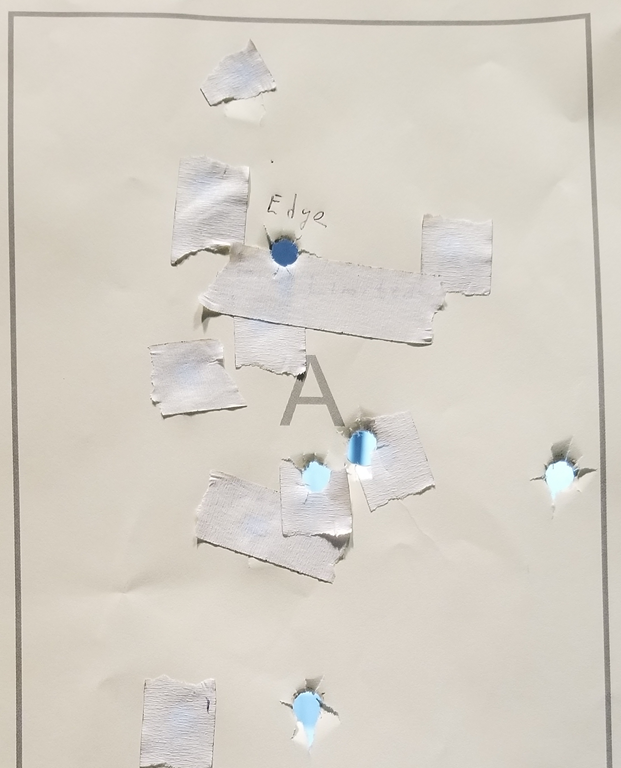
There was no keyholing. I put five rounds though each of the guns at a 25 yard target. Here are the results:

image

image

image

The accuracy was as good as my handloads. These are the 20 shots fired for velocity testing at a range of 10 yards. Some, or perhaps all, of the flyers were shooter error. With this many rounds I could feel some fatigue during the strings.

DVC Limited:
image

Edge:
image

Eagle:
image

The Eagle has never been as accurate as the other two and I don’t blame the ammo for the greater dispersion.

Today, I shot several USPSA stages at the Renton Fish and Game Club with the Federal ammo. I was pleased with how the ammo performed. No complaints at all.

Here are some videos from Federal on their ammo:

Target Barn has the ammo for $0.24/round in 9mm and $0.36/round in .40 S&W and .45 ACP.

Another bad trigger

A little over five years ago I had to replace the trigger in an AR because it would sometime double. A month or so ago I had another AR double on me. I cleaned it and tried it again. Still, it sometimes doubled.

When I took it apart everything looked good. I couldn’t see significant wear like I did with the other trigger that went bad on me. Oh, well.

Last weekend I replace the trigger group with a Timney trigger. I should have read the comments to my previous post before ordering. I have really liked the several other Timney triggers in various guns and so I just ordered another and dropped it in.

Quote of the day—Carl Bussjaeger

I would like Swalwell, Biden, O’Rourke, and Harris to note that what US gun owners consider play time is what a major news outlet can mistake for a major military offensive by the Forces of a NATO nation. Tell us again how resisting a tyrannical government is futile.

Carl Bussjaeger
October 14, 2019
Overwhelming Military Force
[This was in regards to what I posted about yesterday: Layers of fact checkers.—Joe]

USPSA shooting on a Segway

I shot in a USPSA match yesterday and one of the guys in my squad, Loke, brought his Segway. He mostly used it to move from stage to stage. But on one stage, after shooting the stage for real, he shot it while riding the Segway. I have my own video but this is better and is already posted on YouTube with this comment by the shooter:

After owning and using a Segway Ninebot for a few months, I got to shoot one of the stages for fun on it. It was a blast. You can see me wanting to go faster but the Segway’s acceleration is pathetic. I’m sure it’s for safety reasons, so I’m ok with that.

Another shooter also had her Segway and was pulling her wagon loaded with her shooting supplies while riding it. It worked surprisingly well even when traversing uneven ground.

Layers of fact checkers

When you catch them in lies (or even errors) this big the correct conclusion to draw is that nothing they say can be trusted:

ABC News ‘slaughter in Syria’ footage appears to come from a Kentucky gun range

ABC aired supposedly shocking footage Monday and Sunday purporting to be from the frontline battle between the Syrian Kurds and the invading Turks. The only problem is: The footage appears to come from a nighttime machine gun demonstration at the Knob Creek Gun Range in West Point, Kentucky.

As J.D. Rucker said:

If @ABC News made a mistake, then their incompetence is startling. If they did it on purpose (and with the edits to the video, that seems to be the case), then they’re an outright evil group of bald-faced liars pretending to report the news.

This reminds me of what WSBTV did with a video of daughter Kim shooting a Boomershoot fireball target a number of years back.

Cleaning brass

In the comments Sendarius asks:

When you say “clean”, how do you do that?

Vibratory tumbler with dry media?
Rotating tumbler with wet media?
Power drill with a Brasso-soaked rag? /jk

I have been using a Lyman tumbler with walnut shell dry media for years, and I am considering switching to wet solution with those tiny stainless steel rods.
Others at my club have made that switch, and their brass looks amazing.

Any thoughts?

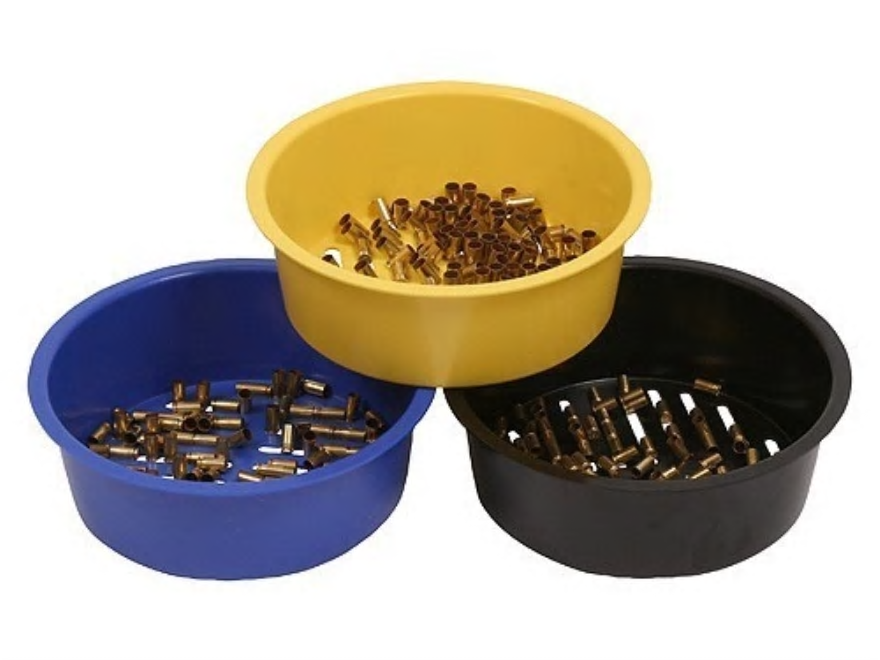
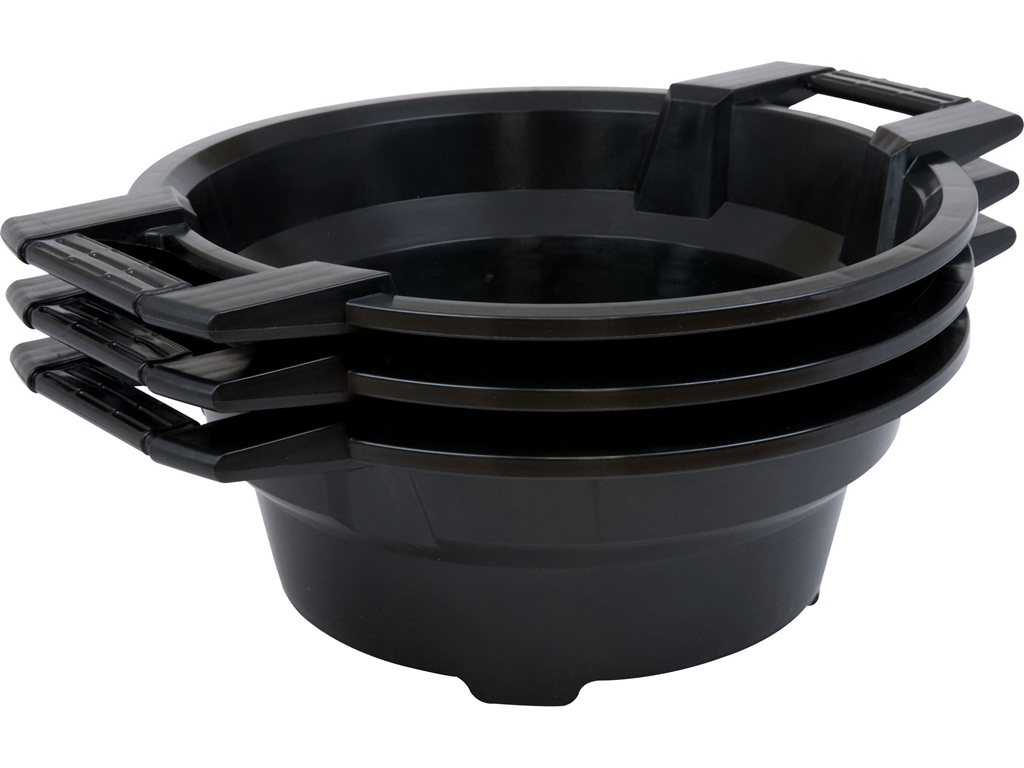
I first sort the brass using a set of these (Amazon also has them for $10 more):

image

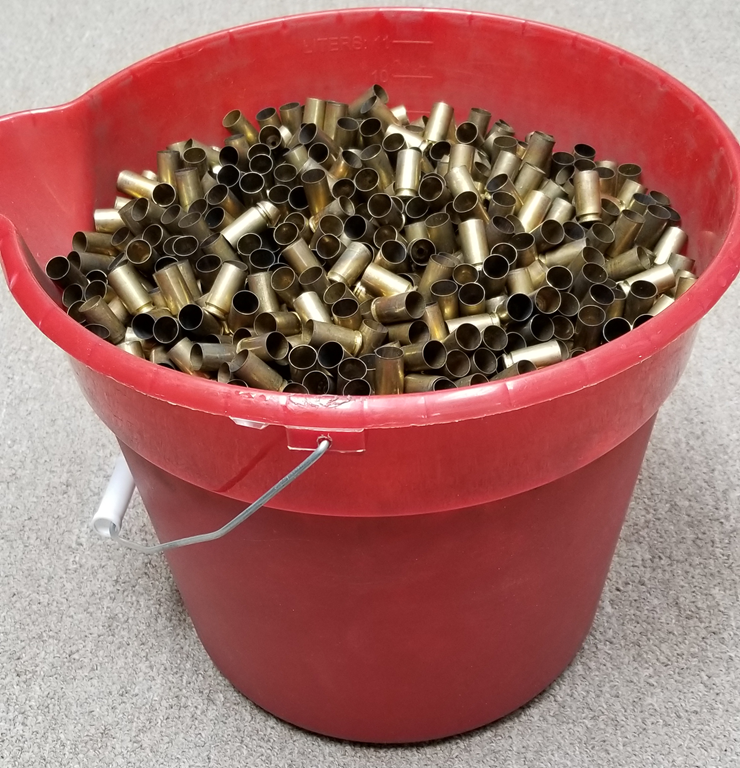
This is how the brass ended up in a five gallon bucket.

There is a similar product available for less money but I have not had my hands on them so I can’t compare the quality:

image

Amazon sells it for the same price.

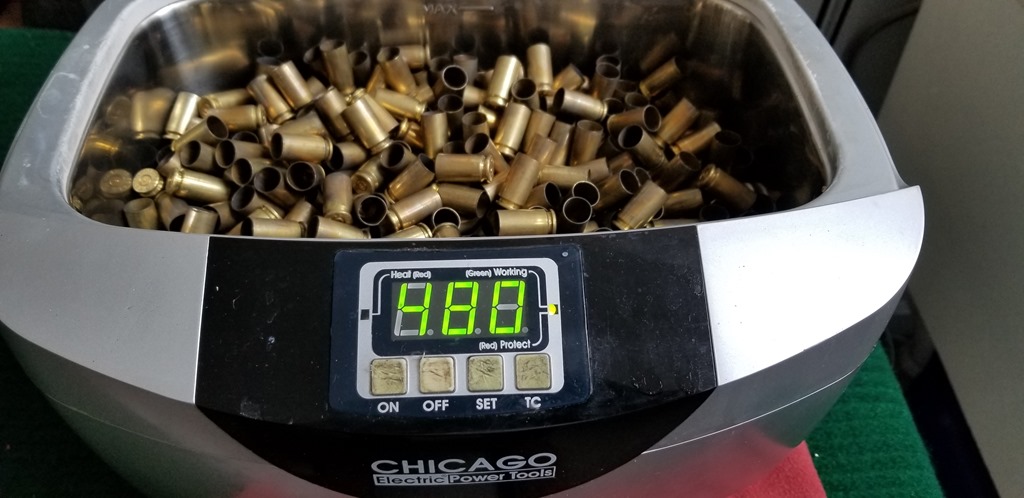
I then put the brass in an ultrasonic cleaner (I bought mine from Harbor Freight several years ago but Harbor Freight is slightly more than Amazon for what appears to be the same product):

20190929_124113

I use Hornady One Shot Sonic Cleaner Ultrasonic Case Cleaning Solution. I tried a homemade recipe using vinegar and Dawn dishwashing detergent but this works much better. I run the cleaner for at least 24 minutes (three cycles of 480 seconds each).

After the cleaning the brass may not look that great. But most of the remaining dirt/tarnish will come off in the rinse.

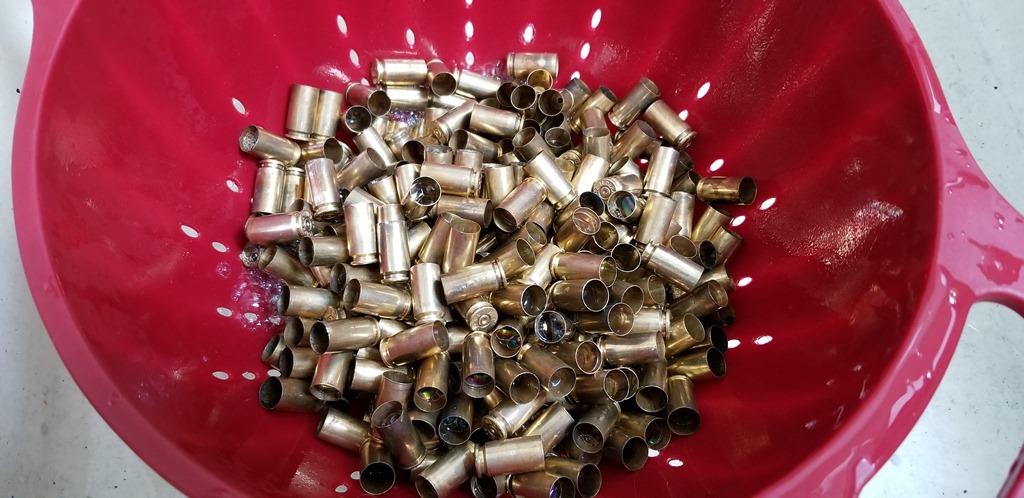
I then dump the brass and cleaning solution into a colander:

20190929_133100

I stir the brass with a gloved hand to remove most of the liquid.

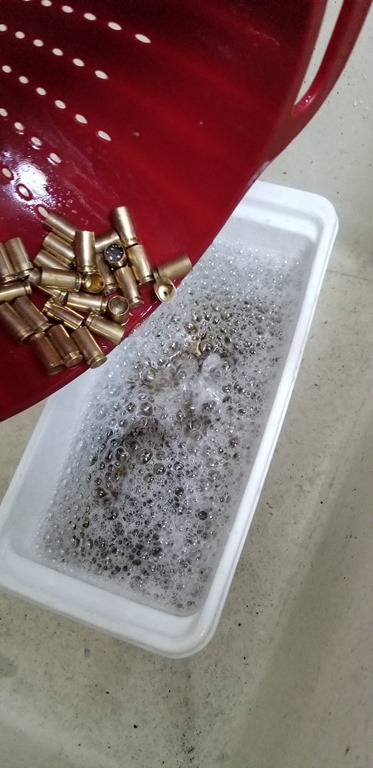
I then rinse the brass in tap water:

20190929_133330

Again I stir the brass with my hand.

I drain and rinse two more times. The final rinse is done with distilled water from my dehumidifier.

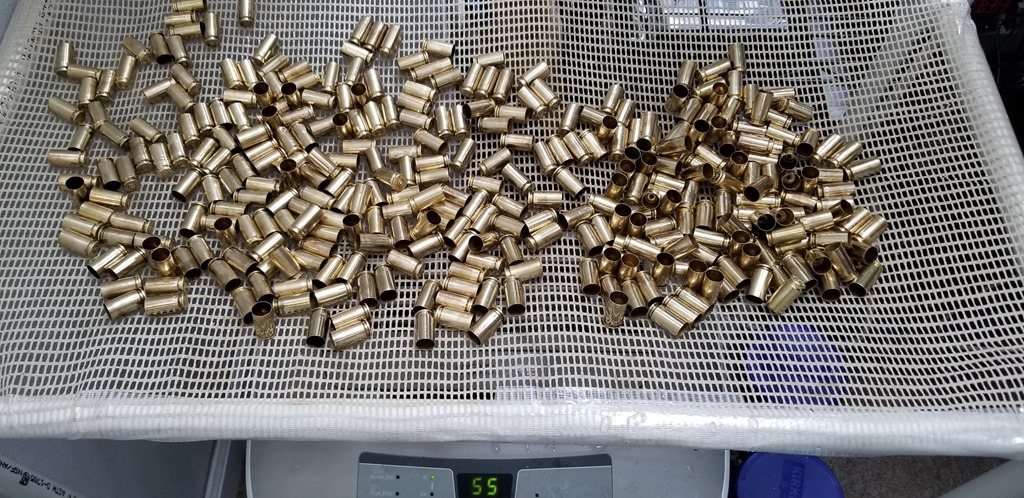
After the final draining I put the brass on a rack above my dehumidifier. I built the rack from PVC pipe, a plastic screen, and transparent duct tape:

20190929_123929

The dehumidifier puts out warm dry air. I usually let it run for about eight hours and I may stir the brass a time or two.

When cleaning rifle brass I may remove the primers before cleaning. This will result in clean primer pockets as well as a clean interior and exterior.

If I want really shiny brass I will first run it through the vibratory cleaner with the usual corn cob or walnut shell media and a brass cleaner additive. I then follow up with the ultrasonic cleaning.

For many years I just used the vibrating cleaner with the corncob or walnut shell media but the ultrasonic cleaner gave me a faster throughput and the cases are cleaned on the inside as well as the outside.

I considered buying a wet, stainless steel pin, type cleaner but I decided what I had worked well enough.

It’s time to clean some brass

I haven’t reloading any .40 S&W ammo in a long time but that doesn’t mean I haven’t been shooting any. Here is a partial illustration:

image

This is what I have picked up of the floor after practice as the local range before I sorted and cleaned it. Maybe five percent of that is 9mm or .45 ACP that got mixed in as I scooped it up. That this bucket is full means I don’t have a place to put the brass I’ll bring home from the range this week.

It’s time to sort, clean, and put away some brass.

Ammo aging

This last weekend I finally got around to doing some chronograph work on some (relatively) new loads I made last February. To make sure the chronograph was all set up correctly I fired some old rounds that weren’t marked but I was pretty sure what they were. The mean velocity should verify or disprove my hypothesis as well as do the function check on my chronograph setup.

The mean velocity was 3507.92 fps. I looked up the last time I had reloaded and chronographed the ammo. I last reloaded that bullet in April of 2001 and chronographed them using the same gun in May of 2001. The mean velocity from over 18 years ago was 3506 fps.

The ammo (and gun!) aged better than I expected. I like Varget powder even more than I did before.