1.5 Watts! Wow! No wait…

I was over at friend, Cliff’s house last night.  He showed me his new LED light bulbs.  They’re awesome.  Nice spectrum, smaller than a regular bulb, plenty of light, no observable strobe effect from the power supply, and IIRC they used only 1.5 Watts.  Cool to the touch after being on for hours.


But wait.  This is the North.  With the low temps this Spring, we’re still heating our homes.  Therefore any reduction in the heat output of your lighting and other appliances has to be made up, one for one, by the home heating system.  Zero energy savings until we get warmer weather (outdoor lighting is of course exempt from this issue – any reduction in consumption means direct energy savings).


That means there will be maybe 120 days this year in which your ultra efficient indoor lighting pays off anything in this region.  Remember that when making your pay-off calculations.


Cliff is in the stage production supply business.  He showed me some of the new LED Par cans (stage lighting, in this case also computer [MIDI] controlled).  Stage lighting can be brutal on the performers, since even with the biggest, most powerful sound systems, it is the lighting that traditionally used the majority of the electrical power.  That’s why you’ve so often seen performers soaked in sweat.  We’ve been running the old, hot cans, and then running clusters of fans to try keeping the performers halfway comfortable.  With these new LED cans, it’s going to be much, much nicer to be on stage, and we won’t need to have the sometimes difficult to accommodate power requirements in our performance contracts.  This particular model also changes color by switching the LEDs, something like the way a color video display uses the different color pixels, which means no more screwing around with color gels.


Technology is wonderful, just so long as we keep the retarded politicians (but I repeat myself) out of our business.  Let them shovel shit instead.  With some training in shit shoveling, maybe they could be of some small service to humanity.  I’ve done it.  It can be quite important at times.

A bug or a feature?

I need to report this to some co-workers and at least warn them.

After leaving Microsoft last night I deleted my MS email account on my phone. The phone immediately said I needed to change my password on the phone. There were three edit boxes. One for my old password, one for the new password and one to confirm the new password. I put in the requested information and it claimed my old password was invalid. I tried again. Same problem. I then noticed it said my old password was four digits long. That wasn’t right. It had been six digits. As I tried to “get in” it started making me wait before I could retry. First it was one minute, then two, then four. When it got to 16 minutes I gave up trying plausible passwords they remotely set the device to. I got online and used the remote wipe feature to completely erase the phone.

Grrrr…. that was unpleasant. I can understand why a company would want to delete company private information off of former employee phones when they leave the company. But I did that with the deleting of the email account. The rest of the information that ended up being deleted was my personal information. They should have at least warned me so I could make sure I had all my personal information copied to a safe place.

As it turns out I think the only thing I lost was some notes about the length of some Boomershoot berms, all my SMS messages with my kids and wife from the past few months and a few things like that. Nothing that is more than annoying rather than something really important like a video of your child’s first steps or something.

The irony is that while at dinner with Ry last night he suggested I delete my email account rather than just let it expire and have Microsoft remotely wipe my phone like what happened to him when he left.

There is no privacy

I had lunch with someone today that told me they attended a “Privacy Conference” recently. One of the interesting things that came out of it was that the technologist all thought the lawyers would be the ones that would save privacy and the lawyers all thought the technologists would save it.

Other observations included:

  • Kinect has a camera, microphone, a connection to the Internet and a view of the interior of your home.
  • Many people carry a device with GPS, camera, microphone, and a connection to the Internet with them wherever they go.
  • Surveillance cameras are almost free.
  • Someone has demonstrated a system that you can take a picture of a random person on the street and ~40% of the time deliver the person’s SSN within a minute.
  • An 8-core computer processor in quantity 1 can be now be purchased for about $8.00. This has implications.
  • The UK may have millions of cameras and no improvement in their crime rate to show for it but they were trying to watch the cameras with human eyes. My fear is that we may get 100s of millions of cameras with computer eyes (Kinect technology?) and a police state to show for it.

I think I’m depressed again.

Quote of the day—Senator Al Franken

Steve Jobs said to the press that ‘we build a database of cell tower hotspots that could be 100 miles away from where you are, those are not telling you anything about your location.’ Yet in a written statement, Apple explained that the very same data would help your iPhone calculate its location. How can those two statements be true at the same time? Does this data indicate anything about your location or doesn’t it?

Senator Al Franken
May 10, 2011
Senators press Apple, Google for answers about location tracking
[I know! I know!

While Apple is a direct competitor to my employer (Microsoft) with this product and it’s not in my best interest to defend them I feel compelled to say that in this particular instance Apple is getting a bum rap. I worked on this same feature in Windows Phone 7 and understand the problem very, very well.

The answer given wasn’t the best and that probably made it difficult for Franken to grasp the concepts. So I’ll try again. Almost for certain this is how it works. The phone obtains a collection of cell tower  locations and unique cell tower IDs in a particular geographical area. This area could be a rectangle that is 100 miles by 100 miles on a side. When the user requests their location the phone obtains the unique ID of the cell tower the phone is connected to. The ID is looked up in the collection of cell towers, just as someone’s name might be looked up in an address book. The location/address of the cell tower is then returned to the user as the best estimate of the user’s location.

As long as the cell tower IDs used for location lookup are not stored then the best that can be done by examination of the files on the phone is to see the different cell towers (and Wi-Fi) collections that were stored. As long as those collections were large (100 miles by 100 miles per collection) then the best that can be deduced is the user was someplace within that collection area. If the collection area is much smaller, say 100 feet by 100 feet (this could happen because Wi-Fi access points have much greater density that cell towers) then it becomes very important to make sure those collections are secure from snooping. If those collections are sometimes for a small geographical area and the files are not made secure then shame on Apple. They were being careless with the users privacy and should be chastised for that carelessness. But at this time I cannot conclude Apple screwed up.

So to answer Franken’s questions, those two statement can be true at the same time. The data does indicate your position within the geographical area of the hotspot locations. But that does not necessarily mean the location is know with the type of accuracy that a stalker would find particular useful–unless just knowing the city or zip code is sufficiently damaging.—Joe]

Are there any homosexuals in your home?

Telephone surveys are a valuable method of obtaining data. Sometimes they are the only means by which data on a particular topic can be gathered. But there are times when they can give you very bad data.

Suppose you did a phone survey asking if there were any fugitives from justice living at your house. My guess is the data obtained would differ considerably from the actual value.

Suppose you did a phone survey asking if you had expensive jewelry. Probably to a lesser extent but still my guess is the answers given will not be accurate.

Furthermore my hypothesis is the differences from reality to the two questions above would be be fairly constant over time. If you asked about fugitives living at your home my guess is that you might get 1 out of 100 to admit a fugitive was living there when there was one and that would not change much from 25 years ago to today.

Now suppose you did a survey on how many homosexuals live in your home. If you did the survey in the 1950s my guess is the report of a “none” when in fact there was one or more would be very high. But if the survey were done today the false reporting would be much lower.

Surveys on gun ownership suffer from similar problems. There is a threat of oppressive regulation and confiscation in some jurisdictions and there is the threat of theft by non government actors as well. Gun owners have a vested interest in not giving accurate data to some random person calling up on the phone.

Hence, I am skeptical of the latest survey on gun ownership. The huge increase in gun sales during late 2008 and 2009 was do to fear of heavy restriction. This climate of fear would have been motivation to falsely report to survey takers.

Note that this is not a VPC survey but just a VPC interpretation of a survey. Had it been a VPC survey additional motivation for error introduction could have been present as well. The VPC conclusions are almost for certainly flawed. If they were correct then Brady Campaign and VPC “membership” would be up and the NRA membership would be down. But this is not the case. I don’t think we can determine what the true gun ownership numbers are but I’m nearly certain it is much higher than that reported in the survey.

As Sebastian said to the Brady Campaign, “Keep telling yourselves that.

Boomershoot prep

Yesterday Ry, his daughter Arden, my son-in-law Caleb, and I went out to the Boomershoot site. We did tests of a new target type invented and built by Ry. It was a little disappointing. I’ll put video up someday. I’m just too tired right now.

Most importantly though is that Caleb put in nearly 500 stakes at the tree line for targets. I put in the fence posts to create “clothes lines” to support more targets in the air above (sort of, they are offset some) the ground targets. This will give us space for about 1000 targets at the tree line. The tree line is about 375 yards from the shooting line and these targets always go fast and are completely consumed. By utilizing the vertical dimension we can put more targets in front of the same linear foot of berm (backstop) space.

I also worked on getting the extra Wi-Fi access point on the shooting line working. I was not successful and in fact just before I left I managed to get the configuration set such that I couldn’t access the network via Wi-Fi.

Today I went back out and finally got the Wi-Fi working. With the three access points I can now get on the net with my cell phone (my laptop had pretty good access already) from the tree line to the shooting line to the Taj. There are very few points on the normally traveled areas of that 40 acres that I can’t get access.

I also put up some fences posts for aerial targets on the hillside. I put them at the bottom of the hill probably closer than we have ever had hillside targets before. By suspending them we get the bullets hitting more into the hillside behind the target rather than bouncing off the ground with a shallow angle of attack on that range.

Location info—why you should care

The iPhone (and cousins) storing of location information and similar activity by Android is turning out to be a pretty big scandal. Some people are saying, “I’ve got nothing to hide.” but most people I associate with don’t think that way. And since that guy writes for the NYT he doesn’t really count with most of the country anyway.

Brian X. Chen and Mike Isaac explain the issue better than I could:

Having a data file with over a year’s worth of your location information stored on your iPhone is a security risk.

So if a thief got his hands on your iPhone, he can figure out where you live and loot you there, too. Same goes for a hacker who gains remote access to the consolidated.db file. But if a thief or hacker dug into an Android device, there isn’t going to be much geodata saved on the smartphone to digitally stalk you. (There’s plenty of other data on smartphones such as text messages, address books and so forth, but at least we have control over what data we store in this regard.)

Bottom line, this data shouldn’t stick around on your iOS device, because it does nothing but put you at risk. And you should care about that, because this problem can be and should be fixed by Apple, and you should demand that.

I’m not at liberty to say much but I will say that I spent some time explaining the security of Windows Phone 7 location services to our Program Manager and Dev Manager this afternoon. Both seems satisfied with the status. It’s not as good as I would like it to be when I put on my utopian privacy hat but I think the tradeoffs made were within acceptable bounds. I’m also pleased that at every stage through the location service development process privacy was taken seriously by everyone I worked with. I had expected I would have to fight hard at times to protect location information but that was not the case. I only got pushback on some relatively minor issues, for legitimate needs, and the compromises made were acceptable to me.

WP7 location service does a much better job of protecting your privacy and giving you control over your data than the iPhone currently does and probably better than Android. And as long as I am working on location services I will do my best to make sure it stays that way.

Windows Phone 7 update is available

The Windows Phone 7 update for the Samsung Focus (and I think all AT&T Windows Phone 7 phones) is now available.

Copy and Paste is just one of the many new features and bug fixes that come with the update.

Connect your phone to your computer to install the update.

Just say no

This would not be acceptable to me:

The Michigan State Police have a high-tech mobile forensics device that can be used to extract information from cell phones belonging to motorists stopped for minor traffic violations.

If a cop were to ask me to allow him to connect his device to my cell phone the answer would be, “No”. If that wouldn’t be allowed I would attempt to do a hard reset of the phone (know how to do this so you can do it quickly) or attempt to call someone who could remotely wipe it for me.

Via email from retired co-worker Chet.

Quote of the day—TJ

Google isn’t so much a company as it is a programmers cult.


TJ
A programmer at Google
April 6, 2011
[I talked with him for over an hour. He had me convinced the above assessment is correct. Their culture is very different.—Joe]

Don’t mess with the geek

If you send a particularly offensive email to someone and don’t want it forwarded to your boss don’t depend on Outlook forwarding restrictions to protect you.

I found a way to defeat it other than the obvious taking a picture of the computer monitor with the email visible.

Blacklist plugin for Windows Live Writer

Several months ago I started using Windows Liver Writer for creating and editing blog posts. It is much better than the native editors for any of the blogging software that I have ever tried. Yes, I am Microsoft employee and this is a Microsoft product but I’m not exaggerating. It makes blogging much more pleasant.


Barron has improved the experience still more by creating a plugin for Live Writer such that it checks all of your links in your post against the Right Haven blacklist I created. Hence, if you have a link to one of the bad guy media outlets the plugin will catch it at publish time.


I did have some problems installing it. When I tried to save or run the .msi file it always turned into an .htm file for some reason. I ended up saving it as a .htm then renaming it to .msi and then running it to install the plugin. Another item of confusion was that there are two ways you can set options in Live Writer. One is from the “Blog Account” tab and the other is dropdown menu that has the exit menu entry. The first option setting method doesn’t give you all the configuration control over the plugin. Be sure to use the second method.

Brain scans detect predisposition for criminal behavior

The pointer to this article came via email from Chris M. who says, “I recommend that this be tested first on government employees who carry guns and on those who give them orders.”

Several areas of the brain have been shown to be implicated with antisocial personality disorder (ASPD), commonly known as psychopathy or sociopathy. The frontal cortex is the large part of your brain that is responsible for higher reasoning and behavioral traits, and is one of the areas that has been looked at. It’s smaller than normal in individuals with ASPD. Although there is a difference in crime rates between men and women, 77 percent of that difference goes away once you control for frontal cortex volume.

Dysfunction or abnormalities in other brain regions have also been associated with higher rates of crime and ASPD. The septum pellucidum is a region of brain tissue that separates the brain’s fluid-filled spaces, called ventricles. During fetal development, there is an opening inside this tissue that usually closes up within the first few months after birth. Individuals for whom this doesn’t happen have higher rates of arrest and conviction, and score higher for ASPD.

A key center of emotion activity in the brain, the amygdala, is another important region, and a study comparing ASPD and normal brains found deformations and a significant reduction in volume in the ASPD cohort. These were centered on the basolateral nucleus, which is responsible for fear conditioning. This suggests that one possible source of differences (or one of several interweaving mechanisms) is that ASPD-affected individuals don’t form the same sort of response to fear as normal people.

Pure Awesomeness

Where else can you find deuterium oxide (or would it be di deuterium monoxide?) uranium, thermite and jet engines for sale on one site?  Too much to mention.  Just look.

Our Fragile Infrastructure

This recent post of Joe’s reminded me.  I don’t remember whether I posted about this before, but a couple years ago during a state highway upgrade outside of Moscow, Idaho, a fiber optic line was cut.  One little line.  Typically, we think of having a cell phone, a computer with internet access, a land line, and a radio as being diversified with regard to our communications.  Well, not necessarily.


When my cell phone was unable to reach anyone outside the Moscow area I tried the land line.  No go.  Then I tried to get on line and check e-mail.  Nope.  Then I turned on the radio.  More than one station dead.  It turned out that more than one cellular service, our local internet access, much of the land line traffic, and even some radio station feeds were using the same FO line.  I don’t know if that’s changed.


I view large scale electrical generation plants in the same light.  Your local food supply may depend on one or two highways and one rail line, and the stores have been relying on the “just in time” inventory method more and more.  A similar situation may exist in your local hospital.  I don’t know.  It costs money to keep extra rooms, beds, personnel and supplies available, much beyond the normal demand.


We tend to take a lot for granted.

We cannot go back

Co-worker Chet stops by my office and chats every once in a while. We both grew up on a farm, we share similar views on the world, and have similar concerns about the current economic situation. One of the concerns is the potential for world wide economic collapse. This has lead us to ponder how we might deal with the collapse of technology. How would or could we survive in a world with greatly diminished supplies of various natural resources such as oil, metals, fuels, and even water (electricity is needed to move it for irrigations as well as direct human consumption). As a consequence of those reduced supplies the food supply would be dramatically reduced. Our total population as well as the distribution of that population would make “going back” even to the time of our childhood (the 50’s and 60’s for Chet and I) nearly impossible without dramatic and extremely painful consequences.

Some of the concerns are that food production today is heavily dependent on oil based fuels, fertilizers, and pesticides. The yields (bushels/pounds per acre) on the farm today about almost 50% greater than what they were when I was a small child yet our food surplus is smaller than what it was then. If we were to attempt to go back to horse powered farm production it would take something like 20 years to increase the horse population adequately and it requires about 1/3 of the farm capacity to feed them.

The food distribution problems are just as bad. The populations of major cities require food (and frequently water) be brought in from at least 100 miles away if not 300 miles away simply because the land within a smaller radius is not capable of supporting a population that size. How do you transport the food with greatly reduced oil supplies? We can’t produce enough fuel on our farms.

Shall we talk about heating? Coal, natural gas, and oil either directly or indirectly via electricity produce much of the heat for our buildings. How are those supplies going to hold up in an economic collapse? The metals to distribute electricity are already being stolen and sold for scrap (H/T to Roberta). Read Doctor Zhivago or watch the movie. It’s a novel but it was based on events from the Russian revolution and civil war of the early 20th century. People will burn their furniture and even their own houses to keep warm. In todays world I expect even pieces of streets and road (asphalt) will disappear in the night to be burned as heating fuel.

Apparently these concerns are far from new. Yesterday Chet sent me an email (bold added):

As we have discussed several times we cannot easily go back to our parents or grandparent’s way of life if we lose today’s technology.

It looks like this idea has been known for some time. I found this quote in ELEMENTS OF TECHNOLOGY published in 1831 (second edition).

“The augmented means of public comfort and of individual luxury, the expense abridged and the labor superseded, have been such, that we could not return to the state of knowledge which existed even fifty or sixty years ago, without suffering both intellectual and physical degradation.”

Full book at: http://www.archive.org/details/elementsoftechno00bige

That is from 1831!

The civil unrest in the Mid-East is not just something that happens someplace far away. Wisconsin may be the first sign of stress in the U.S. but other states are very close behind and things are going to get far worse before they get better. The attitudes of the people protesting economic belt tightening and demanding revolution will guarantee it. A lot more people need to do a reality check to avoid disaster.

A brief family discussion about these concerns late last year resulted in daughter Kimberly taking it upon herself to read up on how to make your own simple medicines, grow various foods, and we made plans to plant fruit trees on some of our land. Kimberly now has avocados trees about two feet tall and pumpkins blooming in our living room:

KimsPumpkin

We might not be able to go back without suffering intellectual and physical degradation but some people will survive. Will it be you? Or should anyone even be concerned? I am concerned. Far, far from everyone has sufficient land or a Kimberly in their family.

Quote of the day—Lawrence Johnston

To the people of Japan, from my friends in China.

Lawrence Johnston
August 5, 1945
Message written in black marker on the atomic bomb soon to be dropped on Hiroshima Japan.
From his Los Alamos presentation given August 9, 2006.
[For those of you who are unfamiliar with the reference to China do a little reading on Nanking. Johnston had spent some time in China before the war.—Joe]

Lawrence Johnston

A few years ago a friend of mine and I were talking about nuclear bombs and he said something about all the scientists involved with the development of “The Bomb” were now dead. I told him, “No. Johnston is still alive.” “Who is Johnston?” Johnston, I told him, was the guy that invented the detonators. After the war he was a physics professor at the University of Idaho and still lives in Moscow. I’m not sure my friend really believed me. Why would someone with a background like that end up in a backwater college like the U of I? I disputed this. The U of I has done quite well for itself and has nothing to be ashamed of—well, except for perhaps Larry “Wide Stance” Craig. Other famous graduates or professors include Sarah Palin in the class of 1987, Dan O’Brien (class of ’93), and Margrit Von Braun (daughter of Wernher von Braun).


Back to Johnston—I got my undergraduate degree at the U of I and took several physics classes there. But none of them were with Johnston even though he was there at the time (’67 –> ’88). But I would occasionally see mention of him in the news and I was proud to have him in my home town.


Last week wife and physical therapist Barbara called me up and excitedly asked me, “Do you know who I have as my patient?” “No. You don’t tell me that information unless you get permission from the patient and you haven’t done that for several weeks now.” My taking her literally somehow didn’t damping her spirits as it usually does and she went on to tell me that it was one of the scientist who worked on the first atomic bomb. “Johnston?”, I asked. “Yes. How did you know?”, her spirits finally dampened a tad. “Because he is the only one left and he lives in Moscow”, I explained.


She went on to tell me he gave her permission to talk to me about him, he was a really nice guy, is 92 years old, is the only person to have witnessed all three of the first atomic bomb explosions (he was in the observation planes over Hiroshima and Nagasaki), and he would be interested to exchange email with me. “Uhhh…. WOW!” was about all I could say.


I did exchange email with him and he sent me a presentation he made at Los Alamos a few years ago about his experiences developing and deploying the first nuclear bombs. I found it fascinating. My QOTD tomorrow will come from that presentation. And despite the detailed info in the presentation about the explosives and detonators used and the requests for “upgrading” beyond chemical explosives at Boomershoot I have no plans to pursue that particular line of experiments at this time.


Thank you Barbara and Professor Johnston.


MildredLawrenceJohnston
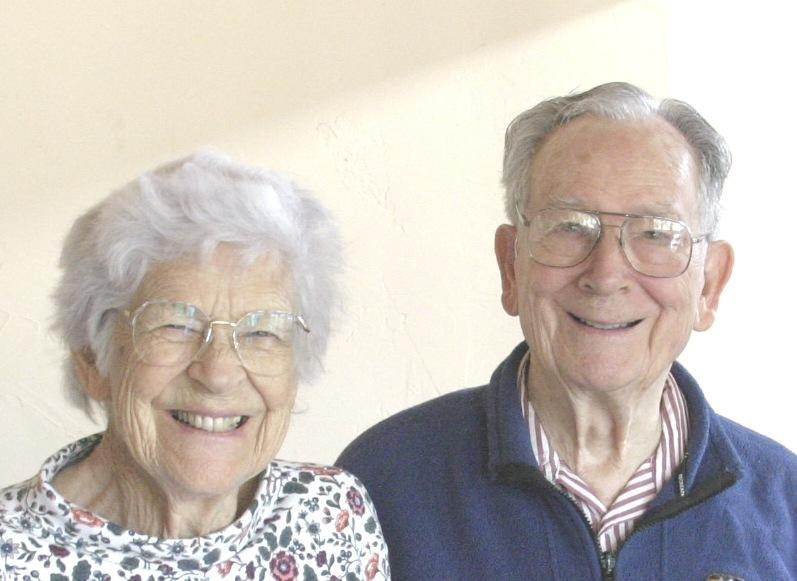
Mildred and Lawrence Johnston

Quote of the day—Pete Cunningham

It’s a big win for Microsoft today. Windows Phone 7 is no one’s priority. But now Microsoft has a leading vendor committed to use the platform.

Pete Cunningham
An analyst with Canalys, a research firm in Reading, England.
February 11, 2011
Together, Nokia and Microsoft Renew a Push in Smartphones
[It’s a big bet. But when we had an all-hands meeting about it on Friday morning everyone seemed pretty pleased about it. There will be lots of work in involved but the rewards should be large too.—Joe]

Epic WP7 feature win

Since I’m on “The Location Team” for Windows Phone 7 I sometimes get feedback on location usage and applications that use location information. The story below came in today and it brought tears to my eyes. I asked Afshan if I could post her story and she graciously allowed me to do so:

From: Afshan A
Sent: Monday, February 07, 2011 2:49 PM
To: Windows Phone ALL – Users & Enthusiasts
Subject: Epic WP7 feature win

WP7 Team,

Here is a story of my WP7.  It all started 45 miles away from Bellevue in Snoqualmie Pass where I enjoyed the best day of skiing with a bunch of friends in fresh powder. We left the resort in high spirits, talking about the highlights of the day when I decided to reach for my phone. I searched my empty jacket but no luck. I thought, not a problem at all, it is probably in the bag pack but still no luck. Umm, over here? Empty. We were almost half way back to Bellevue. I called my friend who was in a separate car. We were on the slopes together and she borrowed the phone from me; probably she forgot to give it back, but still no luck.

Slowly the realization grew into an empty black hole devouring all happiness – I just lost my new phone. (Ok not that long, but along those lines!). The worst part was I didn’t have a clue where I dropped it. The question was is it alive or dead?  I started cursing myself that things could have been different if I would have not been so over confident about being a responsible person and purchased the phone insurance. But well some things in life happen for a reason. We seem to gain wisdom readily through all failures than through our successes.

While I was blaming myself in the car, one of my friends suggested that I should try using ‘Find My Phone’ feature to detect the phone location. At last! a sign of hope. The other iPhone user friend in the car goes ‘You can’t use that feature unless you have subscription. At least that’s how it works for iPhones’. After hearing this conversation back and forth I didn’t lose hope. After all I’ve had the phone for a short time and I wasn’t ready to give up. This was simply not acceptable.

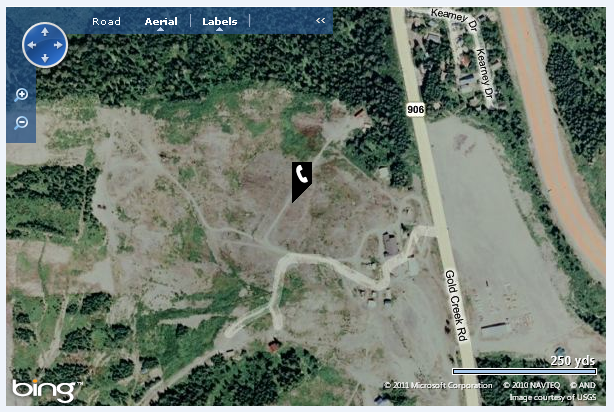
As soon as I reached the friend’s house who was driving, I immediately logged in to my live account and desperately looked up the option for ‘Find my Phone’.  Within a few seconds I found this life saving feature and clicked on the button to detect my Samsung Focus location co-ordinates on Bing maps. Keeping my fingers crossed for the longest 30 seconds of my life, hoping I don’t require subscription and boom, I see the results. The phone was resting at Snoqualmie Pass 250 yards from interstate 909 road. This was such a  relief. Even if I don’t recover the phone, at least I know what happened  to it.

When my friend saw my crying and helpless face, he offered a ride back to the resort. He was also an owner of WP7. Almost after 1 hour of driving, we got there. Now all we had to track the lost phone was through a memorized picture of Bing maps in our brains… around 9pm on a Sunday night in a closed ski resort, leaving us in the frigid cold and pitch dark slopes. You could see the clouds surrounding the moonlight and even random flurries. We had no option but to search by stumbling around the ice and snow within the area of what Bing map was showing with the help of our flash light. Immediately an idea popped up that why don’t we just detect the friend’s WP7 location co-ordinates and then compare the two pictures of the map and track it from there. My friend called another friend who had access to a PC and asked her to log in to his windows live account to detect his phone’s location co-ordinates. You can think of this friend at home as a control tower. Once the CT had the two pictures in front of her she was able to guide how far we were from the lost phone. How much further we need to move and most importantly in which direction. 50 yards north. 24 feet east. 20 more steps uphill. Every time pausing and hearing nothing but the dark silence. Finally we reached a point where the two pictures looked identical with a minimal difference to CT and we just started to ring the lost phone. Carefully listening to the sound of darkness, looking at 360 degrees and then , wait, is that… THERE, LIGHT!!! I rushed towards it, and yes it was, MY PHONE!!! IT WORKED!!!

As I rescued my dear phone from the bitter ice, it greeted me in character –the pink home screen boxes nonchalantly indicating I missed only 19 calls and 123 messages, I realized there were multiple factors that made this possible such as having a bunch of geeky friends full of ideas (who work for Microsoft), the lost phone not running out of battery or not getting crushed by other skiers on the slope and mother nature didn’t let it rain during the full 3 hours phone was resting on the snow ground. And that it landed right side up!

I think this is a proud and successful story of Windows Phone 7 which has helped me rediscover my vision of technology and how it can make a difference in your day to day life.  So Thank You WP7 !!

EpicWP7FeatureWin

Afshan A.
Microsoft OEM Finance | Business Excellence