I read Ayn Rand’s Atlas Shrugged about my Freshman year of high school. With that one book, second only to Robert Heinlein, she made a very deep, life-long impression on me.
It was between my Junior and Senior years of high school I read my first Heinlein book, Stranger in a Strange Land. During college I read most of Heinlein’s books and many of his short stories. I still remember the vehicle I was driving and where on 116th NE in Bellevue I was when I heard on the radio that Robert Heinlein had died.
It was later when I was in my late 20’s through mid 30’s that I read more of Rand. I didn’t know her other works existed until they were pointed out to me by Susan K. I am still grateful for Susan’s guidance with Rand and George H. Smith’s Atheism: The Case Against God.
Over the years I have read all Rand’s books and some of her essays and scholarly papers. Her works still resonate with me. My one big quibble with her is what she apparently believed is the perfect sexual relationship between women and men is repugnant to me. I see it as something closer to rape than a respectful relationship between equals.
I hope her works continue to be an inspiration and philosophical guideposts for people everywhere.
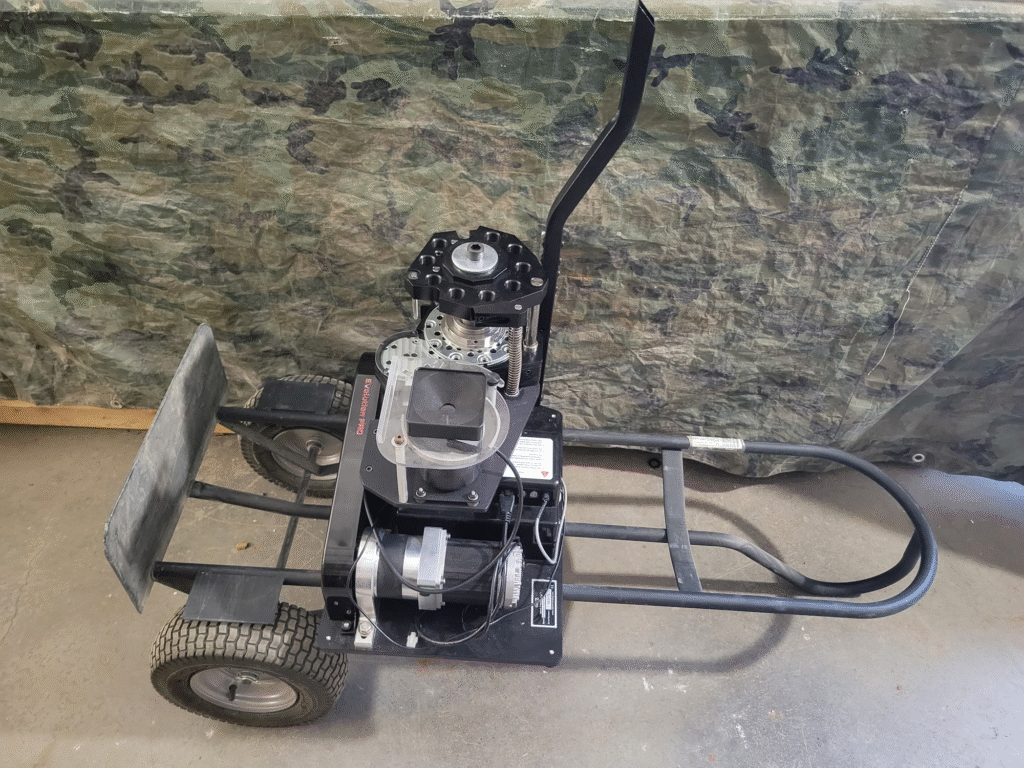
For Father’s Day two of my children chose stuff from my Amazon Wish List for my car and my underground bunker in Idaho. Xenia and husband John gave me .products from his business, JV Training Accessories.
There is an empty lot and also a house for sale a little over a mile from Boomershoot. They are both just over 20 acres and have absolutely incredible views.
It would be nice to have Boomershoot friendly people living there.
For the first time, scientists detected negative light in human history. The discovery, known as “darker than darkness,” tests the basic understanding of natural light phenomena. Research opportunities in quantum physics have expanded through the discovery of negative frequency photons, which hold potential implications that enhance our understanding of the universe.
I think it would be cool to have a flashlight that projected negative light. You could “shine” it at your floor, wall, etc. and make it appear as a black featureless hole in your living room. You could tell your kids you are getting rid of the dog and “shine” it at Fido sleeping in the corner.
Or how about a laser pointer to play with your cat?
But the best use would be to shine it on your face for a Halloween mask.
Yesterday I received a text message from a friend:
There is a slight chance that someone may try to take out a contract on me. What precautions would you take?
They are as good or better than I am with a handgun. They are at least moderately skilled with rifles. They are middle aged and of middle class means living in a rural area.
Yesterday, Barb, her daughter Maddy, and I were our way to the Jolly Farmer Cliddesden for dinner after visiting some interesting sights. I looked to the side of the road and saw what looked like Stonehenge with some people and sheep. I gave my phone to Barb, and she took some pictures for me:
Yup. It was Stonehenge alright. We didn’t realize you could see it from a nearby road. The last time we visited, we took a about a two-hour bus ride from London to the entrance. This is from the opposite side.
It turns out that A303 goes right by it:
The visitor center is much further away as seen in the upper left-hand corner in the picture below:
After getting home today, I went out to do some errands. It was such a pleasure to drive on the correct side of the road. And so many of the roads there were very narrow and without shoulders.
The Oregon Department of Emergency Management (OEM) states there is about a 37 percent chance that the Cascadia Subduction Zone will produce an earthquake of magnitude 7.1 or greater within the next 50 years.
Robert Ezelle, the director of Washington state‘s emergency management division, said: ‘It’s going to be the worst natural disaster in our country’s history.’
…
Large earthquakes produced by these faults would likely cause mass property destruction, cut off access to certain neighborhoods and lead to numerous injuries and even deaths.
‘One would expect the power to be down, natural gas lines to be broken, maybe water and sewer lines to be broken,’ Tobin said.
He told NBC News that if a major quake were to hit the Cascadia shaking would last five minutes, but tsunami waves would batter the coast for 10 hours.
Roads and bridges would be destroyed, along with some 620,000 buildings and about 100 hospitals and 2,000 schools.
‘We’re unprepared,’ Ezelle said, noting that residents would have to take care of each other due to Washington officials say they’d have to fend for themselves for at least two weeks.
As seen in the map above, Barb and I live on the edge of the red and solidly in the orange.
Tsunamis will form in the lakes in the area too. The quakes encourage the steep hills to provide the dirt to slide into the water and create large waves. And, of course, all those hills with lake views are covered with expensive homes.
These are the weather summaries for the Boomershoot weather station and my weather station about 0.75 miles away at my pistol range (and underground bunker).
Boomershoot:
Pistol range:
Ignore the pressure difference. One is relative and the other is absolute. Also note that the second weather station is at least 50 feet from any man-made thing the generates heat.
Notice that the low temperature for Boomershoot was -13.4. and the low for the pistol range was 4.8 F. That is 18.20 degrees different!
The difference in the average is 3.7 F.
When I purchased the second weather station, I had some people roll their eyes at me. The implication was there is no significant difference between the two locations. Yet, from many years in the area, I suspected the Boomershoot site was colder than the surrounding fields. It just felt colder there.
Using anti-inflammatory drugs and steroids to relieve pain could increase the chances of developing chronic pain, according to researchers from McGill University and colleagues in Italy.
Their research puts into question conventional practices used to alleviate pain. Normal recovery from a painful injury involves inflammation and blocking that inflammation with drugs could lead to harder-to-treat pain.
Growing up we didn’t have any pain killers in the house. I did not even take an aspirin until sometime after college. Yes, I had anesthesia for dental procedures, but nothing afterward.
In later years I had sports and related injuries but almost never took pain medications. And some interesting things did not happen.
I injured my left knee playing tennis in my early 30’s. As a result, the medial meniscus was removed. I had bone-on-bone action from then on. The orthopedic doctor told me I probably would be looking at a total knee replacement in 20 years. Nope. I’m still using the same knee for hiking, shooting action pistol, and shoveling tons of dirt for my underground bunker.
It is not that I am just pushing through the pain. Unless I push things with really long hikes or carrying a heavy load, I don’t feel any pain in that knee. It does have a lower threshold than the undamaged knee. But I still have endurance that exceeds most of my five children*.
Barb calls me amazingly durable. I feel pain sometimes. But I almost never take medication for it, and it goes away and I heal up quickly.
There are some exceptions. A few years ago, I had a pain in my shoulder. I tried some anti-inflammatory drugs, but it did not seem to help beyond the short term. The doctor finally got an MRI. I had a bone spur tearing up the soft tissue. They removed the bone spur. Then without pain medications and just a few days of rest, I was back to shooting again.
* Xenia and Maddy are exceptions. Xenia competes in long-distance running events. Maddy is a competitive dancer.
I graduated from the University of Idaho. My father and all three of my children attended school there. My ex-wife graduated from there, her mother and one of her sisters also graduated from the U of I.
One of my daughters got married on the campus. I once taught an NRA Personal Protection class in the basement of the building in the background of the picture.
Brother Doug has been doing a lot of genealogy and history research on our family. He has written several biographies. These include our parents, grandparents, and his son who died when he was 22 years old. See also Brad Huffman autopsy.
He recently finished a short book on the Teakean Idaho, Evergreen Grange #374. Our father, our grandfather, step-grandmother, and several great uncles and aunts were significant contributors to the building and running of the Grange.
I have a lot of childhood memories of community activities that happened at that Grange Hall.
Alcohol consumption is the third leading preventable cause of cancer in the United States, after tobacco and obesity, increasing risk for at least seven types of cancer. While scientific evidence for this connection has been growing over the past four decades, less than half of Americans recognize it as a risk factor for cancer.
…
The direct link between alcohol consumption and cancer risk is well-established for at least seven types of cancer including cancers of the breast, colorectum, esophagus, liver, mouth (oral cavity), throat (pharynx), and voice box (larynx), regardless of the type of alcohol (e.g., beer, wine, and spirits) that is consumed. For breast cancer specifically, 16.4% of total breast cancer cases are attributable to alcohol consumption.
Wild Turkeys were introduced to my area of Idaho in 1985.I had seen them on the grade down to Orofino for several years. But I had never seen them at the higher elevations. Today they triggered an alert on one of the webcams around my gun range:
According to Google Earth, this would be about 3,125 feet above sea level.
Welcome to my place guys! I now need to look at getting a license to hunt turkeys. Brother Doug says they are tasty, but do not have near as much meat as domestic turkeys.
About an hour ago, I talked to Barb about the fire. I said that the Los Angeles fire will go down in history as a major event. It will be like the Great Chicago Fire. A memorable point of history. Then I saw this from Matthew Bracken on Gab:
Brother Doug is writing a biography about my Grandfather Huffman. Doug asked that I write a little about I remember of him.
Grandpa died in February a few months after I turned seven years old. The things I write about below were all from summers when I was six or fewer years old. Doug is younger than me and just barely remembers him.
This is what I sent Doug a few minutes ago. Perhaps it will be interesting to others as well.
It always was a big event when Grandpa and Grandma Huffman would come to the farm. Early in the summer we would get a letter and/or call from Grandpa and Grandma Huffman telling us when they planned to arrive on the farm. My brothers and I would eagerly await the day. And then on the expected day we would run to check the road whenever we heard a car. Usually, it would be in the mid-afternoon that we would finally see the green Crysler Windsor pulling the camping trailer down the road to the bottom of the driveway, then up the driveway to our house. The car would stop and temporarily park in front of the old house. Mom and Dad would join us kids as we welcomed them and talked before they parked the trailer and unhooked the car.
The trailer’s normal location for the summer was under the trees to the west and a little north of the old garage. We had created a simple septic system for the trailer to connect to and there was a water hydrant supplied by a long above ground semi-flexible black plastic pipe <Doug, this is how I remember it, but I can’ t remember where it was supplied from. Was it via the pipe that went a few inches under the gravel road behind the woodshed?> They had an electricity connection too.
The trailer would spend most of time there. But sometimes they take it to go camping and fishing. Uncle Walt and Aunt Pet would always go with them with their trailer. At least once Harold and Virginia Rhymer (sp?) and brought their trailer went with them too. I don’t remember exactly where but I suspect it was up the Lochsa or Selway Rivers. Usually, our entire family went camping with them. But I know that once I went with them without my family. It was with the Rhymers and the two elder Huffman families. There may have been other times too. I remember fishing using hellgrammites for bait. I would find them under rocks and logs in the river and put them on my hook or lure (the “Super Duper” lure was frequently used) and cast them into the pools of water to attract the rainbow trout. The adults typically would use lures with a different bait and I’m pretty sure Harold almost exclusively used handmade flies. I know Grandpa raised fishing worms in his backyard in Riverside. A wood box filled with dirt and worm food was under one of the orange trees. I think he brought some of those up with him for the fishing trips.
While all the adults slept in beds in the trailers, I recall sleeping in a small tent with a sleeping bag.
One time Grandma made biscuits for breakfast. They came out the most beautiful brown and everyone was eager to eat them. I got mine first, put the required butter and jelly on it, and took a big bite. Someone asked how it tasted. I told everyone it was good. But it wasn’t good. It tasted really bad. As other people took a bit out of their biscuits it became apparent there was something very wrong with the biscuits. I continued to slowly eat my biscuit which I had proclaimed was good until several adults told me I didn’t have to eat it. They would, and did, make something else for our breakfast.
It turned out that Grandpa Huffman put all the baking supplies into containers that would not spill when the trailer was being moved. When he labeled the containers, he mixed up the baking powder and the baking soda. The baking soda is what caused the biscuits to taste so bad.
Grandma and Aunt Pet frequently told that story about me to demonstrate how polite I was by not saying anything bad about Grandma’s food.
Early one morning Aunt Pet took me out into the woods to look for what they called Mountain Tea (research on this last summer revealed it is more frequently called Yerba Buena, clinopodium douglasii, or Oregon tea). We picked the leafy ground hugging vines and took it back to camp and made a hot tea with it. The extra leaves and vines were taken home to dry and put in a container for the next camping trip. I really liked the delicate mint like tea made with the fresh green leaves and vines. But the dried tea was harsh and not something I cared for.
Here is a picture of the “Mountain Tea” I referenced above. The picture is one I used in a blog post last summer.
Previous research using seismology found that a large reservoir of magma sat beneath the caldera. However, the recent study, using a method known as magnetotellurics that tracks the electric conductivity of magma, found something different.
“When we used magnetotellurics, we were able to see, actually, there’s not a lot there,” said Ninfa Bennington, lead author on the study and a research geophysicist at the Hawaiian Volcano Observatory. “There are these segregated regions where magma is stored across Yellowstone, instead of having one sort of large reservoir.”
Bennington added that her team learned that the percentage of magma stored in the reservoirs was actually quite low. This means that none of the reservoirs are capable of producing an eruption anytime soon. Their research suggests the northeast region of Yellowstone wouldn’t expect to erupt again for hundreds of thousands of years.
Although I knew it was unlikely, being within the severely impacted zone of a Yellowstone eruption has been an item of concern for me. I have seen the devastation of the Mount St. Helen’s eruption and that was barely a hiccup compared to a Yellowstone supereruption*. Yet the speed of the pyroclastic flow reached speeds of 670 MPH and may have even briefly been supersonic. Imagine the effect of a huge mass of rock, sand, and dirt on the countryside when moving across it at supersonic speeds. The death of all life blast radius of a Yellowstone supereruption would be hundreds of miles. My underground bunker in Idaho would not be a suitable refuge in the face of a such a natural disaster. It is only a little over 300 miles from the probable center of the Yellowstone eruption.
Hence, the projection of the next eruption being hundreds of thousands of years from now allows me some comfort. I can probably expect dealing with such an eruption is someone else’s problem. i can concentrate on the more immediate threats of economic collapse, tyrannical governments, and other man-made disasters.
Volcano’s, high taxes, high crime, and a high probability of damaging earthquakes. Seattle is not nearly as attractive as it was when I first moved here just out of college.
I knew about the occasional earthquakes and was thrilled to experience three of them. Now that I’m older, I know just how serious they can be. I would rather not wait around for “the big one.”
The nearest volcano, Mount Rainier, was sort interesting in an abstract way when I arrived. And it is an incredible mountain. It is awe inspiring to go hiking on it. And it seemed to be dormant enough to not worry about.
Mount St. Helen’s blowing up a little over 100 miles away made volcanoes much more real. It obliterated everything within a six-mile radius. And that is just the complete destruction area. There was more:
The deadly pyroclastic surge—a fast-moving, super-hot cloud of ash, rock, and volcanic gas—traveled as much 18 miles away from the blast. The hot lava, gas, and debris mixed with melting snow and ice to form massive volcanic mudflows that surged down into valleys with enough force to rip trees from the ground, flatten homes, and completely destroy roads and bridges. Rivers rose rapidly, flooding surrounding valleys. Ash fell from the sky as far away as the Great Plains. Two-hundred-and-fifty miles away, ash blanketed Spokane, Washington, in complete darkness.
Mount Rainier is about 50 miles to the south from where we live now. Previous mud flows from Rainier have traveled several miles north of where we live. Those flows were in the valleys. We live part way up the side of a mountain. Therefore, I’m not too worried about being directly and immediately impacted by the blast and mud flows.
But even with only some mild ash at our house, the infrastructure issues would be catastrophic because of mud and pyroclastic flows destroying roads, power lines, water lines, and sewage lines. The people issues resulting from a major Mount Rainier blast following the infrastructure destruction would affect everyone for hundreds of miles around. I would rather not have to directly deal with that.
The politics, and especially the gun laws, have gone from benign to oppressive. I can avoid a lot of the pain by leveraging my Idaho connection. But it is a constant source of irritation.
Living in the “Bellevue Bubble”, as Barb and I like to call it, certainly has its advantages. But I really need an option to bug-out if things become an imminent hazard.
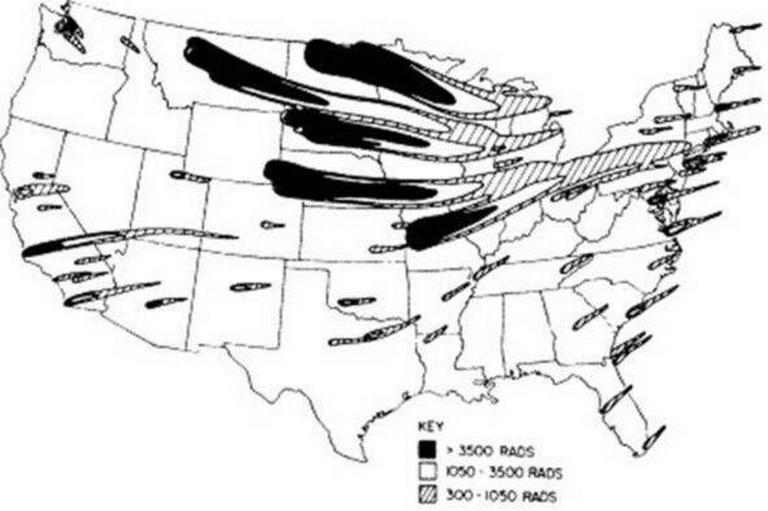
If you survive the blast, and you survive the fallout, you’re going to have to survive the constant threat of mass home invasion from those whose disaster planning is just 3 days.
This is an excellent point. But once made, you realize there are going to be some exceptions. Maintain a large buffer zone between yourself and the hordes with poor planning. Doing this can minimize your risk of contact. The risk can be driven to almost zero.
Let time, distance, and others “thin the herd” before the Seattle hordes reach your underground bunker in Montana. Give yourself some good alarms and a thousand yards of open space in every direction. Then, with the right guns, ammo, optics, and shooting partners, you should not have a problem against the low life.