Quote of the day—Rick Perry

We don’t see the role of government as guaranteeing outcomes, but allowing free men and women to flourish based on their own vision, their hard work and their personal responsibility.

Rick Perry
Texas Governor
August 13, 2011
Texas Gov. Perry jumps into 2012 Republican race
[Those are the right words to get my vote. But I have a feeling those same words absolutely inflame some people. The same sentence that included the quote above completed with, “said Perry, who has never held a private sector job…”

How does what Perry said relate to a “private sector job”? It appears to me the reporter was just looking for some way to draw some blood from Perry. And, of course, like most people on the left the truth is of little importance if a falsehood serves their purpose better. It appears Perry was in the cotton farming business from 1977 until 1984.—Joe]

The War Got Us Out of the Depression?

That’s the claim.  World War Two got us out of the Great Depression.  It’s become an almost Pavlovian response.  Mention the end of the Great Depression, and the pre-programmed, rapid-fire response is “The-War-got-us-out-of-it!”  Ring the bell and the socialist dogs drool.  No thought about how such a thing could be– Just blind faith that it was so.

I heard one of the talk shows hosts (I think it was Limbaugh) bring this up recently.  The very same people who claim that W.W. II “got-us-out-of-the-Depression” are now the ones claiming that the current “Bush Lied, People Died/Inside Job” wars are dragging down the economy.  I don’t think the socialists can have it both ways.  We have troops in active fighting in what, four countries now?  I lost count, and it’s not “fighting” anymore, but “Kinetic Somethingorother” anyway.  We should be doing great about now if their Keynesian economic theories are correct.

Sure.  Just try this experiment with your own business or family; apply all your best efforts, using all your best resources, to build all your best products, for four years, go deeply into debt doing it, and then package up all of that best stuff, along with all your best workers, and send them overseas to be expended with no compensation.  Then build new houses for a German family and a Japanese family, going further into debt to do that, while you engage in years of litigation and appeals with a Russian family with no clear outcome.  See how rich you are at the end of it.

You can’t advocate two opposite ideologies at the same time.  One negates the other.  Either Keynesian theory is spot on, or it’s crazy.  Your perpetual motion machine either works or it doesn’t work.  Don’t claim both or you’ll look even more blitheringly stupid than you looked when you only said your perpetual motion machine generated a net energy output (oops; I’m assuming you know what “net energy output” means, which, if you believe in Keynesian economics, you don’t. Sorry).

PS.  I read several years ago that we don’t have “Infantry” anymore.  Oh no.  That would be much too.. “yesterday”.  Now we have a “Soldier-centric Force Structure” so it’s all new and shiny, you see.  Makes all the difference in the world.  To a moron.

Since having a “War Department” to fight real enemies sounded too unfriendly, and we now have the “Defense Department” and “Peace-Keeping Forces” instead, I figure it won’t be long before we have the “Department of Peace” that will bomb the shit out of you if you advocate liberty.  You’d better hope that the Peace Squad never shows up in your neighborhood.  It’ll be a bunch of government hippies shooting up your private flower pots.  Or something.

Quote of the day—Lyle @ UltiMAK

The disease is socialism. Every little bit of it, and the perpetrators aren’t on the front lines. They use the poor for their dirty work. So regardless of the system to be used, the perpetrators, who tend to work from cover and often hold official positions, are the ones who need “schooled”. Go after the queen bee and you get the whole hive.

Lyle @ UltiMAK
August 10, 2011
Comment to What caliber for riots?
[In essence I agree and have a big blog post in mind about this. My disagreement with the above is that removing the “queen bee” will not be of any use if there isn’t an appropriate replacement for “her”. In the case of Europe and probably several states in the U.S. the great majority of the population cannot comprehend a free society.

I remember having a conversation with one person who insisted that “someone or something” had to be “on top”. It was either government or God that must rule the people. He didn’t trust government, governments were corruptible and had a strong tendency toward evil. Therefore it had to be God that ruled. Our government must be subservient to (his, of course) God.

I explained that is not how our government was set up and it didn’t have to be that way. Our government was found by the people and for the people with only certain enumerated powers that were granted to it by the people. Any involvement by god(s) was merely as an observer. The “one on top” is the people that granted the powers to the government.

The concepts presented yield a confused look and a mild protestation that “the people” couldn’t exercise power sufficiently wisely for that to actually work. The discussion was dropped after that because I think the light bulbs were starting to come on with the realization that god(s) and governments always communicate through people anyway so the situation wasn’t any better with his view of the world.

I think the same mindset exists in the socialists/progressives/leftists. They think of it as their people or their opponents ruling over the losers rather than a free society with government defending the rights of everyone.—Joe]

Capitalism: A Necessity

My 17 year old wrote this essay for his English class this summer.  While the Brits are rioting over what kind of socialism they want, and American public employees have taken to the streets for more of our money, calling for revolution if they don’t get 100% of the coerced funds they think they want, this is a timely piece.  Advocating freedom is always timely though.  I didn’t help him a whit (other than to try to raise him right) and here I left in the parts with which I had minor gripes over syntax, or over a word or two;

Capitalism: A Necessity

We live in a world full of criminals, fools, rapists, murderers, and countless other evil-doers. Many of us are left to deal with the ramifications of these burdensome people. However, evil-doers are not the only issue; many well-intentioned people make mistakes that affect millions. In considering these seemingly never-ending problems of the world, one is left with quite a dismal picture. The subsequent thought is, how can these problems be solved? Is it possible? How can we make society better? There are many ideas about how to best deal with society, some of them promising to perfect it and eradicate crime and evil. In all reality, there will always be evil and evildoers. However, a condition can be imposed which makes life better for all of us, protecting us, and allowing us the freedom to think, create, and trade with others. This condition is Capitalism.

Capitalism is the only system of government which allows individuals the most possible freedom while, at the same time, protecting them from the potential harm of others. This is because its main function is the government recognition [of] individual rights. Individual rights are “conditions of existence required by man’s nature for his proper survival” (Rand, Man’s Rights). Among them are:  that a person has the right to their  own life, that a person has the right to liberty (or the freedom to think and act), and that a person is free to “pursue happiness,” or to do what they please. A person assumes these rights with the caveat that they may not violate any other person’s rights. A system such as this protects individuals, while still allowing them freedoms proper for their survival.

All rights are actually corollaries of the right to life. Man is a living creature; naturally, he must have the freedom to perform all actions necessary to stay alive. Also, Man is a thinking creature; he relies on his creative faculty to produce the tools necessary to live. Therefore, in order to have the right to his own life, he must have the freedom not only to create, but to own what he creates. Otherwise, he is a slave, subject to the whim of a master (Rand, Man’s Rights 322) and has no right to his own life. Essentially, all other rights ensure Man’s right to life which, in itself, is a basic condition for his survival.

Capitalism holds that government’s only enterprise is the protection of these basic rights. It was also the form of government originally intended for the United States by its founders. As stated in the Declaration of Independence: “We hold these truths to be self-evident, that all men are created equal, that they are endowed by their Creator with certain unalienable Rights, that among these are Life, Liberty and the pursuit of Happiness. That to secure these rights, Governments are instituted among Men, deriving their just powers from the consent of the governed…” (Declaration of Independence). It is clear in this excerpt that the founders of the United States thought of government as a protector of the people rather than a controller or a regulator.

A well known  aspect of Capitalism is the absence of economic regulation, or a free market system. No economic regulation can exist in a capitalistic system because it inherently inhibits people’s right to free trade – therefore violating their right to life. A common argument against Capitalism is that a lack of regulation would allow business to grow exorbitantly, take advantage of society, cause poverty and contribute to a general degradation of people’s lifestyle. However, in a free market, if a business is not practicing in a manner that is beneficial to the public, a niche is created for another business to enter, and the public is free to boycott the business in support of an emerging one. As long as a business does not violate another’s rights, they are free to act as they wish. However, in the situation where a business is violating other’s rights, judicial action would be appropriate, just as with any other criminal.

Capitalism is the only system of government that does not require, and in fact prevents, control by force. It ensures that no force may ever be initiated and that the only appropriate force is self-defense. The only method by which any trade may occur is by mutual consent – a transaction in which both parties involved must agree. In this system, it is inherent that both parties benefit; both consensually walk away with something they consider more valuable than what they traded. Other systems of government such as Socialism and Fascism are based on the notion that each individual in society is less valuable than a “public good” and that force may be initiated on society for the sake of this “public good.” In reality, this translates to an ever-growing government control of the citizens. These systems, unlike Capitalism, fail to recognize that society is actually a group of individuals rather than a single entity. In a capitalistic system, individuals are free to act in their best interest and are barred from violating another’s right to do so, creating an optimal situation for the success of society.

An argument made against Capitalism is that it inherently results in people unable to take care of themselves being left to starve because of the lack of redistribution programs such as welfare. However, in a Capitalist system, people are free to help other people as they wish. If an individual believes another person or group should receive help, then that individual can provide monetary support or bolster more widespread support. Additionally, charity organizations can flourish and help millions worldwide. By no means does Capitalism prevent needy people from receiving help. It actually works more efficiently than a welfare system; Capitalism does not support people who, entirely capable of caring for themselves, decide instead to take advantage of a government redistribution system unless other people willfully decide to support them. In a Capitalistic system, force upon any party is forbidden because it violates people’s rights, so redistribution is impossible.

Capitalism is the system that best allows man to produce wealth – anything of value which helps improve his survivability. It does this by giving man the freedom to think, discover, and act on his own volition without oppression from any entity (government, criminals, etc.). Man did not evolve as a highly specialized community species such as bees or ants. By nature, man works best if he is allowed to make his own choices. The early caveman did not create the spear because his only motive was to work for a “public good” – to improve the lives of other cavemen – he created the spear out of his self-interest in his own survival. Even so, the result was an improvement in mankind as a whole; because they saw the first, other cavemen’s lives were improved by using his idea for themselves. Capitalism does not ensure a perfect society. Rather, it ensures the conditions which best allow society to function. It does this by protecting Man’s rights.


Works Cited

Decaration of Independence, Thomas Jefferson (1776). Print.

Rand, Ayn. “Appendix: Man’s Rights.” Capitalism the Unknown Ideal. New York: Signet, 1967. Print. This chapter specifically outlines the nature of man’s rights and their necessary existence.

The public college teacher gave him a “B”.  I’m a little bit suprised she didn’t lose composure and start breaking things.  Maybe she’s been in contact with her higher-ups, trying to find ways to deal with this problem “under the radar”.

Quote of the day—Chas

Their extremist rhetoric against the Tea Party is outrageous. People who peacefully participate in the political process are not terrorists. Let me say that again, since important things are worth repeating: Peaceful participation is not terrorism.

This is an administration that won’t call terrorists, terrorists, but they have no problem slapping that label on the American middle class, which kinda lets ya know who they really regard as being the enemy.

Hint: It’s not the jihadis, with whom they share an anti-American agenda. It’s the people who want America to succeed with whom they have a problem and with whom they do not share an agenda.

If we’re terrorists, then shoot us, or shut up and stop making fools of yourselves!

Chas
August 8, 2011
Comment to You’re all a big bunch of meanies!
[As son James pointed out after I showed this comment to him last night, “Well… we are their enemies—ideologically.” Yup. And as Lyle (and here) and history frequently points outs, when the left starts loosing they do crazy, scary, violent stuff. We may be headed for those times where they do treat us as terrorists. The rhetoric is ramping up for it.—Joe]

State Sponsored Media?

Speaking of the tools and mechanisms of oppression, have any of you noticed how many government or Ad Council ads there are on AM radio lately?  We’re being told where to find out how to raise our kids, fasten their car seats, talk to kids about drugs, notice the signs of a stroke (call 911) quit smoking, and ZOMG– be afraid of your food!  In the 20 minutes or so I listened to KMAX this morning, there were two or three government ads to one commercial ad.

Now; I haven’t looked into who runs the Ad Council or where its funding comes from, and I don’t know how many of the government ads are actually paid for as opposed to being forced as “public service announcements” but it’s looking more and more like there is already a mechanism in place to further control radio stations– threaten to their pull ads, which are becoming a majority of the ads on the air.

I thought y’all might want to look into this, as there has been “chatter” for years about how to clamp down on talk radio and yet no one is talking about the recent uptick in Big Brother ads.  I smell “Hope and Change” in this.

Quote of the day—Henry Mencken

The trouble with fighting for human freedom is that one spends most of one’s time defending scoundrels. For it is against scoundrels that oppressive laws are first aimed, and oppression must be stopped at the beginning if it is to be stopped at all.

Henry Mencken
[I’m unable to find the date or the context but the ‘net seems unanimous in attributing it to Mencken.

Mencken makes a very important point whether it is a First, Second, Fourth, Fifth Amendment or natural rights issue. The oppressors make it difficult because they get to choose the “poster children” who will have standing to challenge the oppressive law. This is the main reason I am far more tolerant of the ACLU than many of those that I keep company with.—Joe]

Privacy issues

Numerous times I’ve posted half-baked concerns about our increasing loss of privacy and the dangers and even extreme dangers.

Some people have brought up good points and/or asked good questions and I will respond to those people then share further thoughts I’ve had on the topic.

Acksiom asks (after I said having a twin could be useful to raise reasonable doubt about who did what):

Joe, what kind of situations do you have in mind where that would be appropriate?  I can’t imagine any where I would want to raise reasonable doubt by blaming another innocent person, so I’m curious.

What if your employer is extremely conservative/liberal and a picture shows up of you at a gay-bar or sex shop/gun range or Tea Party rally? There are lots and lots of things of this nature. In the mild case they are things like pictures of a drunk, topless, woman at spring break 10 years ago who now wants to run for public office or be a Sunday School teacher. In the worst case we are talking matters of life and death, Jews in the Attic, type of things.

Alan states:

Privacy is a recent illusion caused by growing population and increased mobility.  Technology is allowing the return to the historical lack of privacy that has been the normal human condition for thousands of years.

You can’t fight it any more than the RIAA or MPAA can fight file sharing.  Better to start thinking how we’re going to adapt to everyone knowing everything.

In regards to his first point, it’s more like millions of years but that doesn’t distract from the validity of his observation. What is different now is that we don’t have a small homogenous tribe. We have an exceedingly diverse population with a powerful government.

In regards to his second point I’m not entirely convinced it is possible create an environment where “everyone knows everything”. And as long as an imbalance of knowledge exists there are “issues”. I am convinced that he is right about the analogy with the RIAA and MPAA. The “privacy gene” is not only “out of the bottle” the bottle has evaporated.

Sebastian posted (three+ years ago):

But in an information based society government will be able to know a lot about its citizens.  Our government probably knows more about its citizens than any other government in history.  There won’t be much means to avoid that.  Conversely though, information technology also makes it possible to know more about our government than any other people in history.  I would encourage and recommend anyone who’s interested in this topic to read David Brin’s The Transparent Society.

Tam stated (several months ago):

I think David Brin had it mostly right in The Transparent Society: This genie is well and truly out of the bottle, and the only non-Orwellian outcome will be if everybody has access to it.

Sebastian echoes (last night),

One of the sources I look to in this issue is David Brin’s “The Transparent Society”. I don’t think Brin is right about everything, but the fundamental idea that the loss of privacy isn’t such a big deal provided it’s applied equally in society, I think is a reasonable concept.

I responded (three+ years ago) by saying the politicians and government employees should go first and we will see how well that works out. The only thing I think I need to add to that post is that they should add real time location information to the collection of public servant information available to the general public.

We are entering uncharted territory. Never before has their been societies this diverse able to know this much about everyone else. Sure, if you go back far enough (it would not be necessary but just to make the point stick go back to where the family tree branching off of the apes) people didn’t have privacy when they had sex or were defecating let alone where they were or what sort of god(s) they did or did not worship. But in those days, with a much more homogenous society, it may not of mattered.

I say “may” because I wonder if such an open society was almost forced to be homogenous at a communistic lowest common denominator level. Perhaps a capitalistic/competitive society requires certain levels of privacy to function. My hypothesis is that trade secrets, secret contracts, and secret finances are necessary for a competitive society. Stated in the strongest (but perhaps indefensible) terms, if you don’t have privacy you cannot “get ahead”. A corollary that follows (perhaps also indefensible) is that if there is no privacy then society is economically doomed to some sort of tribal communistic system. Did the rise of commerce, technology and industry only come about because various tribes had privacy from one another?

Now there may be at least partial solutions to the economic hazards of a completely open society. Patents, for example, are intended to protect information that cannot be protected by trade secrets. Written agreements can be kept private unless a court order demands otherwise. But there are still many vulnerabilities when facial images or location data of people entering corporate headquarters reveals a connection between two or more companies that didn’t used to be there. Or your employer tracking after hours employee location data discovers a handful of engineers getting together at a bank and checking out empty office buildings together.

Imagine what can happen in political campaigns. Knowing who is talking to who gives someone tremendous information about what sort of issue are going to be important and how much money is going to be involved. Sure that information all comes out eventually but when you have the info weeks in advance it will make a huge difference.

Imagine the implications for stalkers. Anytime they wish to go on the hunt they leave their cell phones 50 miles away and know exactly where their prey settled down for the night.

Imagine the implications for an abused spouse trying to hide from their ex.

On a governmental scale the events are less likely but the consequences are catastrophic. Here is a scenario I heard outlined this morning. Monitoring of your water, electricity, and data (Internet) consumption shows a step increase. Examination of your communication traffic might well show that one or more people had a decrease in traffic therefore they are likely
the new residents in your home. Examination of transportation expenditures could confirm it. This fails my Jews in the Attic Test.

Imagine a scenario where a government is deadly hostile to gays (gun owners, Jews, blacks, Tea Party “terrorists”, Christian Fundamentalists, whoever). Public records (while I support gay marriage I sometimes wonder if it is a greater risk than people realize), blogs, and social networks, are scoured to identify the individuals. The communication traffic is examined and the leaders are easily identified even without knowing the content of the communication. Location information is then used in synchronized snatches at 3:00 AM. The plans for the snatch in any realistic “transparent society” would still be opaque because it would be protected out of concern for “nation security”.

Do you think it couldn’t happen in this country?

If so you have forgotten about the black lists in the 1950s. And the Japanese, German, and Italian internments which held over 100,000, of which about 60% were US citizens, during WWII. And you aren’t familiar with the Palmer Raids. Okay, the Palmer Raids were at 9:00 PM, not 3:00 AM. You have me there.

Those events are just the tip of the iceberg and  without computers. Imagine what a government could do with computers and far, far, more detailed information about our location, habits, and social networks.

Someone in law enforcement once told me that the government has a list of everyone in this country who has training as a sniper and “keeps close track of them” in what sounded like nearly daily updates on their locations and somewhat less frequent updates on their attitudes toward high level government officials. How many high-power rifle shooters also have their names on some list?

In a “transparent society” what does it matter if there are lists like that, right? You can have your lists too! But some lists are scarier than others and will always be secret for “reasons of national security”.

Although some have advocated deliberately adding noise to your digital footprint unless this is automatically done by your own computer at near zero cost per transaction you are soon going to get tired of the game. And if FinCEN can’t pierce the noise they will just make it illegal. And, as a person with a Masters degree in communication theory where we learned to pull signals out of noise, I don’t think it would be that hard to detect the noise, pull out the true signal, and then give greater attention to those people.

A few years ago I mentioned to someone in the banking industry that I did almost all my financial transaction in cash. Checks, credit and debit cards where used far less than most people. I was told that, for certain, put me on a list.

Perhaps my view is biased by reading too many books like Hitler’s Willing Executioners, Plotting Hitler’s Death, and Bloodlands—Europe Between Hitler and Stalin, but I contend a “Transparent Society” is very risky. I still don’t have any good answers short of “dropping off the grid” which just doesn’t scale. I have some possible answers which I would be glad to discuss in private but I just don’t have the time to implement them let alone deploy them on a scale where it could make a material difference even if they were effective and could avoid being declared illegal when detected.

The one method of last resort, a doomsday plan, which appears to be the least distasteful if things get really bad are the Second Amendment remedies. But even without formal gun and/or gun owner registration our society is already transparent enough that a “first strike” on the top 10,000 or so gun owners/activists with follow ups on a few hundred thousand more (remember the numbers from the WWII internment camps?) might be sufficiently effective to neutralize even it.

I’m told I’ll never have to worry about that. I suspect most of the people that tell me that are absolutely correct but for the wrong reason. I’ll be in the “first pass”.

Let them start with John Kerry

While I can understand the impulse if this were to be implemented I think it should be first applied to the likes of John Kerry who says stupid things like:

The media in America has a bigger responsibility than it’s exercising today. The media has got to begin to not give equal time or equal balance to an absolutely absurd notion just because somebody asserts it or simply because somebody says something which everybody knows is not factual.

This was in regard to the Tea Party who he claims “held the country hostage” during the debt ceiling debates.

“Everybody knows”? I would like to suggest Senator Kerry reexamine the last election results in terms of how many people believe what the Tea Party candidates have to say.

No good answers

Privacy is more and more a thing of the past:

In one experiment, Acquisti’s team identified individuals on a popular online dating site where members protect their privacy through pseudonyms. In a second experiment, they identified students walking on campus — based on their profile photos on Facebook. In a third experiment, the research team predicted personal interests and, in some cases, even the Social Security numbers of the students, beginning with only a photo of their faces.

Carnegie Mellon researchers also built a smartphone application to demonstrate the ability of making the same sensitive inferences in real-time. In an example of “augmented reality,” the application uses offline and online data to overlay personal and private information over the target’s face on the device’s screen.

“The seamless merging of online and offline data that face recognition and social media make possible raises the issue of what privacy will mean in an augmented reality world,” Acquisti said.

Cloud computing will continue to improve performance times at cheaper prices, and online people-tagging and face recognition software will continue to provide more means of identification.

“Ultimately, all this access is going to force us to reconsider our notions of privacy,” Acquisti said. “It may also affect how we interact with each other. Through natural evolution, human beings have evolved mechanisms to assign and manage trust in face-to-face interactions. Will we rely on our instincts or on our devices, when mobile phones can predict personal and sensitive information about a person?”

This technology has profound implications for both good and evil. Surveillance cameras can scan our sidewalks for wanted criminals as well as political dissidents. And the app for your cell phone can do a background check on your daughter’s date or identify a TSA agent in line at the grocery store.

I worry about this but don’t have any good answers. It seems that about the best you can hope for is that you have a twin* such that you can raise reasonable doubt in those situations where it really matters.


* My twin was discovered by AntiTango.

Origins of progressives

According to one source the origin of the term “progressive” came about in the late1800s:

The first citation of the term “progressivism” in the Oxford English Dictionary is dated to 1892, in England. At that time the St. James Gazette used it as a term of derision, equating it with “radicalism”. However, the St. James usage doesn’t suggest that a neologism was being coined for the occasion (nor does the OED say as much).

…

As it turned out, the identification of biological evolution with social advancement was based on confused and ultimately false ideas; but Spencer’s elaboration of an essentially inevitable and indefinite social progress proved extraordinarily popular — even among those who would today be described as conservatives. (Spencer and Sumner were both arch conservatives.) Among those most taken by Spencer’s ideas was the young Englishman Winwood Reade, who popularized them in The Martyrdom of Man. Reade’s book, originally published in 1872, was read so widely that it reached an eighth edition just twelve years later — shortly before the St. James Gazette would use the term “progressivism” in its pages.

In the U.S. the Progressive Party was formed in 1912 and supported many of the positions associated with progressives today. As a third party in the U.S. it did quite well but still withered and died as the other two major parties adopted the more popular ideas from them.

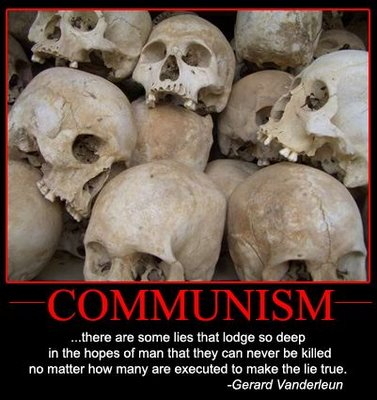
The progressives of Europe in the early 20th Century were a somewhat different origin. They were the students of Marx and Engels who believed a proper study of history would allow the prediction of the future. The end of capitalism and the rise of socialism and communism was inevitable. Those advancing communism were progressives and those opposed to communism were anti-progress. This “progress” could only come through revolution.

According to Timothy Snyder in Bloodlands—Europe Between Hitler and Stalin, Stalin used this label in his exterminations of millions of people. He was advocating the inevitable progress of society and he and his supporters were progressives. Who could be against progress? Whoever such people were they were deserving of death. The utopia of a perfect communist society was just ahead and these people, these millions of murdered people, were a small price to pay to these progressives. They were starved in great famines caused by the seizing the food in the Ukraine, which was the food basket of Europe. Think about that. Millions of people starved to death in the major food production area of the continent due to progressives.

Millions more were arrested then sent to the Gulag after show trials or simply shot in the basements of the police buildings by the progressives of the Soviet Union.

In the U.S. progressives advocated for a vast increase in government power. In the USSR and elsewhere progressives used expanded power of government to murder tens of millions of people.

I see the social inequities which progressives use as their talking points. I understand the appeal of the “progressive” approach to social inequities. But progressives appear to not understand the terrible risks that have been demonstrated by their political ancestors.

I believe a much better term to describe their political persuasion is that advocated by Ayn Rand—looters.

Quote of the day—Thomas Sowell

Egalitarians create the most dangerous inequality of all — inequality of power. Allowing politicians to determine what all other human beings will be allowed to earn is one of the most reckless gambles imaginable. Like the income tax, it may start off being applied only to the rich but it will inevitably reach us all.

Thomas Sowell
[I really like this. It translates into a “sound bite” rebuttal. Those that advocate for the equalization of outcomes cannot implement such a system without creating an inequality of power.-Joe]

The Top Video…

…on this page is excellent.  I couldn’t have said it better myself, and that’s saying a lot.


John McCain should be out in a nice pasture right now, munching on sweet grass and chewing his cud.

Quote of the day—William Van Alstyne

The essential claim (certainly not every claim–but the essential claim) advanced by the NRA with respect to the Second Amendment is extremely strong. Indeed, one may fairly declare, it is at least as well anchored in the Constitution in its own way as were the essential claims with respect to the First Amendment’s protection of freedom of speech as first advanced on the Supreme Court by Holmes and Brandeis, seventy years ago. And until the Supreme Court manages to express the central premise of the Second Amendment more fully and far more appropriately than it has done thus far, the constructive role of the NRA today, like the role of the ACLU in the 1920s with respect to the First Amendment (as it then was), ought itself not lightly to be dismissed. Indeed, it is largely by the “unreasonable” persistence of just such organizations in this country that the Bill of Rights has endured.

William Van Alstyne
1994
THE SECOND AMENDMENT AND THE PERSONAL RIGHT TO ARMS
[I’m reminded of the adage that “all progress depends on the unreasonable man”. Keep that in mind when the anti-gun people demand “reasonable gun laws”. They are anti-progress.

But beyond that there can little doubt that the “unreasonableness” of the ACLU has shaped the legal contours of the First and Fifth Amendments. Many could claim the protections carved out by the courts under pressure from the ACLU extend well beyond “reasonable” limits. We certainly have those that claim the limits of the Second Amendment are too broad now with essentially just one win under our belt. Extending the elimination of gun bans to non-Federal jurisdictions expands the domain but not the shape of the protection. What I’m curious about is if perhaps the ACLU blazed a trail for SAF, NRA, et. al. such that Second Amendment protections will advance to boundaries comparable to the First Amendment at a much more rapid pace than it took for the ACLU to get us where we are today. Will there ever come a time somewhere along the way where the majority of people will concede that the limits on the Second should be similar to the limits on the First and the mass of repressive anti-gun laws all across the land will suddenly topple over like dominos. Will our fight take 70 years? Forever? Or will it only be 10?

I don’t know the answer. But I am certain that the more we push that meme the greater chance it has of becoming reality.—Joe]

Quote of the day—Paul Brinkley

The point of citizen resistance isn’t to be able to kick your own government’s ass; it’s to make clear that it would spend more to oppress you than it would by leaving you free. (Granted, some governments take more convincing than others. But that’s an education problem.)

Paul Brinkley
July 18th, 2011 at 6:54 pm
Comment to the post Brin on Heinlein on guns is dead wrong.
[Via email from Rich R.

And what better way to educate a government on the costs of oppression than by shooting back and/or shooting the tax collectors?—Joe]

Quote of the day—Veeshir

And that’s why I’m rooting for an asteroid.

Veeshir
July 19th, 2011 at 8:53 pm
Comment to Where America used to be
[Over the years I have given that same resolution a lot of thought. Probably far more thought than it deserves.—Joe]

Random thought of the day

Today I left a comment at Snowflakes in Hell on the post Land of the Used to be Free.

Sometimes I wonder if it was that I said something profound or if it was something so crazy that everyone just went silent after I said my thing. This is one of those times. I can’t see that it was all that crazy but then I don’t see anything all that profound in it either.

My brother and I had spent some time chatting on almost this same exact thing yesterday and so I had spent some time thinking about it during the long drive back to my bunker last night. And I incorporated some of those thoughts into my QOTD post yesterday. So I had my response ready from almost the instant I read the title:

The bigger problem, as Sebastian pointed out, is the erosion without consequences. In general the only way this problem can be fixed is for there to be consequences other than voter wrath. There needs to be fines and/or jail time for those that violate our rights and some body, such as the courts but perhaps not, that is specifically tasked with doing nothing but striking down laws that exceed the constitutional authority given to the legislature and/or executive branch.

But that’s not going to happen anytime soon or even perhaps ever unless we set up a new government on the sea floor, the Moon or perhaps Mars. Of course it could also happen if the mid-east gets turned into glass and the new inhabitants set up a different style government after it has had a few years to cool down to a soft green glow.

Another possible path to get out of the mess we are in is for the Federal government to go bankrupt and collapse sort of like the USSR did and we end up with only state governments. Many of those state governments would provide a much more free environment than that currently imposed by the Feds.

The most likely, but still with low probability, is that Feds get into such a poor financial situation that a new wave of politicians get elected with a mandate to scrape all the nanny state crap in an effort to cut expenses. With this entire departments and agencies (energy, education, housing, environment, agriculture, ATF, etc.) get disbanded and all their responsibilities go away too. Sort of a “scorched earth” policy where there is little or no discussion of “cutting back to the essentials”.

Forget a revolution. As my brother pointed out statistically the most likely form of government after a revolution is a dictatorship. I suspect there is a good reason for this. My hypothesis is that in general for a revolution to be successful there needs to be a charismatic leader. Charismatic leaders have a strong tendency to be narcissistic. Narcissists think they are entitled to all the attention and power the world can throw at them. Narcissists don’t give up their power easily. Revolutions and dictators go hand-in-hand.

The lesson to be learned is that revolution is a very, very risky business for those that value liberty. The founders of this country chose their revolutionary leader with extraordinary care. Read some books on George Washington. He had the charisma to lead but he had something else that is probably not only rare but is overlooked by those looking for a leader for their revolution. He was extremely principled. That is an extremely rare quality in our politicians today. The system virtually guarantees people of principle cannot be elected.

Hence we are in a situation where Douglas Adams nails it in The Hitchhikers Guide to the Galaxy, “Anyone who is capable of getting themselves made President should on no account be allowed to do the job.” The same probably can be said of revolutionary leaders.

Quote of the day—Orrin G. Hatch

When I became chairman of the Subcommittee on the Constitution, I hoped that I would be able to assist in the protection of the constitutional rights of American citizens, rights which have too often been eroded in the belief that government could be relied upon for quick solutions to difficult problems.

Both as an American citizen and as a United States Senator I repudiate this view. I likewise repudiate the approach of those who believe to solve American problems you simply become something other than American. To my mind, the uniqueness of our free institutions, the fact that an American citizen can boast freedoms unknown in any other land, is all the more reason to resist any erosion of our individual rights. When our ancestors forged a land “conceived in liberty”, they did so with musket and rifle. When they reacted to attempts to dissolve their free institutions, and established their identity as a free nation, they did so as a nation of armed freemen. When they sought to record forever a guarantee of their rights, they devoted one full amendment out of ten to nothing but the protection of their right to keep and bear arms against government interference. Under my chairmanship the Subcommittee on the Constitution will concern itself with a proper recognition of, and respect for, this right most valued by free men.

Orrin G. Hatch,
Chairman,
Subcommittee on the Constitution.
FEBRUARY 1982
THE RIGHT TO KEEP AND BEAR ARMS, R E P O R T OF THE SUBCOMMITTEE ON THE CONSTITUTION OF THE COMMITTEE ON THE JUDICIARY, UNITED STATES SENATE, NINETY-SEVENTH CONGRESS, SECOND SESSION
[And those that do not value this right have no desire to be free. May their chains set lightly upon them, and may posterity forget that they were our countrymen.—Joe]

Quote of the day—Jeffrey R. Snyder

Those who call for the repeal of the Second Amendment so that we can really begin controlling firearms betray a serious misunderstanding of the Bill of Rights. The Bill of Rights does not grant rights to the people, such that its repeal would legitimately confer upon government the powers otherwise proscribed. The Bill of Rights is the list of the fundamental, inalienable rights, endowed in man by his Creator, that define what it means to be a free and independent people, the rights which must exist to ensure that government governs only with the consent of the people.

At one time this was even understood by the Supreme Court. In United States v. Cruikshank (1876), the first case in which the Court had an opportunity to interpret the Second Amendment, it stated that the right confirmed by the Second Amendment “is not a right granted by the constitution. Neither is it in any manner dependent upon that instrument for its existence.” The repeal of the Second Amendment would no more render the outlawing of firearms legitimate than the repeal of the due process clause of the Fifth Amendment would authorize the government to imprison and kill people at will. A government that abrogates any of the Bill of Rights, with or without majoritarian approval, forever acts illegitimately, becomes tyrannical, and loses the moral right to govern.

This is the uncompromising understanding reflected in the warning that America’s gun owners will not go gently into that good, utopian night: “You can have my gun when you pry it from my cold, dead hands.” While liberals take this statement as evidence of the retrograde, violent nature of gun owners, we gun owners hope that liberals hold equally strong sentiments about their printing presses, word processors, and television cameras. The republic depends upon fervent devotion to all our fundamental rights.

Jeffrey R. Snyder
1993
A Nation of Cowards
[What of the “moral right to govern” when it commits crimes to justify imposing illegal restrictions on gun dealers? It should be no different than a fireman sets fires so they can put them out. It goes beyond losing “the moral right to govern”. They should go to jail or it means those that wish to be our masters, instead of our public servants, have nothing to lose when they attempt to change the relationship. If they get caught and told not to do that they just try something else. There must be a punishment for those that violate their oath of office because otherwise the erosion of our rights will only stop when there are no more rights to be eroded.—Joe]

Ok, That Is Pretty Cool

I’ve come to shrug my shoulders at the various “flying car” ideas out there.  Most of them have never flown, and probably never will, despite having the flight specs listed on the their web sites.  There are of course helicopters and auto gyros, but I don’t know of any highway rated ones.


This one is already in the air and the road, and seemingly ready to go.


I want the option of putting floats on mine, and skis, plus four wheel drive, and it needs to able to carry four people, the dog, and a week’s worth of camping supplies for the family, my tools, several rifles and a couple thousand rounds of ammo.  I’ll have to wait for the “F150 4 x 4” version, and then get it used, ’cause I can’t afford a quarter mil.  You early adopters will no doubt be a great help.