Via email from Chet:
Question: who runs Boomershoot?
Copilot:
Joe Huffman is the driving force behind Boomershoot, a unique long-range precision rifle shooting event held annually near Orofino, Idaho. Let’s explore more about this fascinating event:
Boomershoot is a gathering where participants fire long-range rifles at explosive-filled targets located 375 to 700 yards away.
Joe Huffman, the event’s creator, describes it as a “Magic Kingdom for long-range shooters”.
His vision is to provide shooters with an opportunity to perform their own magic by creating a world where explosions happen, invoking curiosity and fascination.
Boomershoot attracts participants from various locations worldwide, making it a truly international event.
Joe Huffman’s passion for explosives, precision shooting, and creating a unique experience has turned Boomershoot into a memorable and exciting gathering for shooting enthusiasts.
For more information, you can visit the official Boomershoot website.
Gemini:
Identifying a single individual responsible for an event like Boomershoot is complex. However, here’s some insight:
Organization: Boomershoot is primarily organized by the Boomershoot Committee, a group of individuals with expertise in long-range shooting and event management.
Land Use: The event takes place on private land with the permission of the landowner(s).
Safety and Regulations: Local authorities likely play a role in ensuring safety regulations and permitting for the use of firearms and explosives are followed.
Sponsors: The event might have sponsors who provide financial or material support, although attributing the entire responsibility wouldn’t be accurate.
Participants: Ultimately, the participants are responsible for their actions and adherence to safety regulations during the event.
Attributing singular responsibility to any one individual or group wouldn’t fully capture the complexities involved in organizing and conducting Boomershoot. It’s a collaborative effort involving various parties, each with their specific roles and responsibilities.
Microsoft’s chatbot is spot on.
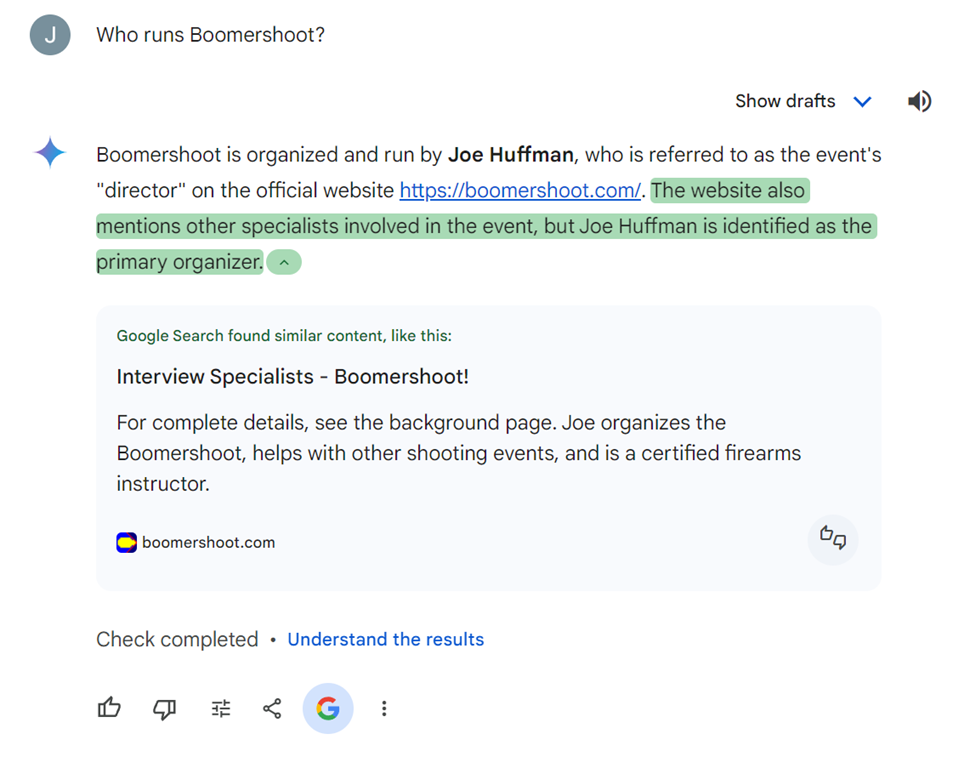
Google’s chatbot is making things up.
I have avoided Google products for a long time.
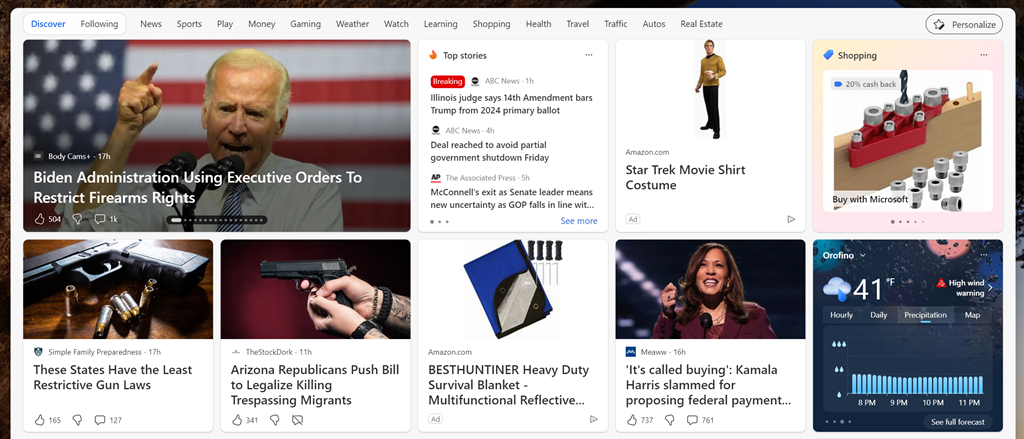
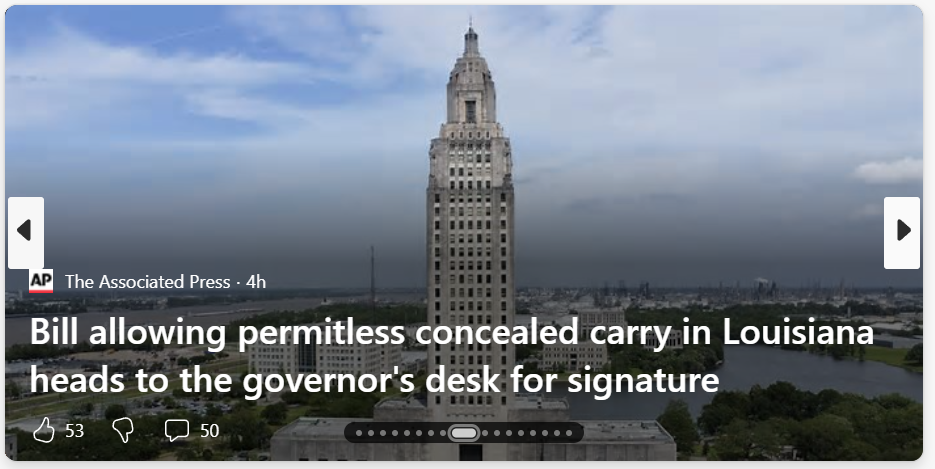
A year or two ago I allowed Edge to use MSN as my start page. It has done a good job of automatically feeding me the types of things I am interested in. Here is a sample (click on the images to embiggen):
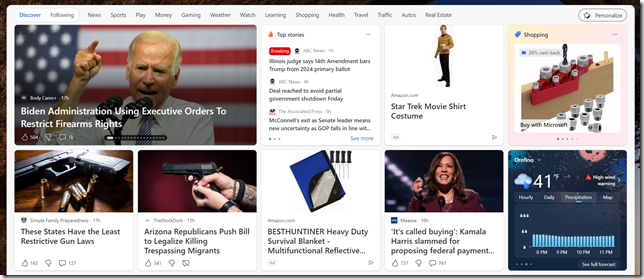
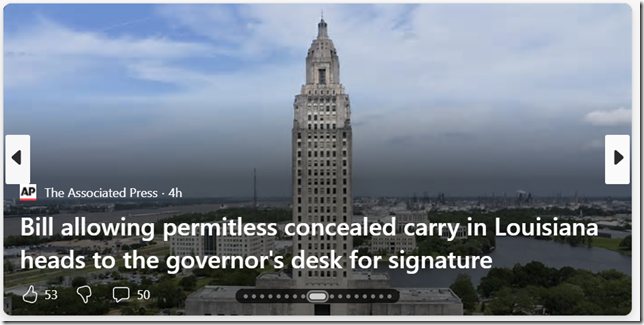
Notice the gun stuff? As near as I can tell Microsoft didn’t put their thumb on the scale to send me communist leaning articles.
I get a Google news feed on my phone. There is seldom anything gun related and it has a definite bias.
Like this:
Like Loading...