My 2 cents on the AR system

Both Uncle and Tam linked to what seems to me like an excellent article on the failure mode(s) of the M16/M4 system, which cemented, for me at least, a great deal of respect for the platform. If you haven’t read the whole thing, Do Read it.

It concludes (after much explanation of HOW the conclusions were derived);

“How to Deal With Heat Limits
The Training Answer: First, every GI should see those Colt test videos [of firing them to failure] and know what his gun can, and can’t, do. While the Black Hills guys were correct in noting that SF/SOF guys usually manually fire single shots or short bursts, even most of them don’t know what happens when a gun goes cyclic for minutes at a time. A good video explaining “why you can’t do that” would be a strong addition to training, not only for combat forces, but for support elements who may find themselves in combat and feel the urge to dump mags at cyclic rate.

The Morale Answer: Every GI should see the same done to AKs as well. There is a myth perpetuated by pig-ignorant people (like General Scales) that the AK series possesses magical properties and that the American weapons are crap. In fact, nobody I know of at the sharp end is at all eager to change, perhaps because the laws of physics and the properties of materials apply just as firmly to a gun originally created by a Communist in Izhevsk as they do to a concept crafted by capitalists in California. If you’ve ever fired an AK to destruction, you know that it grows too hot to hold, then the wooden furniture goes on fire, then, if you persist on firing it full-auto, it also goes kablooey. Not because there’s anything wrong with this rifle, but the laws and equations work the same for engineers worldwide.

The Systems Answer: As you can see from the Colt videos, if you clicked on over to Chivers’s article, thickening the barrel nearly doubled the rounds to catastrophic failure on cyclic. An open/closed bolt cycle might have practical benefits. They wouldn’t show up in sustained heavy firing like the destruction tests, but they might show up in how a weapon recoups from high temps, and open-bolt autofire would eliminate cook-offs, at least. But any such approach needs thorough testing.

The Wrong Answer: Replacing the M4 with something like the SCAR or the HK416, something that is, at best, barely better, that is much more maintenance intensive, and that, contra Scales’s assertion that his undisclosed client’s weapon is “the same price,” is twice (SCAR) or three times (416) the money. (The 416 mags are the best part of the system, though).”

I’ve fired over a thousand rounds in a day, both from an AK and a Ruger Mini-14, and didn’t come even close to failure, or even serious degradation of the rifles. (I haven’t tried it with the AR simply because my business hasn’t made products for it as yet) But then I’ve WORKED WITH steel since I was a kid, and know first hand how soft and moldable it becomes at high temperature, and I’ve seen how it can be “hammer welded” which is welding two pieces together that are red hot, just by hammering them together). And just about anyone who grew up on a farm understands “instinctively” that even the best steel becomes soft enough to bend like a pretzel, using nothing but hand and arm muscles, at high temperature, because THEY’VE DONE IT over and over. And so, without even having to think about it, it was natural for me to avoid over-heating the weapons. I’ve never had so much as a cook-off (again; as kids we sometimes cooked off naked rounds on purpose, because it was interesting and fun). I have no doubt than an AR-15 would do as well in a thousand round, one day test, though it may need a little attention to keep it cycling with the carbon that gets into the action. My Colt AR has been known to stop after about 350 rounds unless I keep it real wet (and depending on the particular ammo).

That one of the M4s in the battle related in the article was able to get through ~600 rounds in a very short time is pretty awesome. The physical limits of the steel were exceeded at that point, and physics is physics.

Another quote from the article stuck out to me as great. It addresses the trade-off between the ability of a weapon to fire an enormous number of rounds quickly without failure, verses the operator’s ability to actually carry it (because it’s too heavy). This may be a paraphrase, but it’s really close;
“You can carry it all day or you can fire it all day, but you can’t do both.” Yup. Take your pick.

But then if you’re unfortunate and pathetic enough to have gotten your technical and physics information from Hollywood actors you might believe that, “Fire doesn’t melt steel”.

I found it interesting to look at the “service life” of a typical rifle in terms of actual bullet-acceleration-in-bore time. If we assume a nice round number of one millisecond to push a bullet through the bore, and if we assume a nice round number of, say, 30,000 rounds to wear out the rifle, that’s a “service life” of thirty seconds. Compared to your family car’s engine, the combustion system in a rifle runs at awesome power levels, and with no oil pressure. Your actual mileage may vary.
Rounds

I reload my own ammo and occasionally a few rounds for friends. I have log files for each caliber and I recently wondered how many rounds I have reloaded for the various calibers. The log files were simple text files and included calibers for which I just did some chronograph measurements and calibers I only did preliminary things like explore powders and bullets to use.

It turned out that the typical log file entries were consistent enough that I could write a simple program to count the number of rounds I reloaded. A typical entry looks like this:

12/27/2014 100 rounds. Win primers. 180 grain Winchester JHP over 6.0 grains of N350. 0 rejects.

All the program had to do was search each line in the files for the word “rounds” preceded by a number then sum those numbers. I found a few cases were I had recorded group sizes or chronograph tests that match the format and changed those to something like “10 shots over the chronograph” from “10 rounds…” and ran the program on *.log in the reloading directory. The result was about double of what I expected in every caliber:

223.LOG: 2027 rounds.
22LR.log: 0 rounds.
3006.LOG: 467 rounds.
300WIN.LOG: 1351 rounds.
40SW.LOG: 34941 rounds.
45.log: 0 rounds.
9MM.LOG: 18643 rounds.
Total: 57429 rounds.

It’s not near as many as a lot of people but I was still amazed. Of course I did start reloading on October 3rd, 1996 which is over 18 years ago. So that only figures out to about 3200 rounds per year. I’m hoping to up that considerably and do a lot more shooting this year.

A story in one bullet

In 1860s America the percussion revolver was the prominent fighting handgun. The 44 caliber, or “44/100ths calibre” was so named at the time because of the gun’s bore. Today we tend to use groove diameter to define caliber, but then why does a modern 44 use a .429″ bullet and a 38 use a .357″ bullet?

Much of the answer lies in this one bullet. When the 44 caliber percussion revolver was converted to fire metal cartridges, it presented the following challenges. The cartridge case of course had to fit into the percussion cylinder chambers, and had to fire a bullet of around .452″ to fill the grooves in a 44 caliber bore. SO the metal case had to fit inside a .452″ or so chamber, and fire a .452″ or so bullet, AND therefore the bullet had to have a heel base of around .429″ to fit inside the metal case. Such is the 44 Colt cartridge. It was built for cartridge conversions of percussion cylinders. It’s a 44 caliber because of the naming convention of the time which went by bore, rather than groove diameter, it uses a .452″ bullet and has a .429″ heel to fit in the case.

From that transition cartridge we see the seeds of how a modern “44” came to have a .429″ bullet. A similar thing occurred with the conversion of 36/100ths calibre percussion revolvers, and that’s how a 36 used a .380″ bullet and how a modern 38 uses a .357″ bullet.

Classic dog shoots man story

This is via an IM from David M. at my work.

Someone wasn’t following all the gun safety rules:

Sheriff Steve Kozisek said Richard L. Fipps, 46, of Sheridan had driven to Murphy Gulch Road with two employees to move a vehicle that had become stuck. Fipps was standing beside his truck as chains were being removed from the front of it when he was shot.

Kozisek said Fipps told a dog in the front seat of the truck to get into the back seat. Among other personal items laying on the back seat was a .300 Winchester Magnum with the safety apparently turned off. The dog managed to discharge the weapon, which fired through the cab of the truck.

The gun wasn’t in use. It should have been unloaded and in a case. Now he may lose his arm. He and others could have been killed by this single shot.

A legend in my own time?

I recently had an email conversation with John G. at the Lewiston Idaho pistol club. I haven’t attended a match there in probably two years but he said they still tell stories about me.

Really?

So he claimed. Then he gave me the following examples (link added about the magazine shooting incident):

A shooter dropped a mag while reloading on the run and somehow booted it into the target area, prompting the story about Joe Huffman, who once shot one of his own mags clean through…  Better to be infamous than forgotten, I suppose.  Strangely, I’m reasonably certain that the person telling the story wasn’t shooting with us when it happened, suggesting you’ve become part of the oral history of our matches.

We also still use you as a unit of measure for heights (e.g., “Joe Huffman could shoot over it but nobody else can, so it’s high enough”).

Wow! I’m thinking maybe I should go back and shoot a match with them again sometime over the holidays.

I was wondering. Does this make me a legend in my own time? Or just in my own mind?

Remington clarification

Here are some of the headlines from the lamestreet media (phrase stolen from Alan Korwin):

Never trust the media to get things right. Especially in relation to firearms. Here is what Remington says, via a Tweet from greenmeanie:

HOUSTON, Dec. 6, 2014 /PRNewswire/ — On Dec. 5, 2014, papers were filed seeking approval of a proposed settlement of two economic class-action lawsuits of certain Remington bolt-action centerfire firearms that contain either a Walker trigger mechanism, or a trigger mechanism which utilizes a “trigger connector.”

The filings triggered multiple news reports that mistakenly conveyed the proposed agreement in significant fashions that require immediate clarification.

  • These settlements are not recalls.
  • These settlements are not any admission that the products are defective or unsafe.
  • These settlements are an opportunity for any concerned consumers who have the Remington Model 700, Seven, Sportsman 78, 673, 710, 715, 770, 600, 660, XP-100, 721, 722 and 725 rifles with either a Walker trigger mechanism, or a trigger mechanism which utilizes a “trigger connector” to have Remington install a new trigger.
  • The benefits under the settlement, including the trigger replacement program, will not be in place until after court approval of the settlement and full notice will go out at that time.
  • This culminates from extensive mediator-supervised negotiations between lawyers for those concerned about the triggers and Remington, who while denying there is any cause for concern, always desires to ensure that its customers are satisfied with Remington products.

    A joint press release will be issued to better explain details of the proposed settlement.

    For further information, contact: Mark Lanier at wml@LanierLawFirm.com; 800-723-3216

    SOURCE Lanier Law Firm

    Hunting with an AR

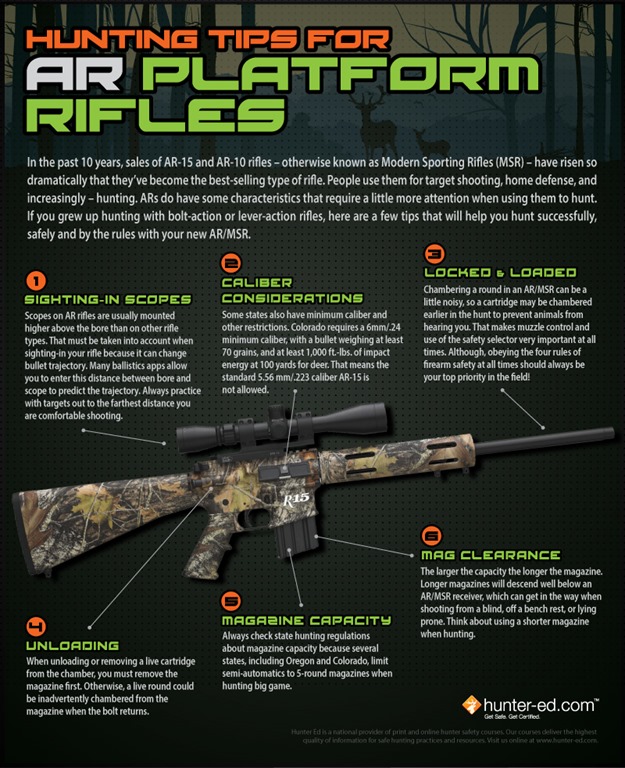
    Via Hunter-Ed.com:

    AR_Infographic_Rd3-1

    Don’t let anyone ever get away with saying these guns are not for hunting.

    Apitir

    Years ago I read about a fascinating pistol target device described by Jeff Cooper as an Apitir. I searched for it at the time and found nothing. I later forgot the name, which I knew only as an odd name starting with an A. After rediscovering Cooper’s description and searching for it just now, I still find nothing. If anyone is building them, or has build even one, they haven’t posted it on line by the name Apitir, and almost no one has been talking about it.

    Cooper describes it in the sixth item on this page. It’s a great idea, Cooper wanted it to be widely embraced, and since no one else is talking bout it, at least under that name, well, there it is for you to ponder.

    It shouldn’t be difficult to build, but I don’t quite understand what he meant by “actuated by the shooter…with the shooting hand.” Maybe he intended that your pistol be holstered as you pull a cord or some such, and then as the disks begin to roll you draw, aim and fire. My (apparently incorrect) memory of it was that you’d shoot a central target, which would release the two rolling disks. He did not indicate the angle, or pitch, of the sloped runners. A variable slope would allow you to experiment, or change the difficulty, as desired. Some experimentation would be in order, to find a rail design that reliably keeps the disks on track, and lets them fall off when hit.

    I remember thinking that a magazine full of the disks, and a feeding mechanism, would allow for several actuations, or tries, before having to reset the thing. That would make it more complicated and expensive, but far more useful.

    If I had any trust that it would remain unmolested by rifle fire for a number of years, I’d have one built and keep it at the Peterson range. Something like that would make a pretty sweet rifle target though, too.

    One compromise design, or variation, would replace the steel disks with clay “jackrabbits” or similar targets.

    Regarding primers…

    …and getting testy;
    There is total energy, and then there is peak power, time to peak power (which in audio circuitry we referred to as “rise time”) and duration of peak or near peak power. So you’d likely want to be able to graph it as power over time, to “really know” what’s happening. Point being of course that total energy would be somewhat inconsequential unless the power were up to a certain level for a certain period.

    But maybe you got it just like that already. If so, carry on. Don’t mind me sitting in the corner and muttering.

    Experiments with oil and primers

    A week or two ago Ry showed up in my office and said he wanted to do an experiment. He and I have had conflicting information on the contamination of primers by oil. The common word on the Internet and word of mouth is that if you get the tiniest amount of oil on the chemically active portion of a primer then it would go dead.

    However Ry had seen Lyle demonstrate this was not true by putting CLP in a shell casing with an active primer then detonating it a minute or two later. I had done similar things myself. I wanted to deprime some cases with live primers and to test the “kill the primer with oil” hypothesis I put a thin oil in the mouth of a shell casing and waited, sometimes a day or more, but they would still fire just fine. Bah! As usual the Internet is wrong. Right?

    As we talked about the experiment we realized the Internet story wasn’t quite the same thing as our first hand data. Our first hand data wasn’t of putting oil directly on the primer. It was putting oil in the mouth of a shell casing. We believed the thin oil would make it through the flash hole into the active area of the primer.

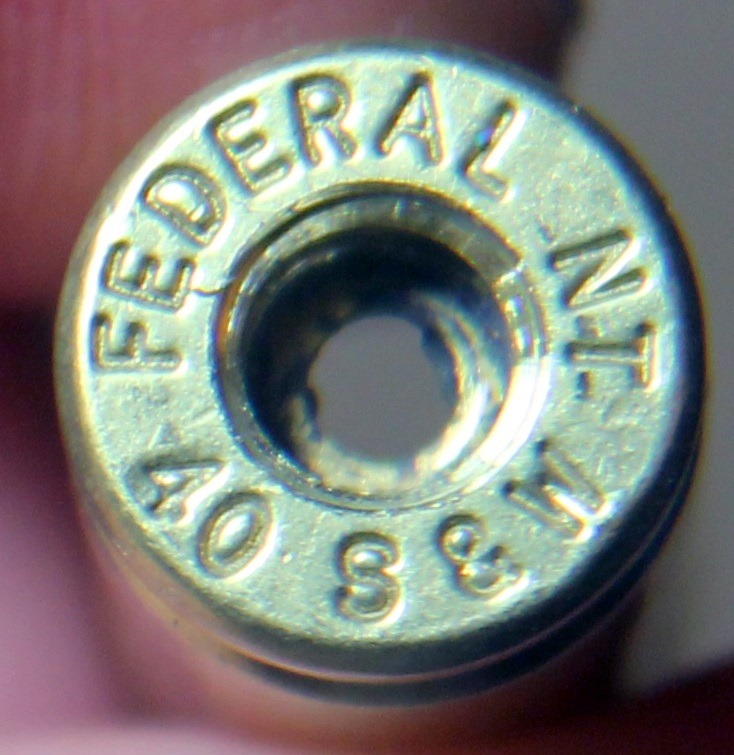
    IMG_1815CroppedAdjustedIMG_1816CroppedAdjusted

    But that was an assumption. It was not a proven fact.

    So what we decided to do was soak the primers for few minutes in a paper cup and then load them in a shell casing. We would do several primers then test them at various time intervals, like an hour, a day, a week, and a month. We expected the primers would still be fine after a month and the myth would be busted.

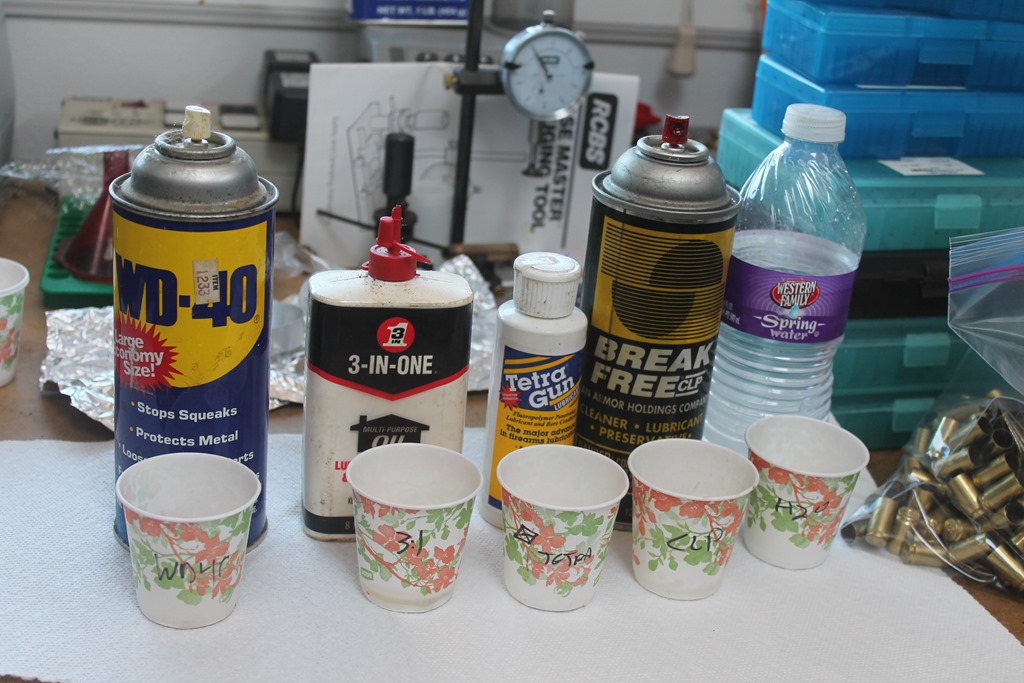
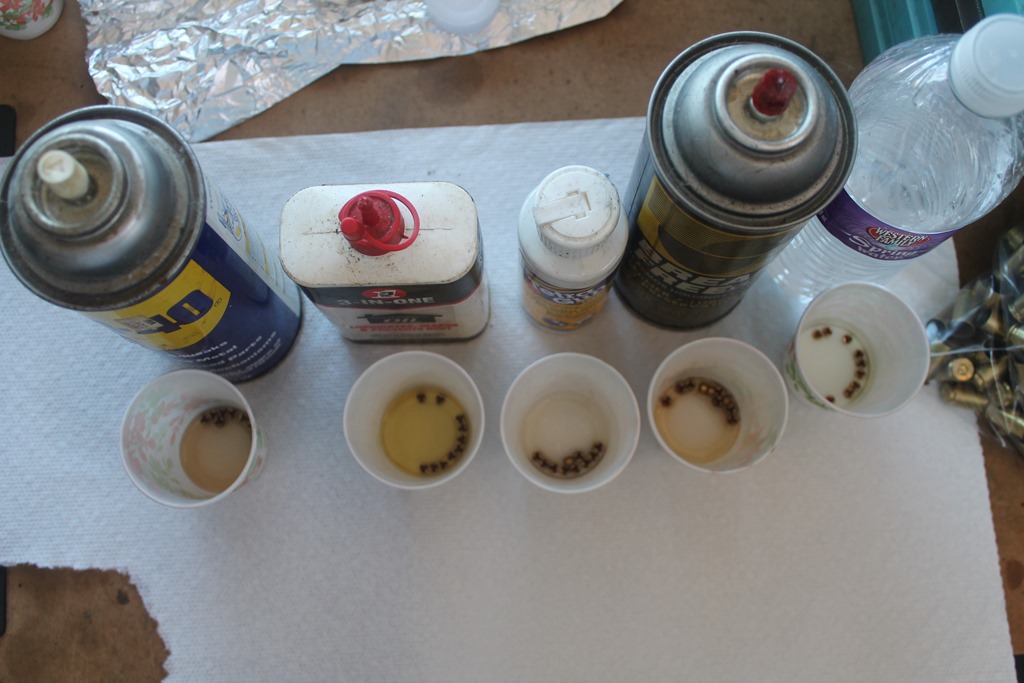
    Here are the solvents we tested:

    IMG_1802

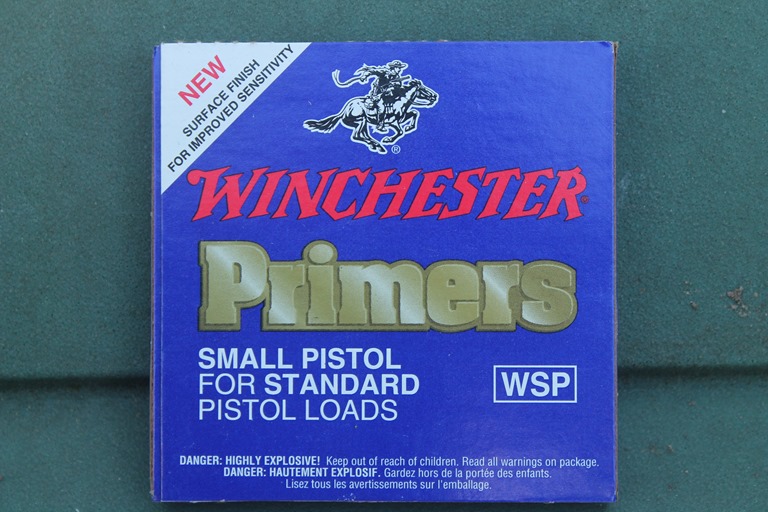
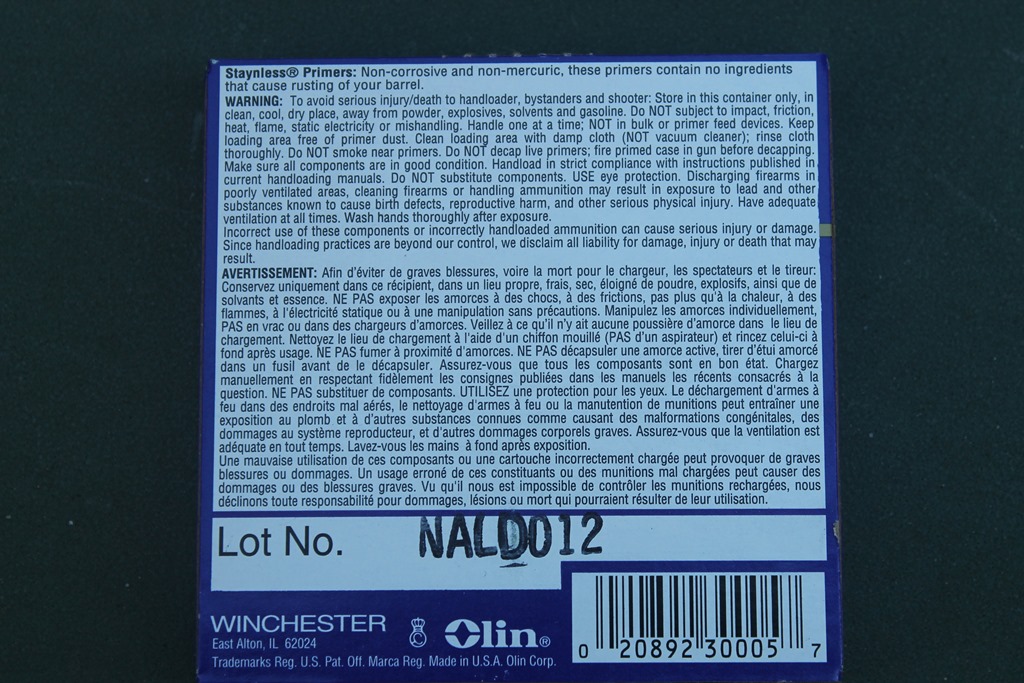
    We used Winchester small pistol primers:

    IMG_1806IMG_1812

    Here are the primers being soaked prior to inserting on the empty shell casings:

    IMG_1803

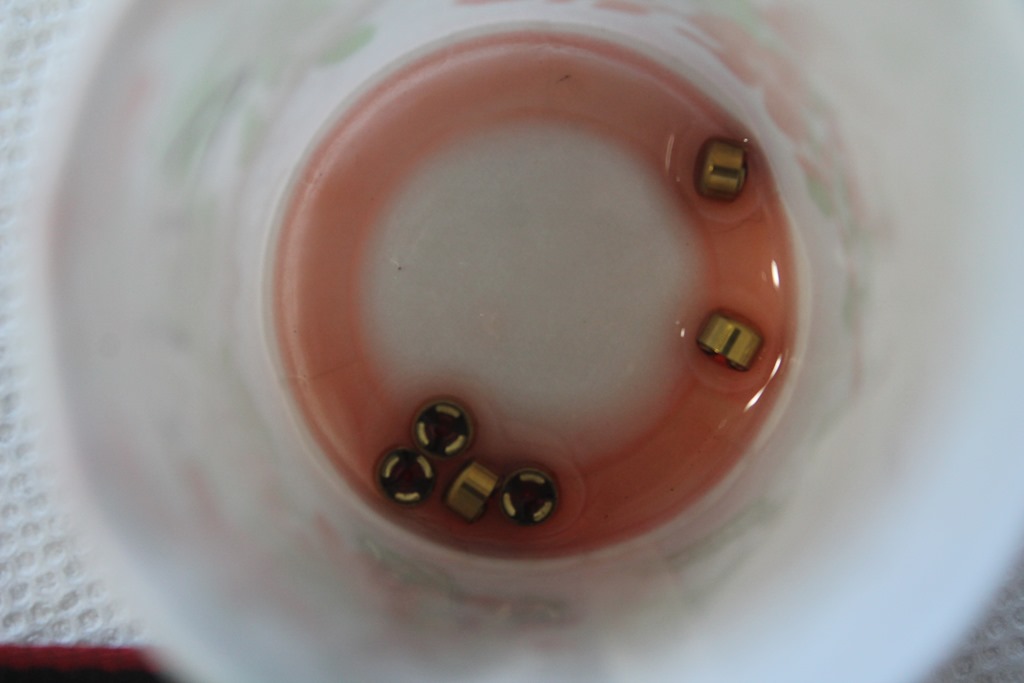
    An interesting thing occurred. The primers soaked in Break Free CLP turned the CLP slightly red after a few minutes:

    IMG_1804

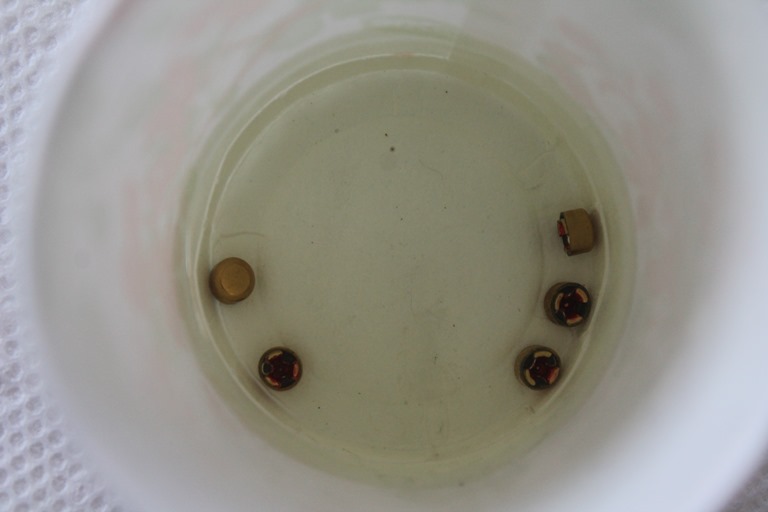
    And the primers in the water turned the water slightly yellow:

    IMG_1805

    We also created two control sets. One set had dry primers in a dry shell casing and the other set had dry primers with solvent put in the shell casing.

    After we had all the shell casing loaded Ry added more of the solvent to the test shell casings so evaporation would not be a factor in the long term testing.

    We then tested both control sets and the test set.

    We hand loaded the empty shell casings into a handgun and put the muzzle tight against an air pillow used for padding in Amazon shipments. We then fired the gun. If it failed to fire we would cock the hammer and try a second time. If it failed both times we called it a dead primer. There were no primers which failed on the first attempt and succeeded on the second. If it popped the air pillow it was a “vigorous” detonation. If it failed to puncture the air pillow it was a “mild” detonation:

    IMG_1809

    The dry normally inserted primers would punch a hole through both sides of the air pillow even though there was a significant air gap between the two sides:

    IMG_1810

    We tested two primers for each solvent. The results with solvent only in the shell casing mouth were as follows:

    Solvent Detonation Result
    Water 2 vigorous
    Break Free CLP 2 vigorous
    WD 40 2 mild
    3-IN-ONE 1 vigorous, 1 mild
    Tetra Gun Lubricant 2 vigorous

    This confirmed the tests Lyle and I had done years ago. The primers were still active after putting oil in the case mouth.

    Here are the results of the primers soaked in the paper cups with solvent:

    Solvent Detonation Result
    Water 2 dead
    Break Free CLP 1 mild, 1 dead
    WD 40 1 mild, 1 very mild
    3-IN-ONE 2 mild
    Tetra Gun Lubricant 2 mild

    We will have updates later after the remaining primers have soaked for longer periods of time but it is clear that the flash hole is a significant barrier to the entry of solvents into the primer compound and the common wisdom of oil damaging primers is true.

    Update from Ry after one day:

    Solvent Detonation Result
    Water 2 dead
    Break Free CLP 1 mild, 1 dead
    WD 40 1 very mild, 1 dead
    3-IN-ONE 1 mild, 1 dead
    Tetra Gun Lubricant 2 dead

    Quote of the day—Barb L.

    Why is it so much fun?

    Barb L.
    October 11, 2014

    [It’s not on video but she said this after shooting steel with a suppressed .22 pistol with no ear protection for the first time. The video above was probably about her fourth magazine on the steel.

    The answer to her question? “It just is.”—Joe]

    Well, there’s always the Contender

    Via TFB, we see The Dominator, a 308 Winchester upper for the 1911. OK then. As Cooper was fond of saying; I suppose we should refrain from asking “why?” I don’t know what it’s for, but it is interesting from a gadgetry liker’s point of view. If it were a choice between the two I think I’d take the Thompson Center Contender. Hmm; how about a 300 Win Mag upper for your LCP, then, for, you know, uh…practice, or something, so when you’re out shooting for defense with your .380 it would serve as low recoil practice for big game hunting.

    Boomershoot 2015 statistics

    Boomershoot 2015 is now half full:

      Total Average per position taken Average per total positions
    Positions Taken 38 0.50
    Participants 71 1.87 0.93
    Friday Field Fire participants 11 0.29 0.14
    Friday Clinic participants 6 0.16 0.08
    Friday High Intensity participants 16 0.42 0.21
    Private Fireball participants 0 0.00 0.00
    Saturday Field Fire participants 29 0.76 0.38
    Saturday Clinic participants 4 0.11 0.05
    Saturday High Intensity participants 8 0.21 0.11
    Dinner participants 37 0.97 0.49
    Shooters 70 1.84 0.92
    Spotters 1 0.03 0.01
    Media/Bloggers 9 0.24 0.12
    ATF Approved 12 0.32 0.16
    Staff 24 0.63 0.32

    Keep in mind this after the event has been open for entry for a little over a week and over seven months before the event. There are still positions open in every area so whether you want to shoot from the well drained ground on the berm, with a bench with room for a canopy, or in the .50 Caliber Ghetto you still have those options available.

    There are still opening for Private Fireballs too. The smoke from these can sometimes be seen from over three quarters of a mile away. It’s tough to describe the intensity of the blast when you are 50 feet away. The phrase we hear about 75% of the time from first timers is, “Holy shit!

    Sign up here.

    Kit Gun

    OK, so I’ve been ignorant. Laugh and make fun of me and get it out of the way. Tam posted about a “Kit Gun” recently. I’d seen that term many times, and it’s always been used as though everyone understood what it meant and there was therefore no point in trying to explain it. Kind of like the high school meetings I missed because, well, “We told everyone” they said (meaning they told a few people and assumed everyone else would hear it from them. I was always out of the loop because I only attended half days my senior year. It was a good excuse to avoid pep rallies anyway.

    I searched “kit gun” some time ago and came up with nothing helpful, but doing it just now I found it! A kit gun means it goes with you on hiking and camping trips, and the term comes from the “kit bag” that a hiker or camper might carry. Well I’ve hiked and camped all my life and never heard of a “kit bag”, so the term “kit gun” has been not at all obvious to me. I somehow missed that memo. I suppose everyone knew about all this but me.

    That makes just about every gun I own a “kit gun”, technically, since I would take most any of them along on a camping trip or a hike, and have done so in most cases, but I guess the term refers to one that’s generally more handy (smaller and/or lighter) than some other similar gun in a similar caliber, kind of how a “carbine” is a relatively shorter and lighter version of a particular rifle. As far as I can determine through observation of usage though is that a “kit gun” refers to a handgun only, not a long gun, even though I do have what might be called a “kit bag” that holds a long gun. So a relatively light and handy rifle equals “carbine”, while a relatively light and handy handgun equals kit gun. Is that about right?

    Does this mean that ANY service pistol is a “kit gun” simply because soldiers tend to hike about and are known to camp?

    Just learned this today, so it may be flawed. I’ve ordered “gun kits” before but apparently those do not necessarily qualify as “kit guns”, though there may be such a thing as a “kit gun kit” from which you build your own kit gun.

    OK, so there MUST be a term for a light or small and handy shotgun that I’ve never heard. “Coach gun” maybe, but that’s a side by side with exposed hammers, in my mind anyway, which would exclude many other light and handy shotguns.

    Bath time

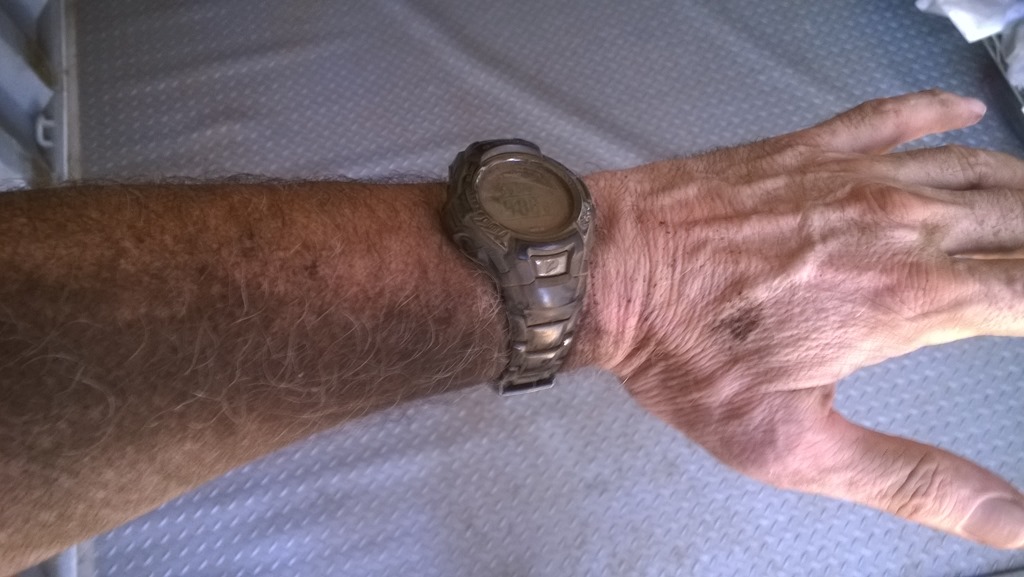
    I did a bunch of dozer work at Boomershoot Mecca this weekend. It was very dirty work. The ground was very dry and it turned to powder as soon as I broke it up with the blade. I got really dirty:

    WP_20140906_013

    I wore gloves and my hand was clean by comparison:

    WP_20140906_015

    I have a solar heated shower at Mecca so I dusted off my clothes and rinsed off my head, arms and hands before I got in my car and left for the day.

    But what I didn’t have there was my gun cleaning supplies.

    IMG_1620Cropped

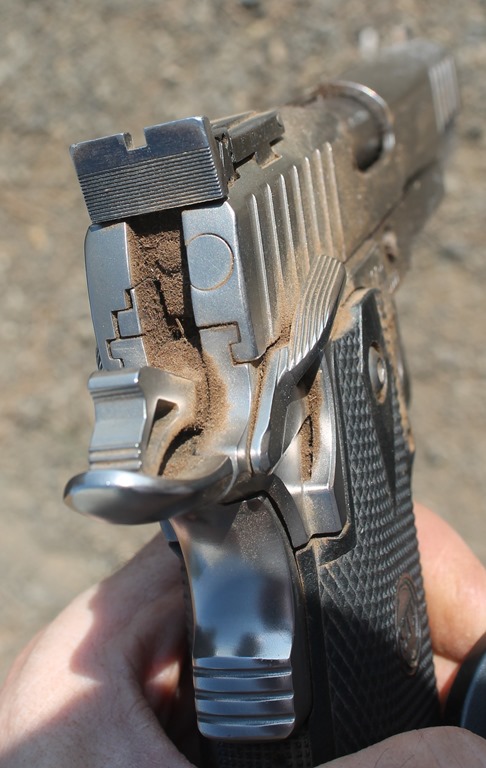
    It probably is functional for at least as many shots as would be needed in a self-defense situation. But I’m sure the wear rate would be dramatically increased with the oil being soaked up by the dust. And the odds of a malfunction have to be much higher than normal.

    It’s ultrasonic bath time for my STI.

    Kids and guns

    When I started reading this I was working myself up for a rebuttal but by the time I finished I decided it wasn’t worth it.

    Via @rhodeskc:

    KidsAndGuns

    Three counties in Idaho make the list

    According to this article three of the top thirty counties in the country for homes that have guns are in Idaho. Nez Perce County (Lewiston is the county seat) is number three with 59.0% of the households having guns. They were edged out by Fairbanks borough, AK and Tooele County, UT both with 59.1% (I want a recount!). I don’t consider it home but I do own a little land in that county and drive through parts of the county whenever I go to the Boomershoot site.

    Nez Perce County is home to CCI and Speer which are some of the area’s largest employers so those workers probably contributed a far amount to the gun ownership in the area. Another thing that probably influences the ownership in the area is the good hunting. Hunting is a very popular activity there.

    The Gun Box

    I was sent, for a limited review time, The GunBox Biometric Hand Gun Safe.

    First the negatives.

    They have a YouTube video on how to get into the box with a common tool. The video is not listed so that helps but security through obscurity is, putting it mildly, frowned upon in the security world.

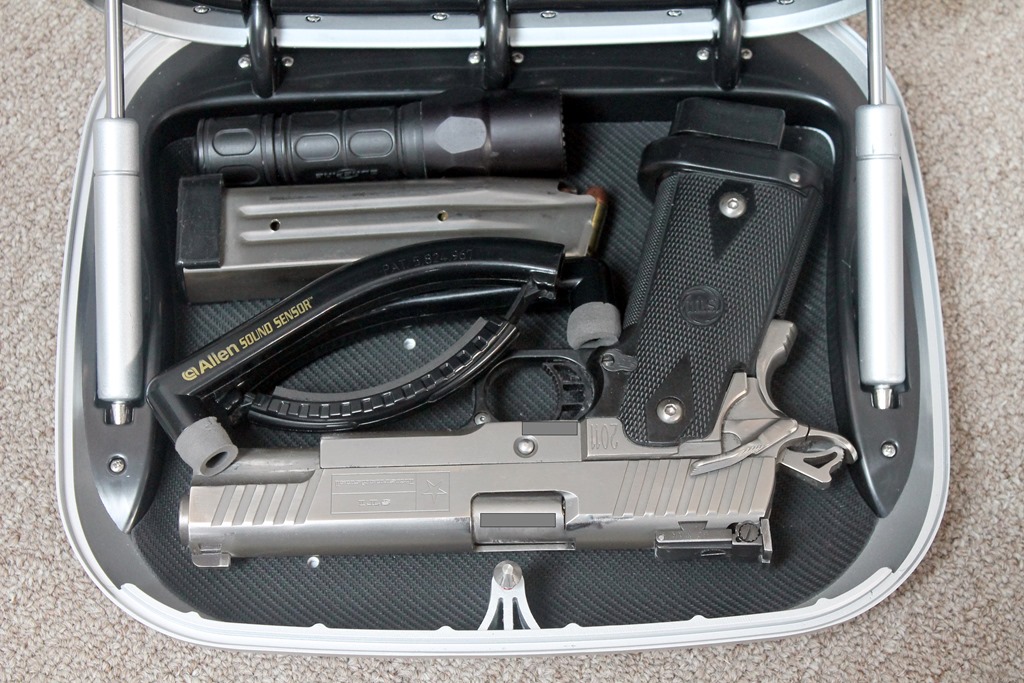
    The interior height should be a little greater. It was tough to get the lid to close with my STI Eagle. The oversized magazine well would hit the lid when I tried to close it. I was finally able to find a configuration to get everything, including hearing protection, in but it was tight:

    IMG_1577AdjustedForWeb

    And if I didn’t have the gun in just the right spot it would fail to open unless I put some pressure on the lid when the mechanism was activated.

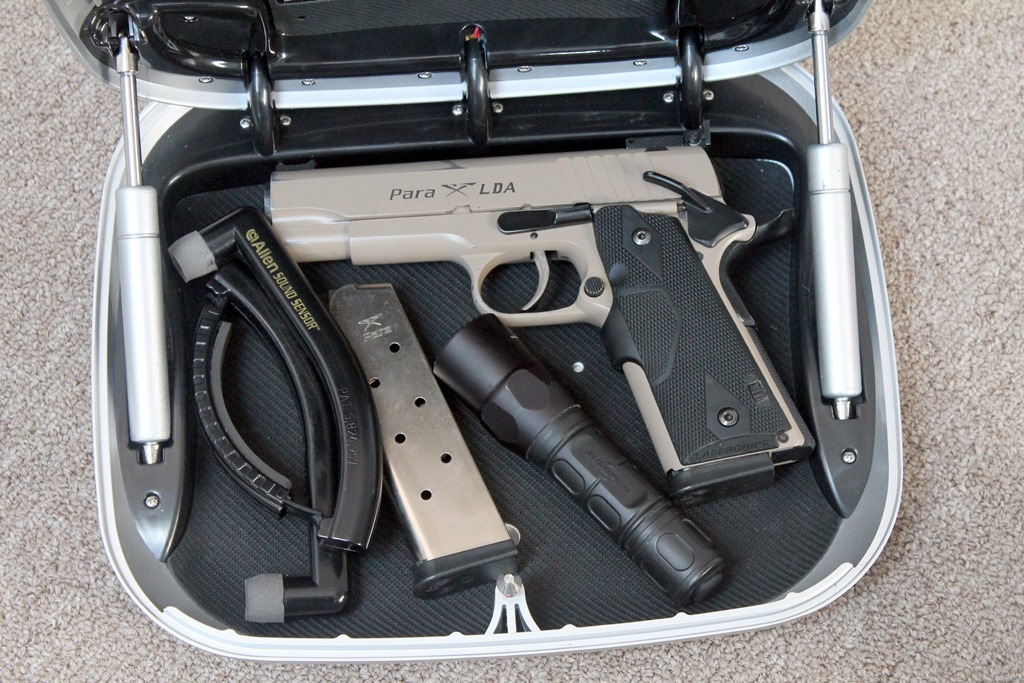
    My Gun Blog .45 fit fine in most positions. Some positions were still an issue. The magazines had to be laying flat which took up more space than I thought they really should. My Surefire 6PX Flashlight was limited to certain locations in the box as well.

    IMG_1576Adjusted

    Next, the positives.

    It does seem to be pretty tough. I was a little disappointed in the testing in their video:

    I would have like to have seen attempts at prying it open by someone with a little more skill and strength than the small children shown in the video. But it’s cast aluminum. A hacksaw is going to cut through it in seconds so anyone that has access to tools, time alone with it, and doesn’t care about damaging the box will easily gain access. This is not intended to be protection against skilled and determined thieves.

    It is opened via an RFID (wristband, optional ring, or RFID label to put on your phone or drivers license) or fingerprint. The slowest access time is with your fingerprint as it takes longer to read and process it than it does with one of the RFID access methods. From “the buzzer going off” to “first shot” took me about four seconds. With the wristband I could do it in three. I was a little annoyed with the wrist band in that I had to present a certain portion of the band to the sensor. For the easiest access to the box the buckle of the wristband needed to be on the top of my wrist which is the least attractive way to wear the band.

    Initially I wasn’t too keen about the opening mechanism but I was focusing on the wristband. I still don’t think I would wear the wristband all the time. And if you left the wristband in a drawer or in a closet then it would be more susceptible to discovery by the kids. Don’t worry about having the wristband around if you don’t plan on using it or if you lose it. You can have the box unlearn all fingerprints and RFID devices and reprogram it for just the opening methods you plan to use.

    And I might see putting the label on my drivers license even though it would be much slower to find my wallet in the pile of clothes beside the bed. It could read the label through the wallet just fine. It wasn’t necessary to remove the label from the wallet so the time to open would be primarily the time to get your wallet to the sensor.

    Some people might find wearing a ring acceptable. I’m not a ring person and I wouldn’t wear a ring just for this gun box.

    The fingerprint method seemed to work well enough. This is how I think I would use it. I programmed it to accept three of my fingers and one of Barb’s then she, her daughter, and I all tried all our other fingers in an attempt to get a false match. All attempts at false entry failed.

    I occasionally had failures to open on the first try with both my index fingers. I think it was the vertical angle (airplane pitch) I used when it was learning the fingers. When it was learning the fingerprints it was on the floor where I was taking pictures. When I was doing extensive access testing it was on the desk while I was sitting.

    I had it learn the same fingers again with the angle I used when sitting at the desk and access was almost 100% on the first try. They claim it will hold “approximately 100 unique fingers” so you might consider programming it for the same finger in different orientations for more reliable opening. You do not need to do this for various horizontal (airplane yaw) angles. The sensor works just fine for 360 degree access on the horizontal plane. That is very nice feature and it work flawlessly for me.

    Here is one of their many videos on the use of The Gunbox:

    I liked this safe and for keeping guns out of the hands of children and casual access attempts by unauthorized people I would recommend people give it serious consideration. It’s attractive enough to leave on the nightstand and functional enough to keep the kids out of it.

    Boomershoot steel target testing

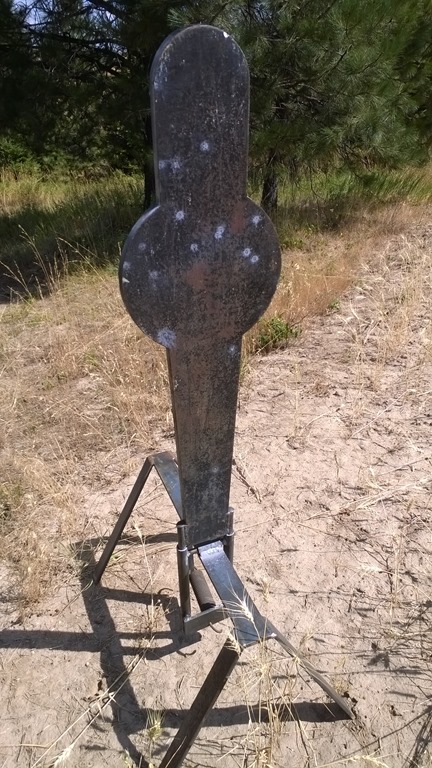
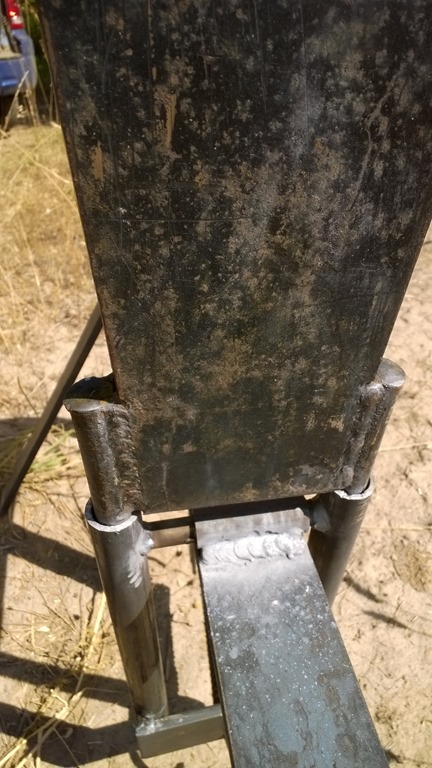
    Phil repaired the Boomershoot target steel someone (not a Boomershooter, it’s a long story) damaged with steel core bullets. This last weekend I tested the “target dog” he built for me. It was also the first time I had shot at the steel myself from further than about 75 yards.

    Except for a single shot with a .40 S&W from about 20 yards all the shots were from 375 yards.

    WP_20140817_007

    The target is 3/4” AR500 so they are not your standard pistol targets. They were intended to stand up to .300 Win Mag from 375 yards and beyond. The white splotches on the target above were almost all from 55 grain .223 FMJ bullets at 375 yards. They barely took the paint off and as near as I could tell did not rock the target backward. The spring, as Phil noted, is way too stiff for that. And I suspect that with a .223 and that massive of a target it’s physically impossible to select a spring such that a bullet strike would knock it backward such that a mild breeze wouldn’t also do that. The .40 S&W didn’t move the target either.

    WP_20140817_008

    Notice the white stuff at the base of the target? That is lead spray from the bullet strikes on the target.

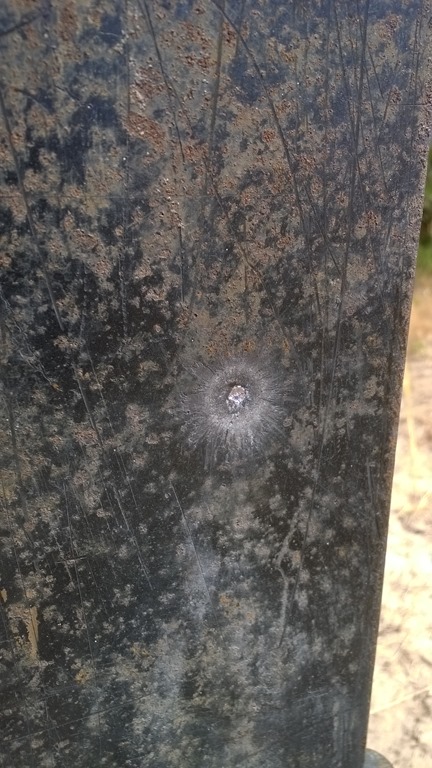
    I was trying to zero my .300 Win Mag, without a spotter, from 375 yards and only got two hits as I probed different hold overs and unders. And the bullet splash on the steel was so small I couldn’t see it even with the 14 power scope at that distance. Here you see the impact from a 190 grain Sierra Match King bullet hitting the steel at about 2475 fps:

    WP_20140817_009

    There is just the tiniest of craters there.

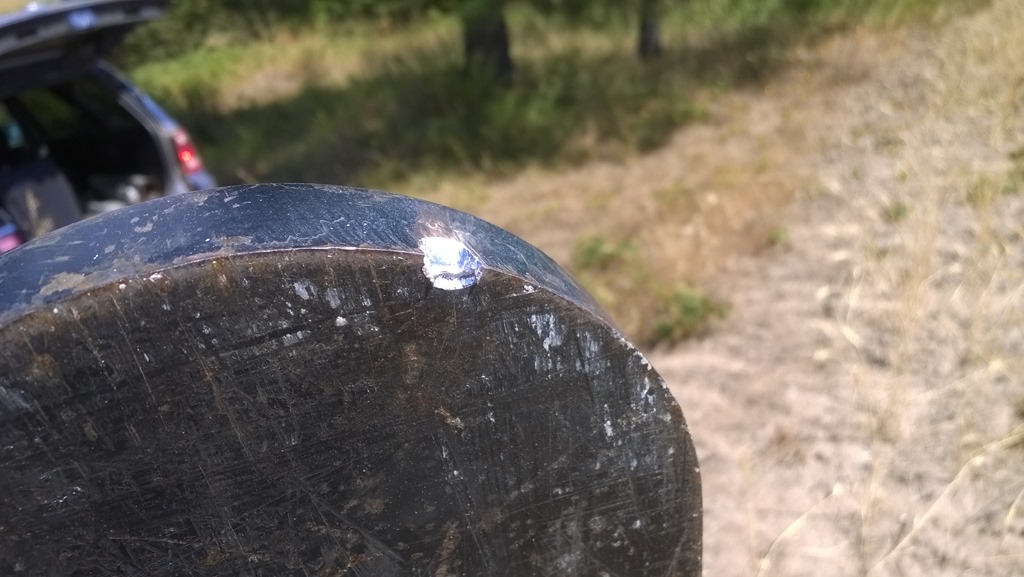
    A hit on the edge of the steel is another matter:

    WP_20140817_010

    The two .300 Win Mag hits weren’t particularly good to judge the knockdown potential of the configuration but as near as I could tell there was, again, no movement.

    I’m extremely pleased with the crater repair Phil did. The targets look awesome! But we need to crunch some numbers to see if it is possible to choose a spring or maybe redesign the target dog such that it will be self resetting for a .30 caliber bullet at Boomershoot distances.

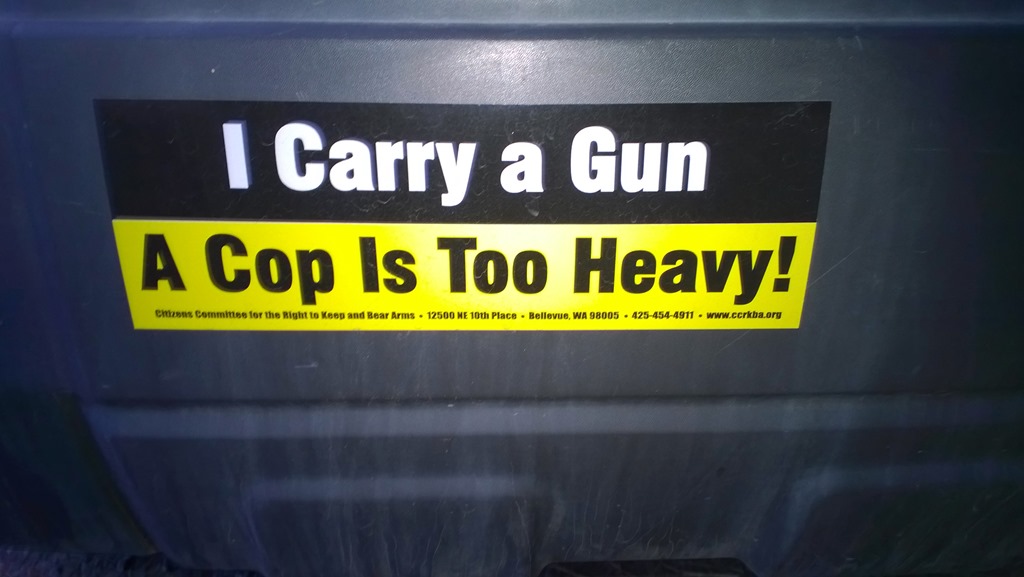
    On the bumper

    I saw this on the bumper of the car my daughter drives:

    WP_20140816_012