Ry and I went out to the Boomershoot site with a new version of the chalk dispenser (also known as Blastmaster 6000). An identical unit was tested in California a few days ago using Tannerite and it worked well without showing any signs of weakness. We were pretty confident that it would hold up better than version 1.0.
We used 200 grams of Boomerite in each test. By volume this one cup, which was the same amount used the designers in their first tests. They later increased the amount to a soda can full with still no structural failures. We put 500 grams of chalk dust on top of the Boomerite.
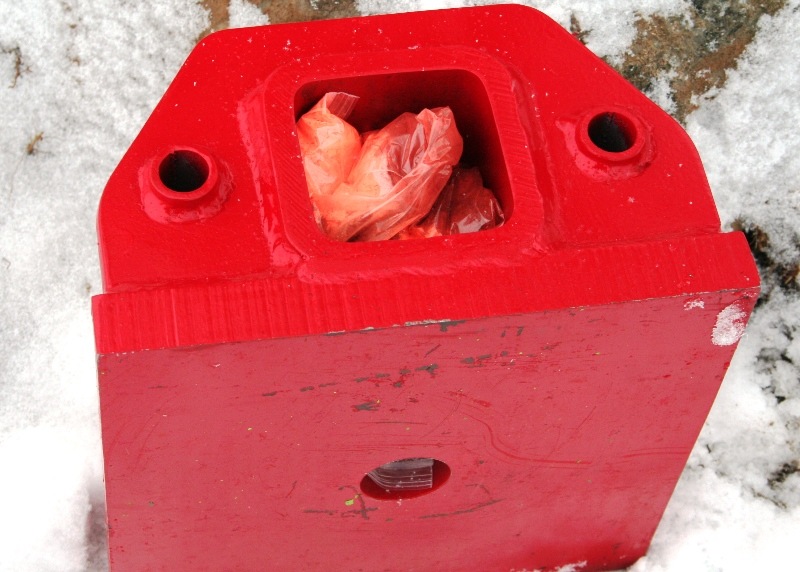
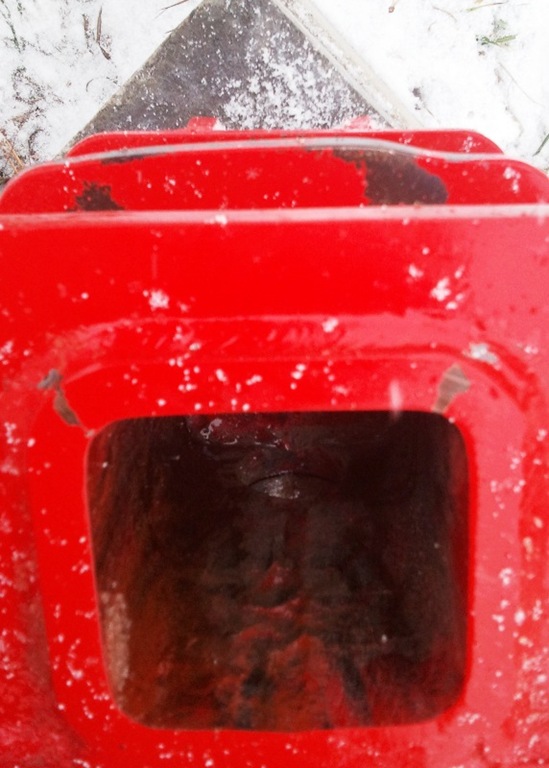
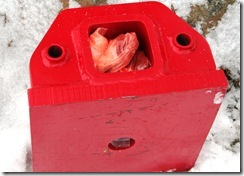
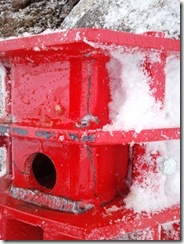
In this first pictures you can see the chalk dust on top of the Boomerite. The zip lock bag of Boomerite is just visible in the front hole.
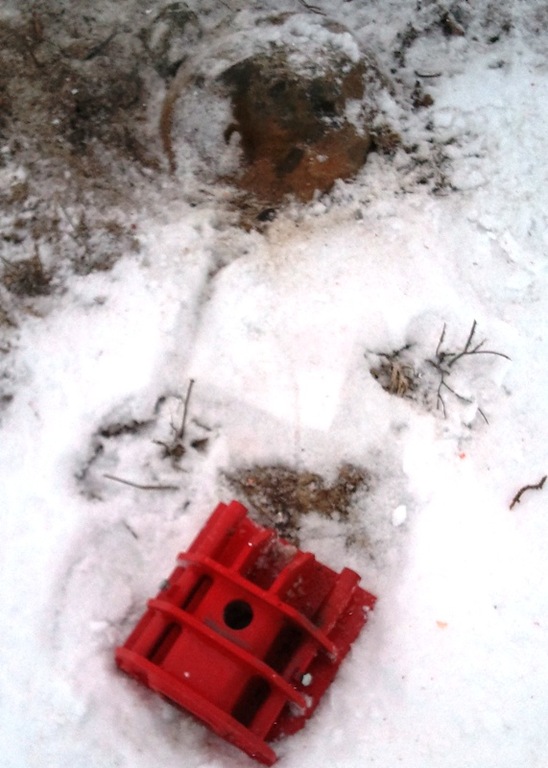
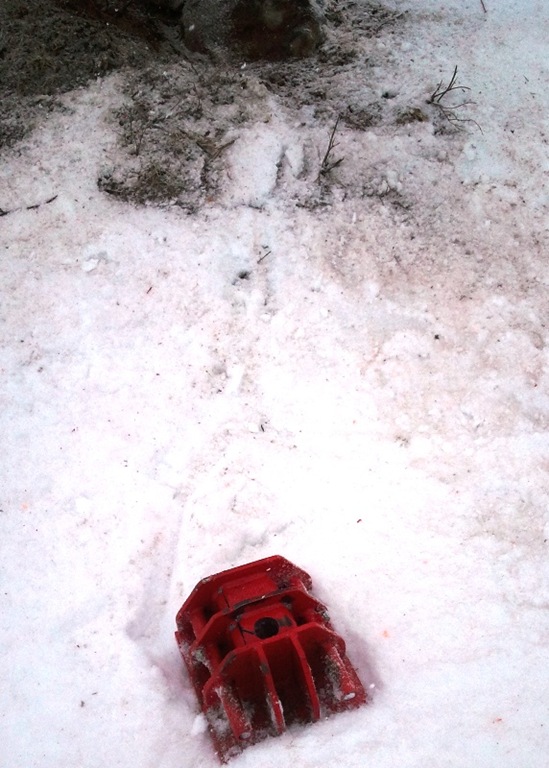
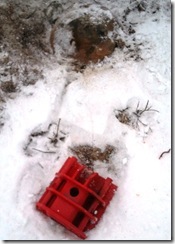
Ry will probably have video to share in a day or three but in the picture below you can see the dispenser was moved a couple feet by the blast. The dispenser appeared to be undamaged.
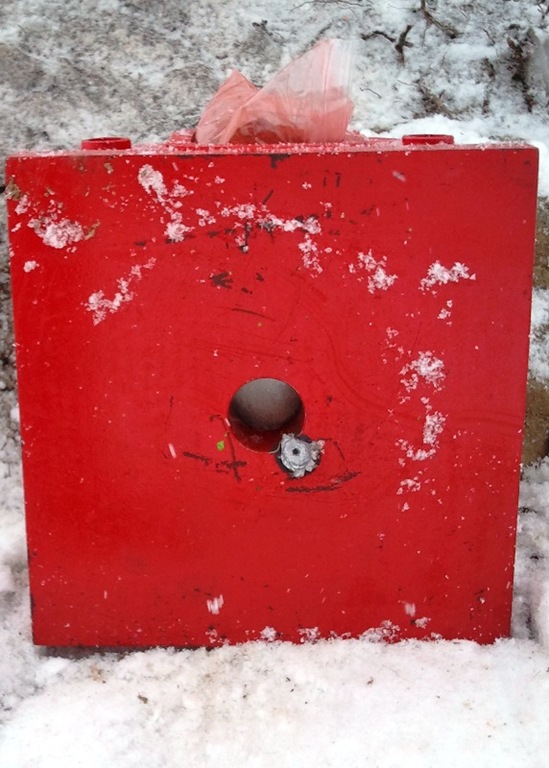
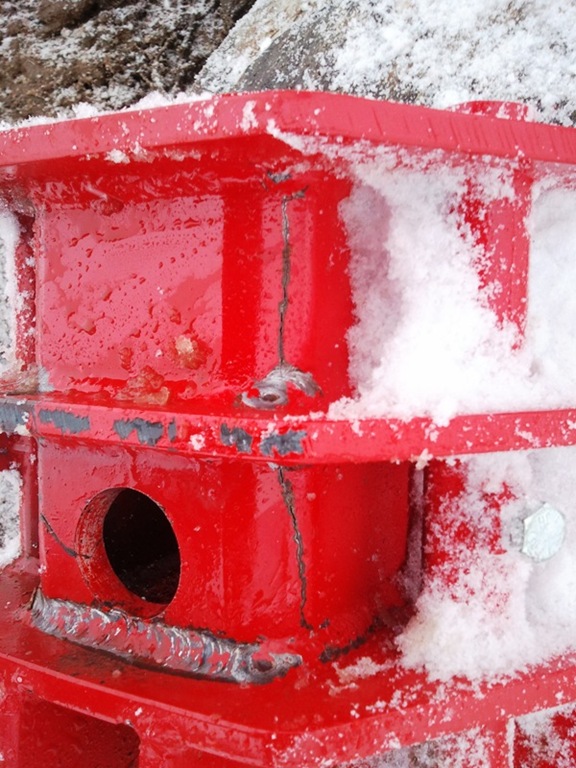
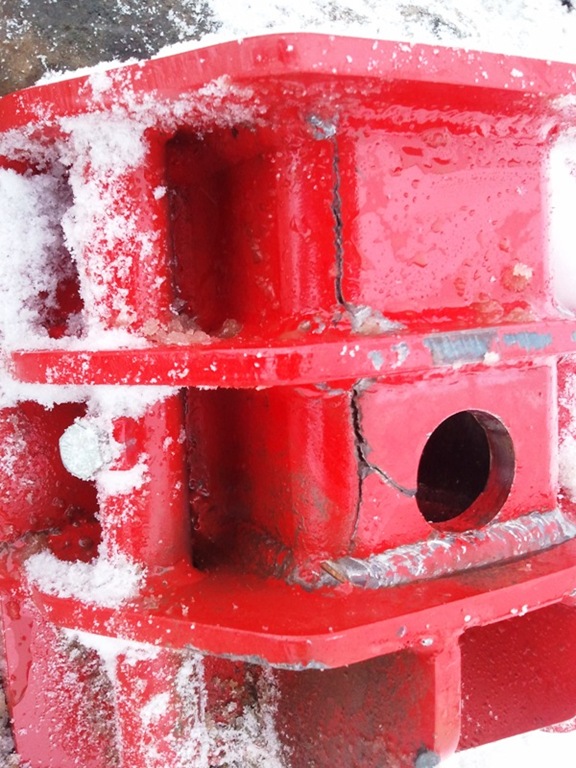
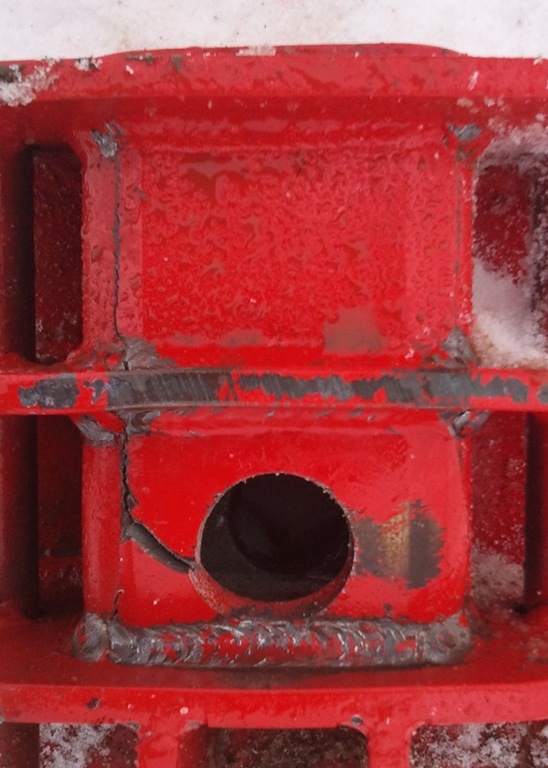
The second test was essentially the same as the first. The only intentional difference was that the Boomerite wasn’t poked partially through the front and rear holes. This time the dispenser was moved several feet and there was some obvious damage:
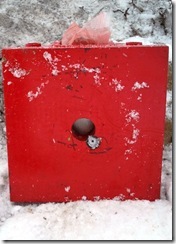
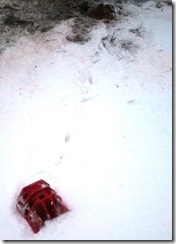
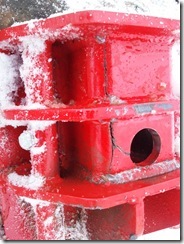
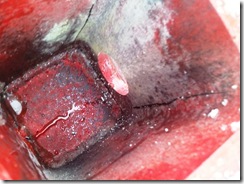
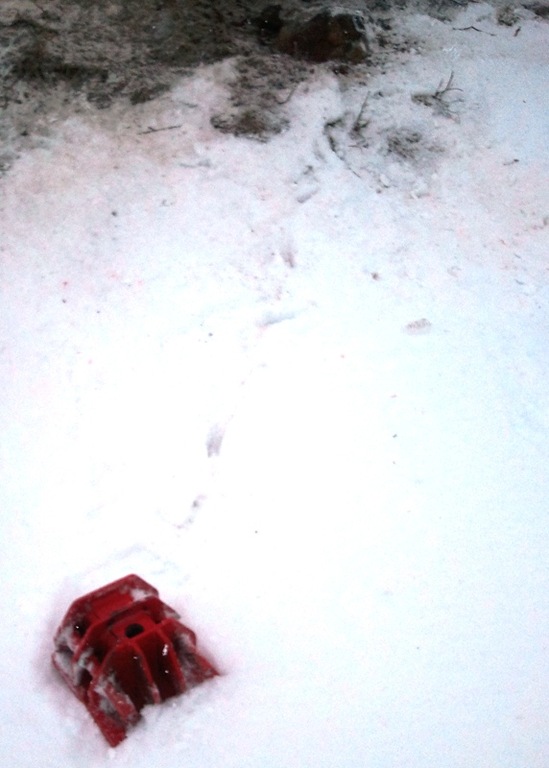
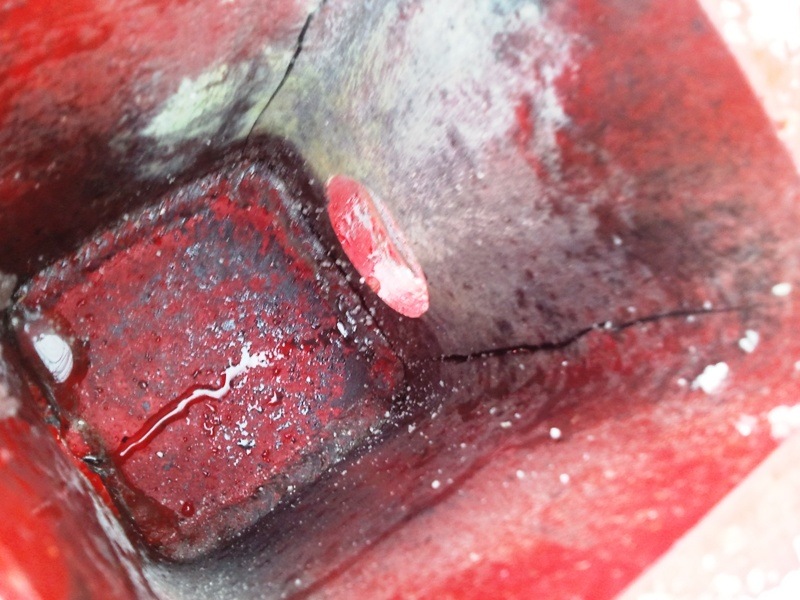
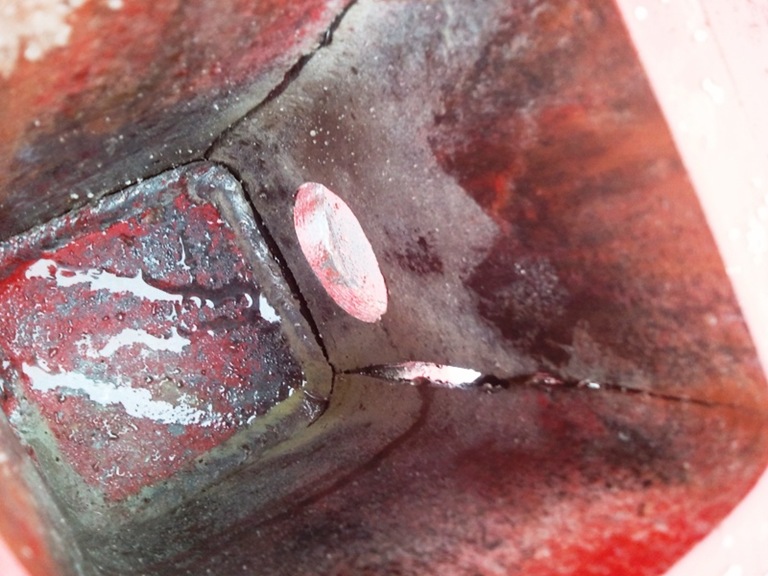
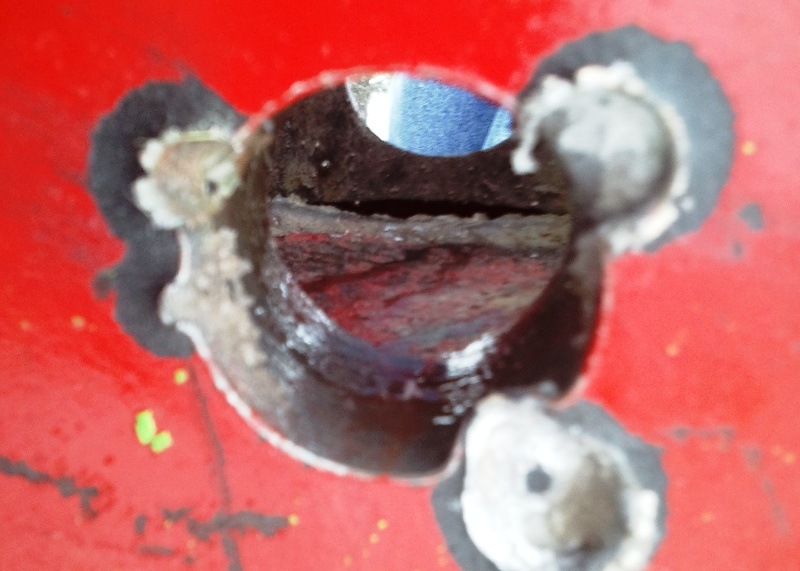
I set it up for a third test and expected it would probably “cut loose” this time. The movement was about the same and the fractures widened. Notice the bottom of the containment area is starting to bulge and the middle “rib” is bulging out the back too.
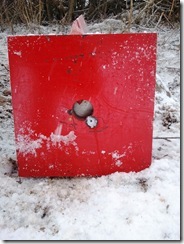
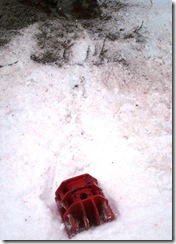
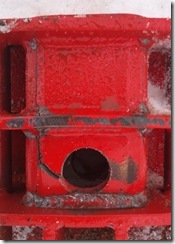
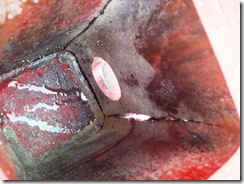
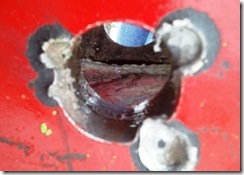
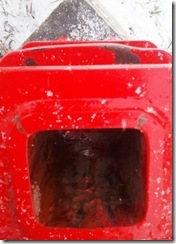
In terms of a long lasting target this has some problems. But it survived three uses which is as much as it really needs for the Boomershoot main event. We should consider cutting the Boomershoot charge in half because I think the ejection of the chalk will be sufficient with a much smaller charge.
On the drive back to my home in Moscow we pondered why the difference between their tests and ours. We had pretty much decided that it was because of the chalk dust on top of the explosives because we just couldn’t imagine Boomerite being that much different than Tannerite. But I replayed the video from the California tests and they used chalk too. So the only other variable that I can think of are the temperature and the Boomerite. Our temperature was about 24 F with the first test done while the metal was probably significantly above that because it had been in the warm vehicle. By the time of the second and third tests the metal was probably close to ambient temperature. Could that temperature change made the metal brittle and weaker?
Update: Ry has the video and details on other tests we did.