As a software developer deeply involved in providing location information to applications running on cell phones I have some advice if this concerns you:
Amid all the furor over the Bush administration’s warrantless wiretapping program a few years ago, a mini-revolt was brewing over another type of federal snooping that was getting no public attention at all. Federal prosecutors were seeking what seemed to be unusually sensitive records: internal data from telecommunications companies that showed the locations of their customers’ cell phones—sometimes in real time, sometimes after the fact.
…
Prosecutors “were using the cell phone as a surreptitious tracking device,” said Stephen W. Smith, a federal magistrate in Houston. “And I started asking the U.S. Attorney’s Office, ‘What is the legal authority for this? What is the legal standard for getting this information?’ “
Those questions are now at the core of a constitutional clash between President Obama’s Justice Department and civil libertarians alarmed by what they see as the government’s relentless intrusion into the private lives of citizens. There are numerous other fronts in the privacy wars—about the content of e-mails, for instance, and access to bank records and credit-card transactions. The Feds now can quietly get all that information. But cell-phone tracking is among the more unsettling forms of government surveillance, conjuring up Orwellian images of Big Brother secretly following your movements through the small device in your pocket.
…
The tracking is possible because either the phones have tiny GPS units inside or each phone call is routed through towers that can be used to pinpoint a phone’s location to areas as small as a city block. This capability to trace ever more precise cell-phone locations has been spurred by a Federal Communications Commission rule designed to help police and other emergency officers during 911 calls. But the FBI and other law-enforcement outfits have been obtaining more and more records of cell-phone locations—without notifying the targets or getting judicial warrants establishing “probable cause,” according to law-enforcement officials, court records, and telecommunication executives. (The Justice Department draws a distinction between cell-tower data and GPS information, according to a spokeswoman, and will often get warrants for the latter.)
…
Al Gidari, a telecommunications lawyer who represents several wireless providers, tells NEWSWEEK that the companies are now getting “thousands of these requests per month,” and the amount has grown “exponentially” over the past few years.
Of course this is a two edged sword. If they can use your cell phone as evidence you were at a given location then you can use it to show you were not at some location. Leave your phone at work/home or in a friends car if you need to take supplies to your Jewish friends in the attic.
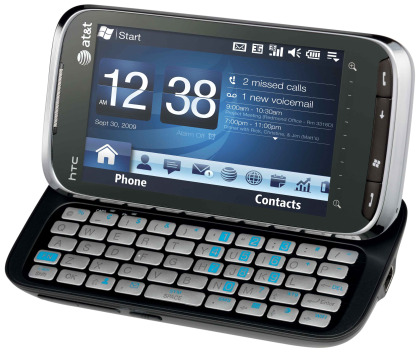
My advice is that no matter how careful you are with the applications you install or “disabling” the GPS or location services that isn’t good enough. The cell phone company will still know where your phone is within a few hundred yards anytime it is turned on. And with some phones it’s possible for you to think it is turned off when it actually is still functional at a level sufficient for your cell phone service provider to get location information.
As a friend of mine in the cell phone manufacturing business once told me, “I don’t know exactly what’s in the phone software. But I do know the phone only has one battery.”