New Product

It’s the UltiMAK model M15 optic mount for the Yugo/Serbian M92 (A.K.A. PAP) AK pistol.

There have been a lot of requests for this. The first batch went into anodizing today and should be shipping by next week.

As always; yes it’s slightly shorter than the original piston tube. Yes, it’s supposed to be that way. No, that won’t have any effect on carrier cycling whatsoever. Yes, it’s the very best place for a dot sight on your AK. It’s also the right place to mount a pistol scope. No, it doesn’t need to be removed for cleaning.

I won’t get into the issue of the utility of an AK pistol. Several of the guns I own don’t have much real utility in the strict, modern sense (the reproduction 1861 Colt Navy percussion revolver comes to mind). Then again, some people are SBRing the AK pistols, providing a sub-gun-sized, shouldered shooter with a lot more power (and muzzle blast) than a 9 mm or a 45, plus ammo and magazine compatibility with a regular AK carbine.

If you’re sans a zans for cans…

…then use your bare hands (from a man from different lands).

And he didn’t even cut himself. I could’ve benefitted from this knowledge a few times in the past. Much less messy than shooting it with a 10 mm pistol. I’ll have to try it of course, as soon as I get home tonight.

ETA; soup, vegetable and fruit cans, etc., are not made of tin. They’re made of high quality steel. The others, like regular beverage cans, are aluminum, but you knew that. I’m not sure where the term “tin can” came from originally. Maybe they were tin at some point, but the steel cans are soldered, i.e. “tinned”, and maybe it comes from that. If get interested enough I can always google it.

Tin is very weak compared to steel, and it isn’t magnetic. We do use a fair amount of tin in bullet casting of course, so I always keep some handy.

Open source maps on Garmin GPS?

I got a Garmin GPS for Christmas, a hand-held one ideal for backpacking. Pretty neat. But then I looked closer, and had a “what the hell?” moment. It has no topo maps. Not even regional low-res 100k maps. Nothing. A few political outlines, major roads, major water obstacles like Lake Washington. You have to buy topo maps as extras. I thought the whole point of a GPS was not to point at a spot in a blank area and say “you are here.” Heck, I can get that with pencil and paper, and know general direction with a compass.

So I went to the Garmin site. They want a hundred bucks for a Northwest 24k topo map. Another hundred for a CA/Nevada topo. Another hundred for “mountain west.” Another hundred for Alaska. Another hundred for 100k US. And so-on. Holy COW! If you get around much, you could easily spend far more on maps than on the GPS unit itself. The unit I received had been bought on sale; any two of those are more than the unit cost.

I dug around a little bit online, and there are some references to using open source (USGS, TIGER, or whatever) topo maps, but nothing very specific or detailed that seemed like the right path. Anyone know any good sourses for free open source 24k topo maps and directions for putting them onto Garmin handheld GPS units? If I can get pointed to some that look like they will work, I’ll try it and let readers know how it goes.

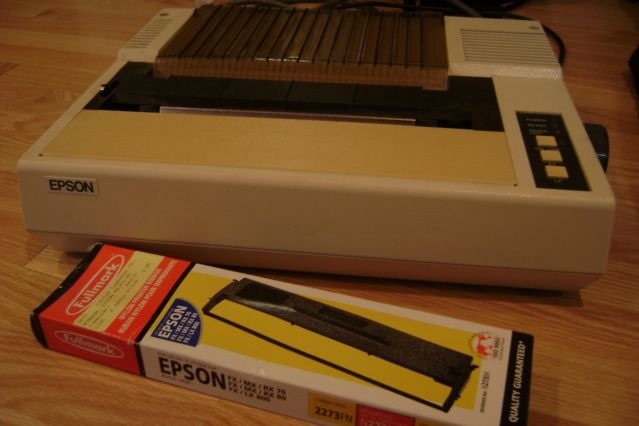
Epson MX-80 dot matrix printer

I bought this printer when I got my first computer in May of 1984. It’s nearly the identical age as my son James. And, appropriately, I stored it in James’ closet for many years before he moved out. From my discussion with him last night that was a bit of a sore point with him over the years. He told me he frequently uses the story about the printer in his closet of an example of me being a packrat or something. I’m not sure why he would think it is evidence of that but whatever.

As I was unpacking in my new Clock Tower residence I came to the printer and decided it was time for it to go to the great recycling pile in the sky. But it was painful. It still looks to be in pretty good shape. Barb L. offered to try selling it for me which eased the pain some.

She has a bid of $50 for it! Amazing.

EpsonPrinter

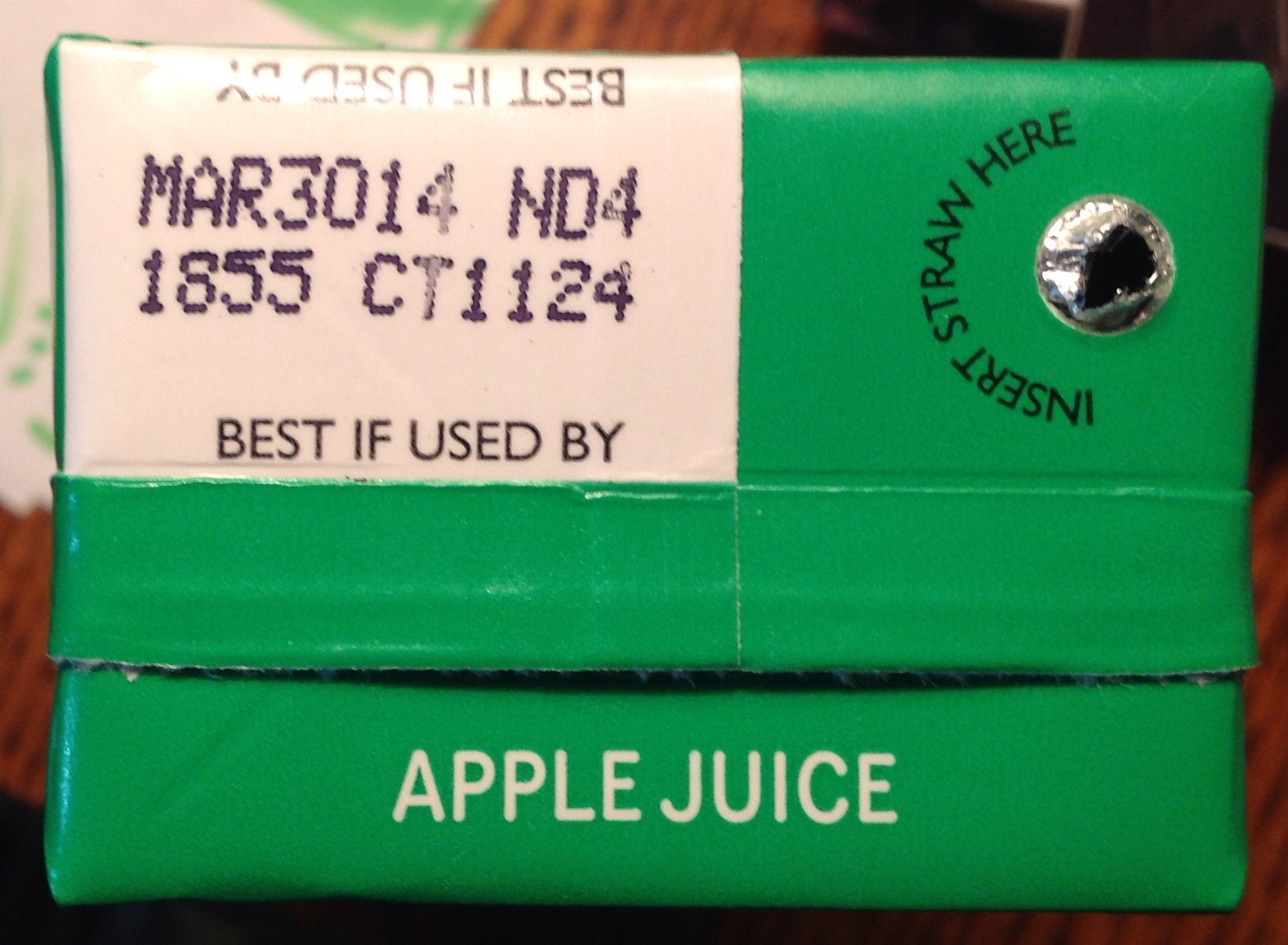
Dang; that’s over a thousand years!

March of 3014.  Dang!

March of 3014. Dang!

That’s some mighty good food preservation technology, right there.
(Yeah; I know. Don’t try to correct me. I though it was kinda funny, OK?)

Bricks

When I worked on Windows Phone 7 for Microsoft there sometimes a risk you could load a new version of the O/S you had just built on the phone and it would fail so catastrophically that it couldn’t even boot up enough to load a new O/S to replace the broken one. We called this “bricking your phone”. You had turned your smart phone into an object that was about as useful as a brick.

A few days ago Barb L. decided she needed to use the self-cleaning feature on her oven. The oven is fairly new and she had always cleaned it by hand and sometimes with oven cleaner spray. But this time she “dinked around” with the controls and got it to do a self-clean. After about two hours she decided it was probably done and turned it off. She went back to the oven a while later and the door was still locked. The display was off and all the controls were dead. She went to breaker box and cycled the power. It was still dead. She left the power off over night and turned it back on. It was still dead with the door locked.

Barb is the only person I have ever heard of that is able to brick an oven. That takes some special talent. She’s a keeper.

I thought so!

Several years ago a friend suggested I read Rare Earth: Why Complex Life is Uncommon in the Universe. I read the book but was pretty annoyed at it. Among other things that I thought were faulty one of the claims was that a low radiation environment was required for life. I was skeptical. Sure, all life as we know it is damaged by radiation but that doesn’t mean that some life form couldn’t evolve that actually required radiation, right? Wouldn’t intelligent life from that evolutionary chain conclude the earth would be lifeless because the lack of radiation required for certain of their life processes didn’t exist?

It turns out we now have life on earth that flourish in a high radiation environment. You can thank the Chernobyl disaster for that.

More on “Barrel Harmonics”

There is incontrovertible proof that those who talk about barrel harmonics do not know what they’re talking about, and that proof is in the very term they use to talk about it.

First; the term “harmonic” is a very specific term for an integral multiple of a fundamental vibration frequency. Since a barrel is (usually) a somewhat irregular object tethered at one end, I question whether most of them have a harmonic overtone series at all (like a guitar string or the air column inside a flute) or a primarily inharmonic one, like a bell or a cymbal. “You keep using that word…”

Second; the fundamental frequency of the “resonating” barrel is being ignored (by the language at least) yet the fundamental is often, or probably, more significant, i.e. it probably has a higher amplitude than the higher frequency vibrations. That’s usually very much the case with a vibrating body unless it’s being dampened at the fundamental. So why, particularly, are we discussing overtones (harmonic ones or inharmonic ones) and not the fundamental?

Third; don’t even talk to me about barrel harmonics, or barrel fundamental vibration, or inharmonic barrel overtones (A.K.A. “partials”) on an AK or a 30 Carbine, et al barrel. Just don’t.

I once had to do this with a class of music majors during a seminar I did at the U of Idaho. We were talking about advanced tweaks, the last one percent, of what goes into the design and structure of a musical instrument to make it a really fine one, and the students were responding as though I were talking about major issues. My fault. I should have been more clear at the outset.

So here it is; you don’t address the last one percent on your AK. It’s not a beanfield rifle. Please. There are several other factors that totally overwhelm the last one percent (like the previous 99 for example) and so if you address the last one percent as though it were “the issue” you’re ignoring the issues that matter.

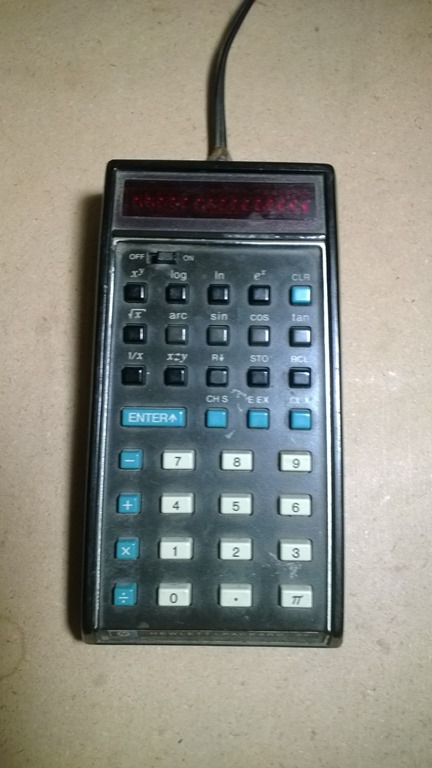
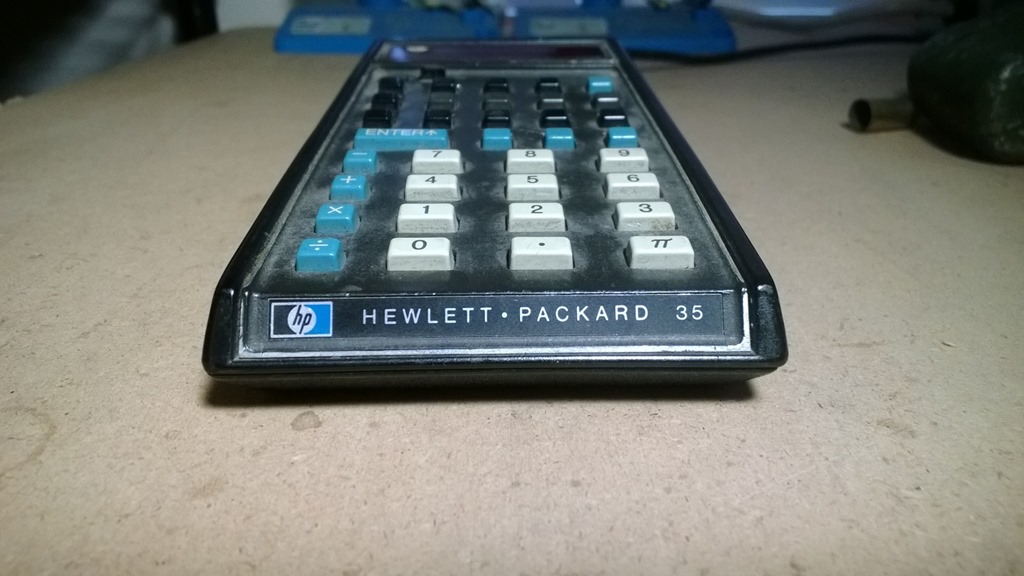
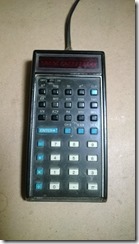
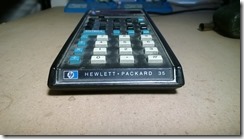
My HP-35 calculator died

When I went to college in the fall of ‘73 they were teaching engineering students like me how to use slide rules. But the HP-35 scientific calculator had been introduced in 1972 and a few other students had them. It was an amazing thing. The HP web page (linked above) says:

HP asked a local market research firm to do a market study. They did and determined that the HP-35 Scientific Calculator would never sell because it was too expensive. Bill said “We’re going to go ahead anyway.” The product was so popular that HP couldn’t make them fast enough.

Bill remembered, “We figured, in the first year, if we could sell 10,000 calculators, we’d break even. We sold 100,000.”

I played with one for a little bit and then went to the University Book Store and bought one. It cost $300. That was a lot of money then. An entire year of school with books, tuition, room, and board was on the order of $2000.

I brought it back to my dorm room and the engineer across the hall from me came over and we played with it until dawn. It was absolutely amazing.

I eventually owned several different HP calculators. I programmed them and spent a lot of time “crunching numbers” for my electrical engineering problems.

I had gotten at least two different battery packs in the late seventies for my ‘35 when the old NiCads died and then ran it on the charger for years. The power switch got a little flakey and some of the keys got some bounce in them and I would have to sometimes fiddle with it to get it to work right. But it always would come through for me.

My HP-35 sat on the shelf a lot after I got newer calculators but when I set up my reloading bench back in the mid ‘90s I got it out and left it there. I would use it for estimating how many rounds I could get from a pound of powder or muzzle velocities and “power factors” from alternate powder charges or bullet weights.

As I was unpacking my gun room today I plugged it in and it would not turn on. I don’t know if it is the power supply, the power switch, or something else. It doesn’t really matter at this point. As of last month I have had it for 40 years.

I have another HP calculator I’ll put on my bench. If it lasts 40 years from when I bought it then it should last for at least another 10.
WP_20131102_010
WP_20131102_011

Computer security just got harder

This has been coming for quite some time (H/T to Jeff):

Triulzi said he’s seen plenty of firmware-targeting malware in the laboratory. A client of his once infected the UEFI-based BIOS of his Mac laptop as part of an experiment. Five years ago, Triulzi himself developed proof-of-concept malware that stealthily infected the network interface controllers that sit on a computer motherboard and provide the Ethernet jack that connects the machine to a network. His research built off of work by John Heasman that demonstrated how to plant hard-to-detect malware known as a rootkit in a computer’s peripheral component interconnect, the Intel-developed connection that attaches hardware devices to a CPU.

I wrote and demonstrated to some folks in D.C. a prototype of something like this in 2004 or 2005. Even before that lots of people knew it was possible.

You can remove all hard disks from your computer, install empty ones, and as the computer is booting up for the first time infect the new hard disk before the O/S even attempts to boot off of the CD drive. Of if you wanted you could just refuse to boot.

Imagine a stealth virus that infected some large percentage of all computers then on September 11th would only perform one function—format any storage device it had control of.

Sleep well.

NSA decryption

From Leaked Slide Shows NSA Celebrated Victory Over Google’s Security With A Smiley Face:google-cloud-exploitation1383148810

That’s good to know. What that means is that either they can’t break the encrypted messages directly or that it is more work to do so. So they do it by attacking the Google servers that do the encryption and decryption.

That means encrypting my data on my computer before it hits the Internet makes it more difficult or impossible for the NSA to read. Hence:

jfFMMWu3VNTJs0iuzM/h1J9wEDojd3+34PNTyb/u/rEnedy3y9YywxRPtP8wX5nZ13xfkduP
/7+vNFbz7150wnHv8+hyEiubOLVB2D4e2Qu62jVS6E9M7q47BGCgv59S/vhV6EKhJ3GyfqK
taan8ss0V+fBjZbpsBGbhsRXaHT+A8tXSx3DpApmVbc4MIzHr9w8WG5pzCSBI/F2CXjqTE8
EMu/5zmxm+XmawdM4IAtPotIiLDTsw8IoHVJFAMdlagQDlla2z5fGJoZlDu7fsrFu7SYTso
5gEJUZF8eju5sWsqfZp1i8KvdFPYuXbzBdKJYCg/Hq0iD3/yGr4TeuW0yZ4Xrx20Wmv3nit
rOhrWZVAOsbfYB6LgoP8j2w0UkJPtzSr3d+zWk80EDMvsuPgnA93Sn5A+omipxXTimZes6Y
nz0NyXO745pZcOH3CNlddW8AFqQ0KlJC5qNVejPRs3rEQL5y+/pXyEd8JHIo0M2Qm+Elrdn
ZwZLSmNHfCeQk7aNAfD3lHTsaCQmbTZzBVWmq1YFDxiJU5ZJGNy3pXw7LT5BUVXLV9ShlSs
RGbZObCH9W8SaMrW7hu9VBJjYvpXftv0+SpbkTcxRS2IXt1Tfuqi8VgtRyJuDf7uk3wGgmI
4Pip7A/FzAwZFCqSy3zKpkVLNg/Bvos390Y5bATdDIvefJq/4QXS/gfJZkLaDUR1+bhxhBW
tRYdi2Rto3B/+hFZ8GpFCGMQpnJBXmoPsUgNtHKkfYC9PsC6dv7iP9U1NRb5KFiRzsUAutD
9blIUkogSwFvc+zyx4YX7zdY1cMLOqmLbIpep8p2TlStjSj2w6LFQddJUQxwSHSJrd3yVlo
jWtxIJU8FvopqR/LUMBjrAG7bYddOWvbuxFF6Pk/UthK12Ih138Na7OdvuTzkQQmjhXdk9z
o/zjyNyZZAVaFsZa0h/RxQjyZUEihMtEMZDXKZNHgtU3urMkQOTR9k1MZahmhbJtEydMiGJ
6ESoyejbMzD1eqzxmZkIXMrZ3VQfPf1lUxjTPwdOoLtzTbUHvuA02vpd9Gx6L0xbqgn7obb
81TAkuYb4SWn+J7gF8Fi7FVwGFZ2V692KQ05lNDP4mWkGoAGuLZmqjvlee6TqXmIaEE0YWz
HVpvRfsdvpZNQxd

One big happy family

This ought to make you feel all warm and fuzzy.

The same company that made the healthcare.gov website (on a no-bid contract, naturally) is the same one that created the Canadian gun registry that cost roughly twenty times the original estimate and got scrapped a decade later after being found to be both useless and seriously defective.

But they want us to just trust their good intentions, ’cause they are so smart and transparent. Yeah, riiiight.

Field Ballistics bug fix

I fixed a minor bug in Field Ballistics. The new version is 1.1.1.0. It is available on the Windows Phone store now.

The bug was that under certain situations you could delete the last target. Other places in the app required that at least one target exist at all times. After deleting the last target the app would immediately crash.

As a side note: I submitted the changed version Sunday evening. It made it through Microsoft certification in less than three days.

Quote of the day—Anshel Sag

Having the ability replicate the human nervous system and some of their thought processes is a good thing to have, but I just hope that there are some very strict checks and balances within these systems. You know, to prevent a Skynet-like event where the robots become self aware and start to realize that the world is a better place without us. It’s a crazy thought, sure, but giving computers the ability to think and feel like humans is also a bit crazy too.

Anshel Sag
October 11, 2013
Qualcomm Takes Us One Step Closer to Skynet with Zeroth Neural Processing Chip*
[The propagation time of human nerves and synapses are many orders of magnitude slower than the electronic analogs because, contrary to the common misunderstanding, biological signals are transmitted via a chemical chain reaction not electrical signals. Electrical signals propagate at nearly the speed of light. IIRC it’s roughly 1 mSec per foot versus 1 nSec per foot. That’s one million times faster.

Imagine being engaged in physical combat with someone that has a OODA loop that is a million times faster than yours. The Terminator/Skynet universe of Hollywood may give you hope that wouldn’t be the reality of it. In that universe the machines were slow to observe and make decisions. In reality their actions would be, for all intents and purposes, instantaneous. If they were to use projectile weapons the compensation for all the environmental conditions, target direction and velocity, and all possible target responses would be calculated and if needed multiple projectiles would be launched to cover the responses.

At work, today, I’m working on something that writes computer code. Given a simple description in a few dozen lines it writes thousands of lines of code that compile and run without error. It completes the task almost before you can lift your finger from the “Enter” key. This same code would take a human many hours, if not days, to write.

Imagine a world with the industrial capacity of machines that not only build machines but can design them as well. There would be automated tools that build better tools and machines without human interaction. And those tools and machines could build better tools and machines than themselves.

It could be utopia. Or it could be a Terminator universe where the battle against an individual human is over in milliseconds and the battle for the entire planet is over in hours.

Sleep well.—Joe]


* See also Qualcomm Zeroth Processors official: mimicking human brain computing

Field Ballistics update

I released a new version of Field Ballistics for Windows Phone earlier this week and it made it through Microsoft’s test gauntlet this morning.

Here are the changes in version 1.1:

A crash that occurred when measuring inclines has been fixed.

Auto conditions retrieves air pressure from the weather service and allows manual input of air pressure independent from altitude for user defined conditions.

Target range can now be set in the range edit box in addition to moving the target push pin on the map.

Random thought of the day

Natural is better than artificial. Right? Man-made is bad. Right? So what could be more artificial than the way we use electricity?

The next time someone tells me how much better something is because it’s “natural” I’m going to tell them I’m sure they would be much happier and healthier if they replaced all the electric lights in their home with all natural whale oil lamps. It’s a renewal energy resource. Right?

CATs from Amazon

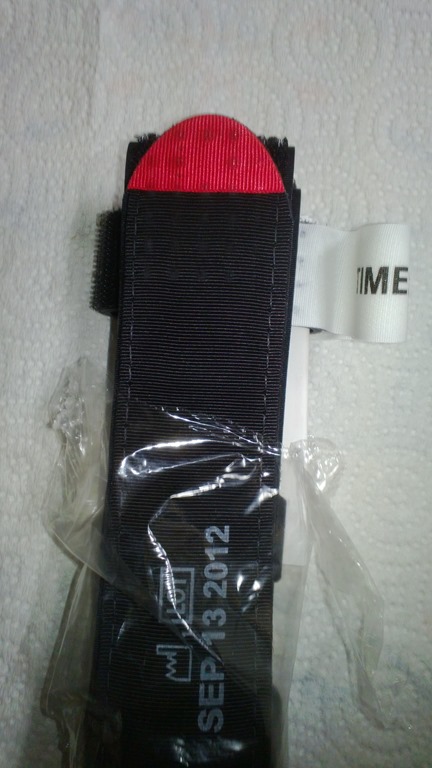
There have been some concerns that the tourniquets I linked to on Amazon in this post might have been counterfeit. I received the ones I ordered and I am pleased to announce they appear to be the genuine article. Here is a picture:

WP_20130807_001

The way you can tell the real thing from a counterfeit, at least the ones we saw in class, was by the end. If it is stitched on the end instead of welded then it is counterfeit. See the little dots, slightly darker the rest of the material, in the red end? Those are the welds.

Threaded barrel .22s

Got a gun question: What’s the best and most readily available .22 LR pistol that comes with a threaded barrel as a standard item? It seems like there should be a lot of options, as suppressors and various barrel do-dads become more common, but I don’t see a lot of models out there. The Ruger 22/45 and Ruger Mk III both have that as an option, as does the Sig Mosquito (but I’ve not heard a lot of good things about that one). Any other options I should be looking into?

Biometric fail

From here:

Cars of the future may use the driver’s rear end as identity protection, through a system developed at Japan’s Advanced Institute of Industrial Technology. A report surfaced earlier this month that researchers there developed a system that can recognize a person by the backside when the person takes a seat. The system performs a precise measurement of the person’s posterior, its contours and the way the person applies pressure on the seat. The developers say that in lab tests, the system was able to recognize people with 98 percent accuracy.

That’s not good enough. If you can’t drive your car one time out of 50 when the chances of your car being stolen are only once out of, say, ten years you are going to disable the feature.

Also 98% accuracy number was in lab tests. I have to wonder if those lab tests included people having different things in their pockets. If you normally drive with a wallet in your rear pocket and you hop in your car after a day at the beach with your wallet in a bag thrown into the back seat what are the odds then? Or if you change your carry gun, or move the holster a little to one side or the other. And it is going to have to adapt to weight gain and loss over time.

Biometrics have a lot of problems. It’s really tough to get the accuracy needed for everyday use because characteristics of people change. And the basic concept has two fundamental, closely related, security flaws.

One is that your biometric “key” is not well hidden. You leave a set of fingerprints on the glass at the restaurant, on door knobs, and on the keyboard at the library. And image of your iris can be captured with a telephoto lens while you walk down the sidewalk.

The other flaw is that in any secure system you must have a way of repudiating a set of credentials if they have been compromised. How do you repudiate an image of your iris or your fingerprints? At most you only have two eyes and ten fingerprints. And there are lots of gummy bears.

Biometric researchers attempt to block access to these flaws by performing “liveness” tests. The guys in the black hats are keeping up and my guess is, except for some very expensive solutions, they always will.

Probable bug in Windows Phone 8

I found what appears to be a minor bug in some Windows Phone 8 devices.

It showed up in my Field Ballistics program. I have code that looks like this:

// Can we focus only on the target?
if (this.cam.IsFocusAtPointSupported)
{
    this.cam.FocusAtPoint(0.5, 0.5);
}
else
{
    this.cam.Focus();
}

On someone’s phone this raised a “System.InvalidOperationException” on the call to “FocusAtPoint”.

What appears to have happened is that the phone reports IsFocusAtPointSupported as “true” but doesn’t actually support it. It’s not all that big of deal but it does mean I’ll be releasing an update a little sooner than I had planned.